
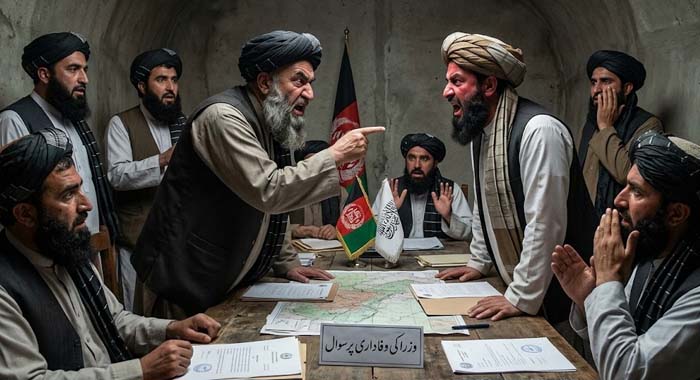
Taliban Deputy Intelligence Chief Tajmir Jawad has publicly acknowledged the presence of what he described as “opportunist elements” within the Taliban administration, warning that individuals seeking to weaken the system are being monitored and that necessary action will be taken against those deemed to be working against the Taliban’s interests.
Jawad made the remarks during events marking the fifth anniversary of the Taliban’s return to power, highlighting concerns within the Taliban leadership over internal cohesion, ideological commitment, and the continued loyalty of individuals operating within the administration.
According to Jawad, the consolidation and strengthening of the Taliban system requires individuals with ideological, intellectual, and religious commitment rather than those motivated primarily by financial interests. He argued that individuals who joined the Taliban for material or economic benefits cannot be expected to demonstrate the same level of commitment, struggle, or willingness to make sacrifices for the system.
The Taliban intelligence official further warned, without naming specific individuals, that elements had previously been used to undermine what he described as the achievements of the jihad against the Soviet Union. He claimed that similar elements are now attempting to undermine the Taliban’s claimed achievements following its two-decade armed struggle.
Jawad stated that various dimensions of such activities are being monitored and that measures are being taken to prevent what he characterized as attempts to undermine the Taliban system. His remarks underscore the leadership’s continuing emphasis on ideological loyalty and internal discipline as it seeks to consolidate its authority across Afghanistan.
He described efforts to strengthen the Taliban administration as a continuation of the group’s 20-year “jihad,” arguing that individuals possessing ideological, intellectual, and religious allegiance to the system would ultimately be responsible for defending and sustaining it.
The remarks come against a backdrop of reports indicating renewed activity by armed groups opposed to the Taliban administration in parts of Afghanistan. Recent developments have added to the security challenges confronting the Taliban leadership as it attempts to maintain control and suppress internal and external opposition.
According to reports by Afghanistan International, fighting between Taliban forces and supporters of dissident Taliban commander Jumma Khan Fateh in Nusi district of Badakhshan has entered its fifth consecutive day.
Local sources cited in the reports said that Taliban forces have continued air operations in Badakhshan while deploying additional reinforcements to the area. The reported buildup has raised expectations of a larger ground operation aimed at confronting Fateh’s supporters and restoring Taliban control over the affected areas.
According to local sources, the confrontation reportedly stems from a dispute that began several months ago over mining activities. The situation subsequently escalated after the arrest of several associates of Jumma Khan Fateh on the orders of the Taliban-appointed governor of Badakhshan.
The arrests reportedly intensified tensions between Fateh and elements of the Taliban leadership, eventually contributing to armed clashes between his supporters and Taliban forces.
The developments present an additional challenge for the Taliban administration, which continues to face the task of maintaining internal cohesion while responding to armed opposition and managing competing political, security, and economic interests within its governing structure.
Jawad’s remarks are significant because they point not only to the Taliban leadership’s concerns about armed opposition but also to potential vulnerabilities within the administration itself. His emphasis on ideological loyalty suggests that the Taliban leadership remains wary of individuals whose allegiance may be driven by personal, political, or financial interests rather than commitment to the group’s ideological objectives.
The warning also indicates that Taliban intelligence authorities are placing increased emphasis on identifying and monitoring individuals perceived as capable of challenging or weakening the system from within.
As the Taliban marks five years since its return to power, the leadership’s public messaging increasingly reflects the dual challenge of consolidating internal control and confronting armed opposition. The latest statements and developments in Badakhshan indicate that questions surrounding loyalty, authority, and internal cohesion remain important factors shaping Afghanistan’s evolving security environment.



