
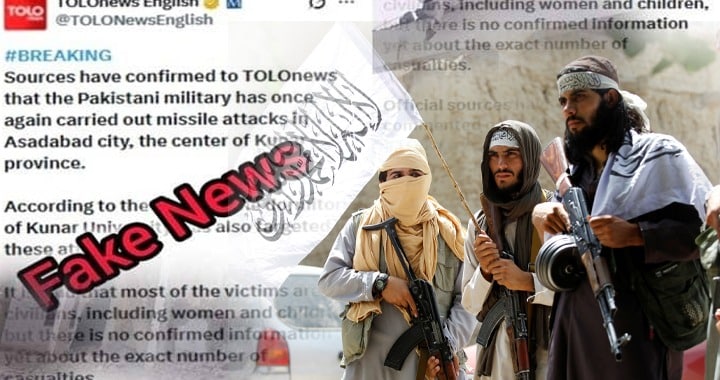
Recent claims, Taliban-controlled Afghanistan, alleging Pakistani cross-border strikes in Kunar Province have been officially denied by Islamabad, with authorities stating no such operations were conducted.
These claims were accompanied by visual material that, upon verification, was found to be unrelated, specifically, imagery from the February 20, 2026, earthquake was recirculated as purported evidence of military strikes.
This follows earlier allegations on April 27 regarding a supposed strike on a university dormitory, which were similarly rejected as unverified.
Media Landscape in Taliban-Controlled Afghanistan
Since the Taliban’s return to power, Afghanistan’s media environment has undergone severe contraction:
Women journalists have largely disappeared from the field
Independent reporting faces structural restrictions
Editorial autonomy operates within imposed ideological boundaries
The absence of plurality raises fundamental questions about the reliability and independence of information emerging from within the country.
Midway Pivot: Claim vs Capability
A key contradiction emerges when examining the claims themselves.
Pakistan has, in previous instances, openly acknowledged and briefed operations of strategic significance. Military leadership, including public briefings by official spokespersons, has historically communicated major actions when undertaken.
Given this pattern, the logic of conducting and then concealing a cross-border strike becomes less consistent, particularly when weighed against established communication practices.
Three interconnected dynamics shape the current information environment:
1. Information Control and Narrative Shaping
Restricted media ecosystems often produce narratives that lack independent verification channels, increasing the likelihood of unverified or amplified claims.
2. Misinformation Through Misattribution
The reuse of unrelated imagery, such as earthquake visuals, points to either poor verification standards or deliberate narrative construction.
3. Credibility Gap
When claims are repeatedly denied and contradicted by verifiable evidence, a credibility gap emerges, affecting both domestic and international perception.
The intersection of restricted media space and unverified claims creates an information environment where narratives can circulate rapidly without substantiation. In such a setting, verification becomes not just a journalistic function, but a critical filter between claim and reality.



