
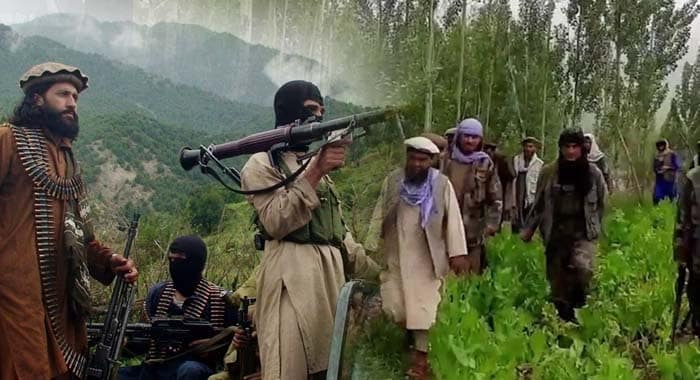
The Afghan Taliban’s reported crackdown on the Tehreek-e-Taliban Pakistan (TTP) is unfolding against a broader deterioration in the security environment, with armed opposition groups stepping up attacks against Taliban positions in northern Afghanistan.
Reports over the past several weeks have pointed to arrests, searches and restrictions targeting TTP-linked individuals across a number of Afghan provinces. At the same time, the Afghanistan Freedom Front (AFF) has claimed a series of attacks and clashes with Taliban forces in Badakhshan, including recent fighting in Zebak and a rocket attack targeting Taliban positions in Faizabad.
Taken together, the developments raise a broader question: is the Taliban administration tightening control over armed groups operating from Afghan territory, or is it responding selectively to mounting internal and external pressure?
Reported arrests spread across Afghanistan
Sources have reported that roughly 20 TTP commanders and supporters have been arrested during the past three weeks in Kabul, Khost, Paktika, Kunar, Ghazni, Maidan Wardak, Kandahar and Uruzgan.
Those reportedly detained include senior and mid-level figures associated with the TTP, among them commander Sher Zaman Aka, former economic commission head Mawlawi Badri, Balochistan division official Pir Zaman and a commander known as Haji Kalan.
Other individuals associated with the faction led by Hafiz Gul Bahadur have also reportedly been detained.
The accounts, however, are not uniform. One source claimed that TTP-linked figure Ikhlas Yar was arrested from his residence in Kabul, while another source associated with a local TTP branch said he was in South Waziristan and had not been detained.
That contradiction is important. It means the reported figures and individual cases should be treated as attributed reports rather than established facts until independently confirmed.
The reported pressure goes beyond arrests
The reported measures also extend beyond the detention of individual TTP figures.
Sources have described searches of residences linked to TTP members in parts of Paktika, Khost, Maidan Wardak, Ghazni and Kunar, along with reported arrests of Afghans accused of communicating or cooperating with TTP fighters.
In Kandahar, searches were reportedly carried out in parts of the provincial capital and in Maiwand and Panjwai. Sources also claimed that homes associated with individuals who had allegedly travelled to Khyber Pakhtunkhwa to join the TTP were searched.
Some shops and fundraising points reportedly linked to displaced families from the former tribal areas of KP were also closed along parts of the Kandahar-Uruzgan route.
If confirmed, the geographic spread would indicate an effort aimed not merely at individual TTP commanders but at parts of the logistical and support environment surrounding the group.
Some TTP members were reportedly ordered to leave
A TTP source has acknowledged that a significant number of its members were arrested in recent weeks, while claiming that some commanders were detained after being instructed to leave Afghanistan but remaining there.
This detail, if accurate, could be particularly significant.
Pakistan has repeatedly demanded practical action against TTP networks operating from Afghan territory. The Taliban, meanwhile, have consistently rejected accusations that they provide sanctuary or support to the TTP and have maintained that Afghan territory will not be used against other countries.
The difference between those positions is precisely where the reported arrests acquire significance.
For Islamabad, the central issue is not simply whether individual TTP members are detained. It is whether Afghan territory ceases to function as an operational, logistical or organizational space for attacks against Pakistan.
Then comes Badakhshan
While the reported pressure on the TTP is unfolding, the Taliban are facing a different challenge in Badakhshan.
The AFF has claimed repeated clashes with Taliban forces in Zebak district in recent days. In its latest account, the group said its commandos fought Taliban forces for several hours and claimed that six Taliban personnel were killed and at least 10 wounded.
Those casualty figures remain an AFF claim and have not been independently verified.
The latest fighting follows a series of earlier AFF claims concerning operations against Taliban positions in Zebak. The group has also claimed responsibility for a rocket attack targeting the Taliban governor’s office and a nearby security post in Faizabad, saying four Taliban personnel were killed and five wounded.
The pattern matters more than any individual casualty figure.
Badakhshan has seen repeated armed activity against Taliban forces, and recent reporting indicates that the fighting in Zebak has become more sustained rather than remaining confined to isolated incidents.
A different test of Taliban control
This creates an interesting contrast.
On one side, the Taliban are reportedly putting pressure on TTP networks and individuals in several provinces. On the other, Taliban forces are themselves being challenged by armed opposition groups capable of conducting rocket attacks and sustained ground engagements.
The two developments should not be conflated. The AFF is an anti-Taliban armed opposition group, while the TTP is a Pakistan-focused terrorist organization with a distinct agenda and relationship with the Afghan Taliban.
But together they reveal the complexity of the security environment the Taliban are trying to manage.
A regime that claims nationwide security and administrative control faces pressure to demonstrate that control in practice, both by preventing Afghan territory from being used by terrorist groups against neighboring states and by containing armed opposition within Afghanistan itself.
Mufti Noor Wali’s movements add another layer
The reported crackdown also coincides with the emergence of footage purportedly showing TTP chief Mufti Noor Wali Mehsud in Khyber Pakhtunkhwa.
One video reportedly showed him speaking with workers at a stone-mining site, while another showed activity involving a drone.
The footage, if authentic, raises questions about the actual movement and operating environment of senior TTP leadership.
It also complicates any simple interpretation of the reported Afghan crackdown. If some TTP figures are being detained or pushed out while senior leadership retains the ability to appear and operate in Pakistan’s tribal districts, the question becomes whether the pressure is directed at dismantling the organization or merely reshuffling its presence.
The real measure will be what happens next
That is ultimately the test that matters.
The Afghan Taliban have not publicly confirmed the reported arrests, while Pakistani authorities have also not formally endorsed the reported figures or individual cases.
Consequently, the most consequential question is no longer whether arrests have been reported. It is whether the reported pressure becomes sustained, verifiable and operationally meaningful.
Three indicators will be particularly important: whether further TTP commanders are detained or expelled, whether their freedom of movement and ability to operate from Afghanistan is genuinely restricted, and whether attacks against Pakistan decline as a result.
The developments in Badakhshan provide another measure of the Taliban’s capacity to enforce control.
If the reported TTP crackdown continues while the Taliban simultaneously demonstrate greater control over armed opposition hotspots, it could point toward a broader consolidation of security policy.
If the arrests fade, TTP networks resume their activities and armed resistance continues to expand, the current moves may instead prove to have been temporary responses to mounting pressure.
For Pakistan, therefore, the significance lies not in the announcement of arrests alone, but in whether Afghan territory becomes measurably less available to terrorist networks targeting Pakistan.
That is where assurances end and evidence begins.



