
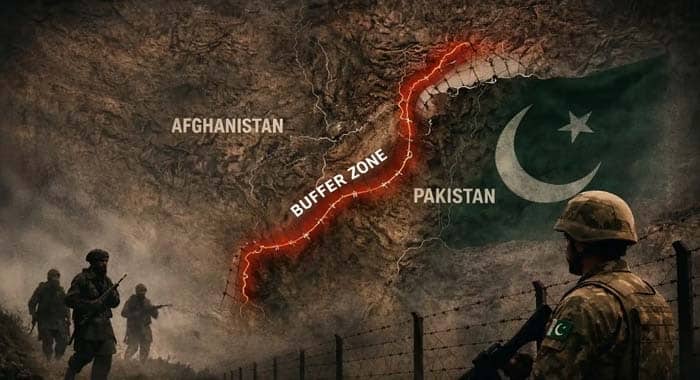
For Pakistan, the Afghan Taliban’s call for responsible conduct raises a question far more consequential than diplomatic wording: will the authorities in Kabul accept responsibility for preventing terrorist organizations from using Afghan territory to threaten their neighbours?
The Taliban’s Foreign Ministry has invoked human dignity, citizens’ rights and mutual understanding while objecting to the possible deportation of Afghan asylum seekers through Pakistan. Those concerns deserve consideration on their own merits. But responsibility is not confined to the treatment of citizens abroad. It also concerns the consequences of exercising authority over territory from which armed groups can threaten another country.
That is where Pakistan’s security concerns become central.
The TTP Challenge
Islamabad has repeatedly accused the Afghan Taliban authorities of allowing the banned Tehreek-e-Taliban Pakistan (TTP) to maintain a presence in Afghanistan and use cross-border networks to support attacks inside Pakistan. The Taliban authorities dispute accusations that they provide safe havens to terrorist organizations.
The dispute cannot be resolved by statements alone. It must be assessed through verifiable evidence, the operational freedom available to terrorist groups, the disruption of their networks and the effectiveness of measures to prevent attacks.
The TTP poses a direct threat to Pakistan’s security. Its campaign targets the Pakistani state and seeks to impose its own ideological order through violence. Attacks on security personnel, law enforcement officers and civilians have consequences that extend well beyond individual incidents, placing pressure on communities, disrupting normal life and requiring sustained counterterrorism operations.
The presence of terrorist networks across an international border complicates the response. Armed groups can exploit difficult terrain, logistical connections and the time needed for coordination between governments. When they can plan, organize or find shelter across the border, the costs of containing their activities increase.
For Pakistan, the central demand is therefore not a rhetorical declaration of goodwill. It is effective action to deny terrorist organizations the ability to use Afghan territory to prepare or facilitate attacks.
Territorial Responsibility Must Mean Something
A government exercising authority over territory has a responsibility to prevent that territory from becoming a platform for attacks against other countries. This principle is particularly important when terrorist groups operate across borders and their activities threaten civilians and security personnel in neighbouring states.
The Taliban authorities have an opportunity to demonstrate their commitment through concrete measures: identifying and disrupting terrorist infrastructure, restricting the operational freedom of armed groups, preventing cross-border infiltration and cooperating in ways that produce verifiable security outcomes.
Such measures must be assessed through results rather than promises. A reduction in the ability of terrorist groups to organize attacks, the dismantling of their logistical networks and effective action against those responsible would provide stronger evidence of commitment than diplomatic assurances alone.
Pakistan also has an interest in distinguishing among different armed organizations rather than treating every threat as identical. The TTP, Islamic State Khorasan Province and other terrorist groups have distinct structures, objectives and relationships. A credible regional security strategy must account for those differences while addressing each threat through evidence-based measures.
Why the Consequences Extend Beyond Pakistan
The issue is not confined to bilateral relations. Terrorist networks operating from Afghan territory can undermine regional stability and create risks for other neighbouring states. The continued presence of extremist organizations also raises concerns about recruitment, training, movement across borders and the circulation of weapons and logistical support.
These risks must be described carefully. The presence of an organization, its ideological links and the direct involvement of a government are different questions that require different evidence. But where terrorist groups retain the ability to operate from territory under a government’s control, that government faces a serious test of its capacity and willingness to address the threat.
The Taliban authorities cannot demand that other governments respect Afghan citizens’ rights while treating the security concerns of neighbouring populations as secondary. Human dignity includes the lives and safety of people threatened by terrorist violence across the border.
Diplomacy Needs Measurable Outcomes
Pakistan’s security concerns cannot be resolved by exchanging accusations indefinitely. Diplomatic engagement remains important, but it must be directed toward verifiable commitments and practical results.
These include preventing terrorist organizations from maintaining operational sanctuaries, disrupting their ability to plan and facilitate attacks, strengthening border management and establishing effective channels for addressing specific security threats.
Any arrangement should also distinguish legitimate civilian movement and humanitarian needs from the activities of armed organizations. Afghan citizens must not be treated as collectively responsible for the conduct of terrorist groups, just as the rights of asylum seekers should not be made conditional on the policies of the Taliban authorities.
This distinction strengthens rather than weakens Pakistan’s security argument. The objective is to prevent terrorism, not to penalize a population.
The Test is Action, not Rhetoric
The Taliban’s appeal to Washington presents an opportunity to apply a consistent standard. If responsible conduct requires protecting citizens from arbitrary treatment and respecting their legitimate rights, it must also require authorities to address the threats emanating from territory under their control.
For Pakistan, the decisive question is whether the Taliban authorities will take effective and verifiable action against terrorist networks that threaten the country. Their diplomatic language cannot substitute for that responsibility.
Regional stability will depend less on what the authorities in Kabul ask others to do than on what they themselves are prepared to do to prevent terrorism, protect civilians and ensure that Afghan territory is not used to organize attacks across international borders.



