
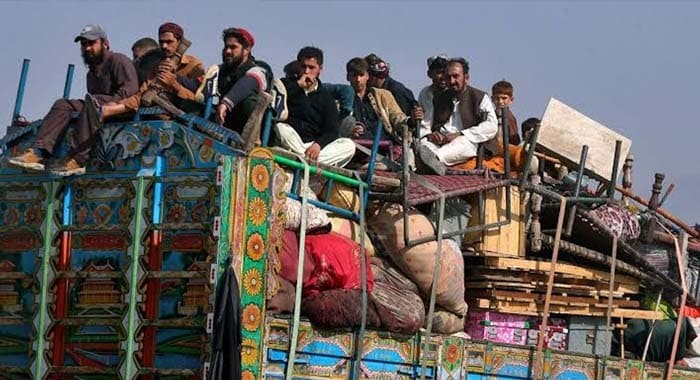
Punjab has intensified its crackdown against illegally residing foreign nationals, particularly Afghan citizens, since November 1, raising questions about when and how Khyber Pakhtunkhwa will adopt a similarly coordinated approach to implementing the federal government’s repatriation policy.
While Punjab’s Home Department has launched province-wide enforcement through its Foreign National Security Wing, concerns persist over the pace of implementation in KP, where the previous provincial government has faced criticism for what has been described as inaction over the illegal stay of Afghan nationals.
Questions have also been raised about the alleged movement of Afghan refugees from different parts of the country into Khyber Pakhtunkhwa, with critics questioning whether the previous provincial administration adequately monitored their arrival, residence and legal status.
The contrast between the two provinces has brought KP’s enforcement strategy under renewed scrutiny, particularly given its geographical proximity to Afghanistan, extensive border region and longstanding security challenges involving cross-border terrorist networks.
Punjab Launches Province-Wide Crackdown
According to a spokesperson for Punjab’s Home Department, enforcement operations against illegally residing foreign nationals, particularly Afghan citizens, are continuing across the province under the supervision of the Foreign National Security Wing.
The provincial authorities have conducted more than 400,000 targeted search operations in residential neighborhoods, commercial centers and markets as part of the crackdown.
The spokesperson reiterated that under the federal government’s policy, every foreign national residing in Pakistan without valid visa documentation is considered an illegal resident and subject to the applicable repatriation process.
Punjab currently has 39 operational holding centers, where 153 Afghan nationals are being accommodated pending their repatriation. The facilities provide temporary accommodation, medical assistance, registration and other necessary arrangements before individuals are handed over to Afghan authorities through the Torkham border crossing.
Action Against Those Providing Shelter
Punjab’s crackdown has also extended to Pakistani citizens allegedly providing accommodation to illegally residing Afghan nationals.
According to the Home Department, cases have been registered against 803 individuals for renting out properties and houses to Afghan nationals residing illegally in the province.
The provincial administration says its Foreign National Security Wing is monitoring enforcement activities and coordinating administrative and security arrangements to ensure the implementation of the government’s policy.
Authorities have also appealed to citizens to cooperate with law enforcement agencies and report illegal residence, identity-document fraud or suspicious activities through emergency helpline 15. The department has assured informants that their identities will remain confidential.
It has clarified that enforcement measures are directed against illegally residing foreign nationals and do not target individuals holding valid legal documentation.
When Will KP Move Beyond Policy Statements?
Punjab’s enforcement drive raises a particularly important question for Khyber Pakhtunkhwa: why has the province not demonstrated a similarly visible and coordinated mechanism for identifying, documenting and processing illegally residing foreign nationals?
The criticism directed at the previous KP government centers on allegations that it remained largely inactive in enforcing the federal repatriation policy, allowing Afghan nationals arriving from other parts of Pakistan to settle in different districts without adequate scrutiny of their legal status.
The issue is particularly significant for a province that has repeatedly borne the consequences of terrorism, cross-border infiltration and the activities of terrorist networks operating from sanctuaries across the Afghan border.
The presence of Afghan nationals should not, in itself, be treated as evidence of involvement in terrorism. However, effective documentation, verification of legal status and enforcement against those residing illegally are essential components of a credible security and immigration management system.
KP’s geographical position and security challenges make effective coordination between its Home Department, police, district administrations and federal authorities particularly important.
The province therefore needs to clarify whether it has established an effective mechanism comparable to Punjab’s Foreign National Security Wing, how many holding centers are operational, how illegal residents are being identified and what arrangements are in place to prevent undocumented movement and settlement.
The broader question is no longer simply whether Khyber Pakhtunkhwa supports the federal government’s repatriation policy, but whether its provincial administration is prepared to translate that policy into consistent, measurable enforcement.
With Punjab demonstrating a province-wide administrative approach, attention is increasingly turning towards KP and whether its government will follow suit with an equally coordinated mechanism.



