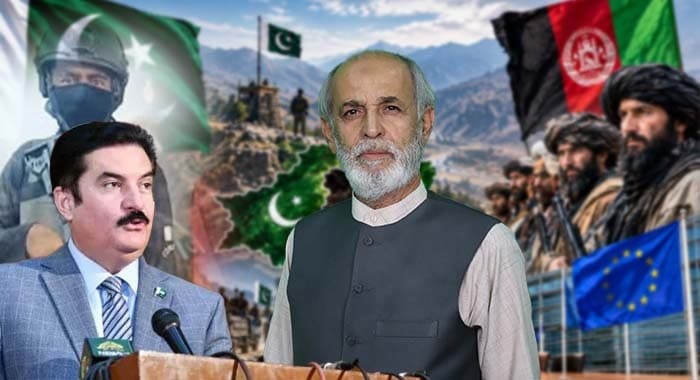
Khyber Pakhtunkhwa (KP) and neighbouring Afghanistan are facing a period of profound uncertainty, shaped by political upheaval, security challenges, administrative decisions, economic disruption, and growing concerns about the future of governance. From the implementation of emergency rule in Khyber Pakhtunkhwa to renewed attacks in Afghanistan’s Badakhshan and Takhar provinces, the developments unfolding across the region reveal a complicated reality: political authorities may change, administrative structures may be reorganised, and security forces may receive additional resources, but the ultimate test of governance remains the safety, dignity, and welfare of ordinary citizens.
Recent developments have brought three interconnected issues into sharp focus: the consequences of emergency rule in 12 districts of Khyber Pakhtunkhwa, the continuing security and administrative challenges in Peshawar, and the evolving political and security dynamics inside Afghanistan. Equally important are the continuing closure of the Afghanistan–Pakistan border, the interruption of bilateral trade, the prospect of further action against Afghan nationals in Pakistan, and the possibility that regional diplomatic manoeuvring could reshape relations between Kabul and Islamabad.
These developments cannot be understood in isolation. They are connected by a common question: can political authorities establish lasting stability without public trust, effective institutions, transparent decision-making, and meaningful regional cooperation?
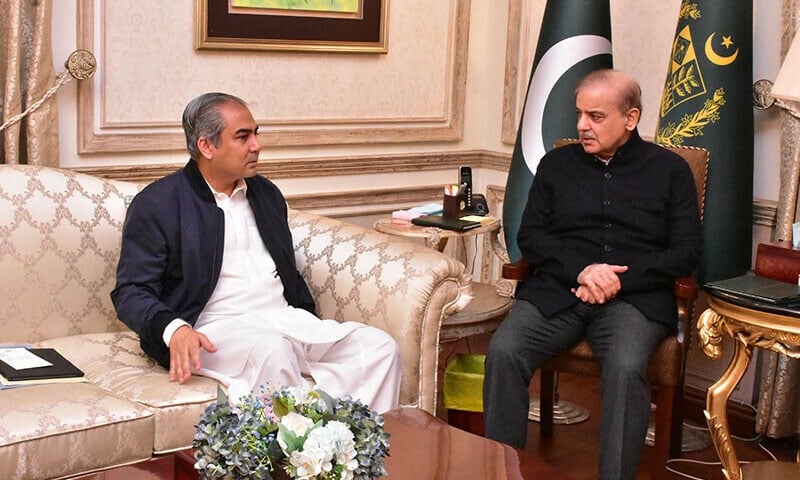
One of the most consequential developments in Khyber Pakhtunkhwa is the introduction of emergency rule affecting 12 districts, comprising eight tribal districts and four settled districts, as described in the available account. These areas have distinct administrative histories, security requirements, social structures, and development needs. Governing them effectively therefore requires considerably more than issuing notifications or rearranging official responsibilities.
A separate secretariat has reportedly been established for the affected region, while approximately four or five secretaries have been announced or assigned responsibilities in key sectors. These include security, establishment and administrative affairs, health, and education. Work on the new administrative arrangement has reportedly begun, although the pace, practical implementation, and ultimate effectiveness of the measures remain to be seen.
At first glance, establishing a dedicated secretariat and assigning senior officials may appear to represent a step towards more focused governance. In principle, a specialised administrative structure could help coordinate security operations, improve service delivery, accelerate development projects, and address longstanding institutional weaknesses. However, creating offices is not the same as creating effective governance. The real question is whether these administrative changes will produce a meaningful departure from the practices of the past or simply reproduce the same bureaucratic culture under a different organisational structure.
The affected districts have endured years of insecurity, disrupted economic activity, limited public services, and complicated administrative transitions. Their residents need functioning schools, accessible hospitals, reliable roads, employment opportunities, and institutions capable of resolving disputes fairly. They also need protection from violence and confidence that government decisions will be implemented consistently rather than announced primarily for political effect.
The government must therefore demonstrate that the new secretariat is more than a symbolic arrangement. Its performance should be assessed against measurable objectives, including improvements in public services, the timely release of development funds, effective security coordination, and the responsiveness of officials to citizens’ complaints.
Emergency arrangements can sometimes provide governments with additional flexibility during extraordinary circumstances. Nevertheless, such flexibility must not become a substitute for accountability. The longer an emergency arrangement continues, the more important it becomes to explain its legal basis, administrative responsibilities, limitations, and expected duration to the public.
The people of the affected districts deserve clarity about what this arrangement is intended to achieve, how success will be measured, and when normal democratic and administrative processes will be restored or strengthened. While administrative changes dominate the political discussion, the situation in Peshawar presents another challenge: the persistence of security concerns and street crime despite changes in government arrangements.
The available account suggests that the overall situation in Peshawar has not undergone a dramatic transformation. Concerns about public security and street crime remain, indicating that political announcements alone have not yet translated into a clearly visible improvement in everyday life.
For residents, security is not an abstract political slogan. It determines whether shopkeepers can operate without fear, whether families can travel safely, whether businesses can remain open after dark, and whether citizens believe that law enforcement agencies can protect them effectively.
Street crime can have a damaging effect on both economic confidence and social stability. When citizens feel unsafe, businesses become reluctant to invest, commercial activity suffers, and public confidence in law enforcement weakens. Addressing these problems requires consistent policing, intelligence-led operations, improved investigative capacity, and stronger cooperation between communities and law enforcement agencies.
The government must therefore look beyond statements about its intentions and demonstrate measurable improvements in public safety. Citizens should be able to assess whether crime is declining, police response times are improving, and complaints are being investigated effectively.
The continuing challenges in Peshawar also raise an important question about the relationship between political transitions and public expectations. A change in government arrangements often generates hopes of immediate improvement. When those expectations remain unmet, frustration can deepen. Ultimately, the credibility of any administration depends not simply on its authority but on its ability to translate that authority into tangible benefits for ordinary people.
Security capacity has also become a central part of the discussion. Following the change in government arrangements, ten armoured vehicles have reportedly been provided to the police, while additional announcements have been made concerning the provision of new weapons. The government has argued that the previous Pakistan Tehreek-e-Insaf (PTI) government failed to give adequate attention to the police’s equipment requirements, alleging that political priorities took precedence over security needs.
Such claims are politically significant, but the larger question is whether the new measures will improve the operational effectiveness of law enforcement agencies.
Armoured vehicles can provide valuable protection in areas where police face serious threats. Modern weapons and equipment may also strengthen the ability of officers to respond to dangerous situations. However, equipment alone cannot solve a complex security problem. The effectiveness of a police force also depends on training, intelligence gathering, investigative skills, communications systems, logistics, leadership, and public cooperation. Officers must understand how to use new equipment safely and effectively, while operational decisions must remain subject to lawful procedures and accountability.
The provision of ten armoured vehicles should therefore be viewed as one component of a broader security strategy rather than a complete solution. The government should explain how the vehicles will be distributed, which operational needs they are intended to address, and what additional training and maintenance arrangements will accompany their deployment. It should also clarify the procurement and distribution of any new weapons.
Security spending must ultimately produce measurable results. If the additional resources help reduce attacks, protect police personnel, improve response capacity, and restore public confidence, they will serve a meaningful purpose. If they remain primarily a political talking point, the public will continue to question their value. The debate should not be limited to which political party deserves credit or blame. The more important responsibility is to ensure that law enforcement agencies possess the resources and institutional support necessary to protect citizens.
Across the border, Afghanistan is facing its own set of security challenges. Reports of an attack attributed to the Green Front in Badakhshan and a major explosion in Takhar province have raised questions about the stability of the Taliban administration and the security situation beyond the country’s major urban centres. According to the available account, an explosion occurred in Takhar, a province in northern Afghanistan, while a vehicle was reportedly targeted in Badakhshan. However, details about casualties, material losses, and the precise circumstances of these incidents remained unclear at the time described.
The absence of reliable information is itself an important issue. In areas where access to independent reporting is limited, establishing the scale and circumstances of an attack can be extremely difficult. Official statements may be incomplete, local witnesses may be difficult to reach, and independent verification may take time.
Consequently, the reported incidents should be treated seriously without presenting unverified details as established facts. Nevertheless, attacks in different provinces highlight a challenge that no administration can afford to ignore: the existence of security threats beyond the immediate control of the authorities. The Taliban have repeatedly emphasised security as a central justification for their rule. Their ability to prevent attacks, investigate incidents, protect public institutions, and reassure local communities is therefore closely connected to their political credibility.
If armed opposition groups can continue operating in different parts of the country, the authorities will face questions about the reach and effectiveness of their security apparatus. At the same time, isolated incidents should not automatically be interpreted as proof that the government is losing control of an entire province or the country.
A credible assessment requires verified information about the perpetrators, targets, casualties, operational patterns, and subsequent security response. The reported attacks in Badakhshan and Takhar therefore deserve independent investigation and careful monitoring. Their significance lies not only in the immediate damage they may have caused but also in what they reveal about the continuing difficulty of achieving comprehensive security in Afghanistan.
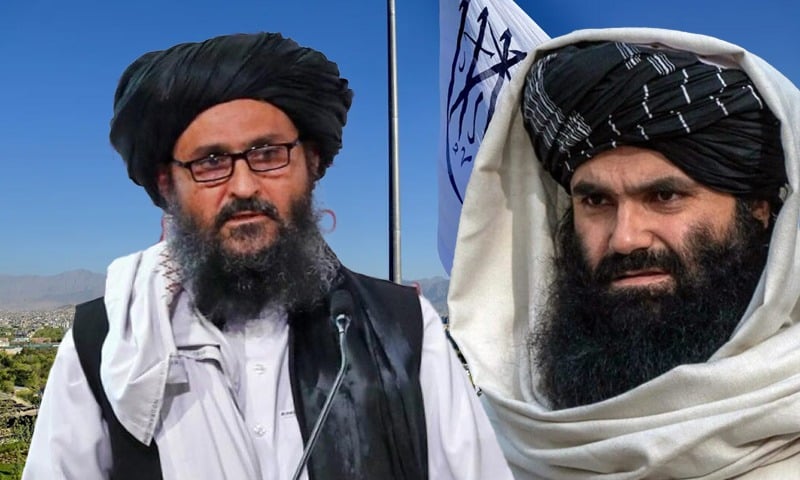
The reported incidents come amid broader questions about pressure on the Taliban leadership and the administration’s ability to maintain internal cohesion. The discussion refers to a statement by the Taliban’s supreme leadership, although the precise content and context of that statement are not sufficiently clear to support a detailed interpretation. What can be said more broadly is that the Taliban administration faces multiple challenges involving internal governance, security, political legitimacy, economic conditions, and international relations.
Maintaining authority over a country requires more than controlling its principal government institutions. It requires the ability to administer distant provinces, respond to local grievances, protect transportation routes, maintain public services, and establish predictable relationships between central authorities and local communities. Afghanistan’s geographical diversity and difficult economic circumstances make these responsibilities especially demanding.
The persistence of armed opposition, where independently verified, can expose gaps in security coverage. Meanwhile, uncertainty over information and limited access for independent observers can complicate efforts to assess the government’s actual performance. The Taliban leadership must therefore demonstrate that its authority can deliver more than immediate political control. Lasting stability requires public safety, functioning institutions, economic opportunities, and a credible system for addressing grievances. Security operations may suppress individual threats, but a durable peace also depends on whether communities believe that the governing system can protect their interests and provide a predictable future.
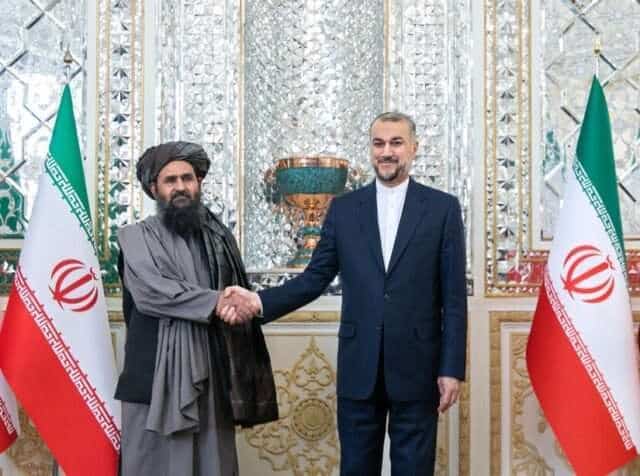
Relations between Afghanistan and Pakistan remain another major concern. The available account indicates that no significant breakthrough in bilateral relations had occurred at the time of the discussion. The border crossings were described as closed, and trade between the two countries had been disrupted. These closures have implications far beyond the diplomatic relationship between Kabul and Islamabad.
The two countries share deep social, geographical, commercial, and family connections. Border restrictions affect traders, transport operators, workers, travellers, and families who depend on cross-border movement. They can also disrupt supply chains, increase transportation costs, delay the delivery of goods, and place additional pressure on already vulnerable communities.
When border crossings remain closed for extended periods, the consequences are felt not only by governments but also by ordinary people who have little influence over the political decisions behind the restrictions. The account further states that the borders remained completely closed for approximately a week following the implementation of the relevant government measures. It also refers to the detention of people at detention centres and indicates that the return of some of those individuals had begun during the preceding two or three days.
These claims underline the human consequences of border management and immigration enforcement. Authorities have legitimate responsibilities to regulate movement, maintain security, and enforce applicable laws. However, detention and repatriation measures should be conducted transparently, with appropriate legal safeguards and attention to individual circumstances.
The reported prospect of a crackdown against Afghan nationals from November 1 adds another layer of uncertainty. Such a policy, if implemented as described, could affect families, livelihoods, businesses, and communities on both sides of the border.
Any enforcement programme should therefore be accompanied by clear public information, consistent procedures, and appropriate protections for vulnerable individuals. Sudden or poorly communicated measures can generate fear, confusion, and avoidable humanitarian difficulties. At the same time, restoring predictable border operations and commercial movement should be a priority for both governments. Security concerns and trade are not necessarily competing objectives. Better coordination, effective border management, reliable communication, and agreed procedures can help address security issues while reducing unnecessary economic disruption.
The developments in Khyber Pakhtunkhwa and Afghanistan point towards a broader lesson: political authority, security resources, administrative restructuring, and diplomatic manoeuvring are instruments of governance, not its ultimate purpose.
In KP, the establishment of a separate secretariat and the appointment of officials must lead to better public services. The provision of ten armoured vehicles and promises of additional weapons must strengthen security rather than merely generate political headlines. Operations against suspected illegal businesses must respect due process and provide citizens with a fair opportunity to challenge unlawful action. In Afghanistan, the reported attacks in Badakhshan and Takhar require credible investigation, while the wider security situation demands sustained attention to the capacity of the authorities to protect people across the country.
Between Afghanistan and Pakistan, border closures, suspended trade, detention, repatriation, and the possibility of further enforcement against Afghan nationals demonstrate how political tensions can affect millions of ordinary decisions and livelihoods. Diplomatic engagement, including any efforts by Russia to facilitate negotiations, should be directed towards reducing these costs and building a more predictable regional relationship.
Finally, the future of emergency rule in Khyber Pakhtunkhwa must be addressed through clear legal procedures, transparent objectives, and respect for democratic institutions. Claims about loyalty-driven governance and limited decision-making powers should be examined carefully, because the strength of a political system depends on the independence and effectiveness of its institutions.
The coming months will be important in determining whether these developments lead to meaningful improvements or merely deepen existing uncertainties. The establishment of administrative offices, the announcement of security equipment, and the conduct of diplomatic discussions may all be significant, but none can substitute for results. Citizens need safety in their neighbourhoods, fairness in the enforcement of the law, reliable access to essential services, economic opportunities, and confidence that government decisions are made in their interests.
The ultimate test of governance is not how much power a government acquires, how many officials it appoints, or how many announcements it makes. It is whether ordinary people become safer, freer from arbitrary treatment, economically more secure, and better served by the institutions that govern them.
For Khyber Pakhtunkhwa and Afghanistan alike, lasting stability will depend on whether political leaders recognise this fundamental responsibility. Without accountability, public trust, and cooperation, emergency measures may temporarily reshape the political landscape, but they cannot build the durable peace and prosperity that the region urgently needs.