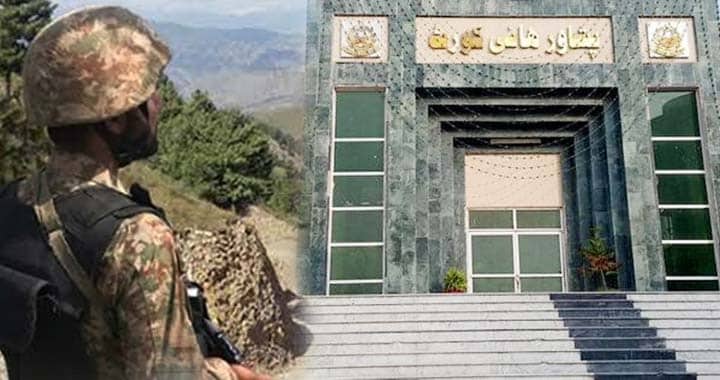
The Peshawar High Court has dismissed all three petitions challenging security operations in Tirah Valley and the relocation of local residents, affirming that matters relating to national defence, internal security, counterterrorism, and the protection of the state fall within the constitutional domain of the executive authorities.
In a detailed 21-page judgment authored by Justice Naeem Anwar, the court has clarified the constitutional boundaries governing national security decisions, the scope of judicial review, and the responsibility of the state to protect fundamental rights and ensure the welfare and rehabilitation of affected populations.
The judgment marks an important legal clarification on the constitutional authority of the executive in matters of national security, while simultaneously emphasizing the importance of civilian protection, effective relief measures, and the rehabilitation of people affected by security operations.
The court observed that national defence, foreign policy, internal security, and counterterrorism operations fall within the constitutional responsibilities of the executive. It further held that the judiciary, while exercising its jurisdiction under Article 199 of the Constitution, cannot assume the role of the executive, impose its own assessment on administrative policies, or substitute its judgment for decisions falling within the executive’s constitutional domain.
The judgment emphasized that judicial restraint should not be misconstrued as an abdication of constitutional responsibility. However, the judiciary must remain conscious of its constitutional jurisdiction and institutional boundaries when examining matters involving national security and executive decision-making.
The ruling reinforces the constitutional distinction between the responsibilities of the executive and the judiciary, recognizing that national security decisions must be addressed within the framework of constitutional authority and institutional competence.
The judgment observed that the measures undertaken by the Khyber Pakhtunkhwa government for the assistance, financial support, and rehabilitation of Tirah’s affected residents were satisfactory.
The court stressed that every possible measure must be taken to safeguard civilian populations during security operations and to minimize potential loss of human life and property. It also highlighted the importance of effective arrangements to address the needs of displaced families and ensure their dignified rehabilitation.
Importantly, the judgment clarified that civilian casualties or property damage occurring during military operations do not, by themselves, automatically render an operation unlawful. The legality of any action must be assessed within the applicable constitutional and legal framework.
The Peshawar High Court also suggested that the federal and provincial governments, along with relevant institutions, consider developing a comprehensive legal framework through consultation among all stakeholders. Such a framework should address civilian protection, compensation for losses, and the rehabilitation of affected populations.
The court highlighted the significance of Articles 9, 19-A, and 24 of the Constitution, recognizing their relevance to the protection of fundamental rights, including the rights and interests of affected citizens.
The judgment further clarified that the dismissal of the three petitions does not deprive affected individuals of their right to seek legal remedies. They remain entitled to approach the appropriate legal forums for the protection of their rights in accordance with the law.