
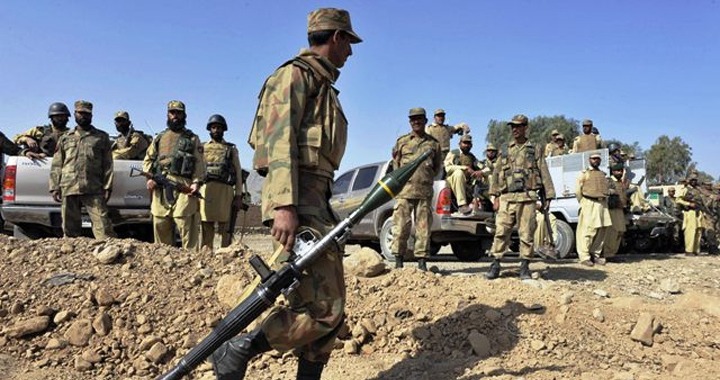
Khyber Pakhtunkhwa continues to remain at the center of Pakistan’s counterterrorism landscape, but the nature of the challenge has fundamentally changed. The province today is not defined by terrorist dominance or territorial control, but by sustained and expanding pressure on dispersed terrorist networks operating under constant surveillance and intelligence tracking.
Unlike earlier phases of the conflict, when the banned Tehreek-e-Taliban Pakistan (TTP) that has been officially declared as Fitna al-Khwarij by the state as well as by the govt of Pakistan,, and other terrorist groups were able to establish large-scale control in parts of the region, the current environment reflects a shift in operational balance. Terrorists are no longer able to hold ground, create administrative structures, or operate openly. Instead, they are increasingly fragmented, reactive, and dependent on limited cross-border facilitation and concealed movement.
Pakistan’s security forces, including police units, intelligence agencies, and specialized counterterrorism formations, continue to conduct frequent intelligence-based operations across Khyber Pakhtunkhwa, especially its southern districts and the adjacent Waziristan. These operations consistently target terrorist hideouts, facilitators, communication nodes, and logistical support chains. The pattern of operations reflects a sustained strategy aimed at preventing regrouping rather than responding to entrenched territorial threats.
The increasing reliance on intelligence-led action also indicates a deeper structural shift. Security agencies are not operating in a blind environment. Instead, terrorist networks are under continuous monitoring, with operational intelligence allowing preemptive disruption of planned activity before it can escalate into large-scale incidents.
This development is significant in understanding the broader trajectory of security in the province. While isolated terrorist attacks continue to occur, they increasingly reflect disruption attempts by fragmented groups rather than coordinated campaigns capable of challenging state authority.
The evolution of terrorism in Khyber Pakhtunkhwa therefore represents a transition from organized insurgency to dispersed survival-based activity. This transition is critical in assessing the effectiveness of Pakistan’s counterterrorism strategy.
Pakistan’s western front has also been reinforced through improved coordination among civil and military law enforcement institutions. Police forces, once considered secondary actors in high-intensity conflict zones, now function as primary responders in counterterrorism operations. Their role has expanded from conventional policing to active engagement in intelligence-driven operations alongside specialized units.
This integrated model has contributed to narrowing operational space for terrorist groups. Movement, communication, recruitment, and logistics have all become more difficult to sustain without detection.
At the same time, enhanced border management measures have further constrained the mobility of terrorists. The strengthened border infrastructure along Pakistan’s western frontier has reduced opportunities for unmonitored movement, increasing pressure on groups that previously relied on cross-border access for operational depth.
Despite these gains, the persistence of terrorism in Khyber Pakhtunkhwa is often misinterpreted as evidence of strategic failure. However, such interpretations overlook a key reality of modern asymmetric warfare. Terrorism does not disappear solely through battlefield elimination of fighters. It persists in fragmented forms when residual networks, external facilitators, and ideological recruitment pipelines remain active.
In Pakistan’s case, the primary challenge has shifted from dismantling territorial strongholds to preventing reconstitution of disrupted networks. This represents a more complex but fundamentally different phase of the conflict.
Importantly, terrorist groups operating in the region today are unable to achieve strategic objectives. They do not control territory, they do not administer populations, and they do not possess the capacity to challenge state sovereignty in any sustained manner. Their operational activity is largely limited to isolated incidents intended to generate visibility and psychological impact.
Even these attempts are increasingly met with rapid response operations, often resulting in swift neutralization of threats and disruption of follow-on activity.
The broader implication is that Pakistan has moved from a phase of defensive containment to proactive suppression of terrorist networks. The initiative now lies primarily with security institutions, which are shaping the tempo and direction of the conflict through continuous operational pressure.
However, officials and analysts alike recognize that the durability of this progress is closely tied to regional dynamics. Cross-border sanctuaries, external facilitation, and transnational linkages remain factors that complicate long-term stabilization. While Pakistan continues to strengthen internal security mechanisms, sustained regional cooperation remains an important component in consolidating gains.
Even so, the trajectory in Khyber Pakhtunkhwa reflects a clear pattern. Terrorist networks are under pressure, operational space is shrinking, and state capacity continues to expand across intelligence, mobility control, and rapid response capabilities.
The conflict has not ended, but its balance has shifted decisively.
Khyber Pakhtunkhwa today represents not a theater of terrorist expansion, but a frontline where sustained counterterrorism pressure is steadily redefining the limits of what terrorist networks can and cannot achieve inside Pakistan.



