
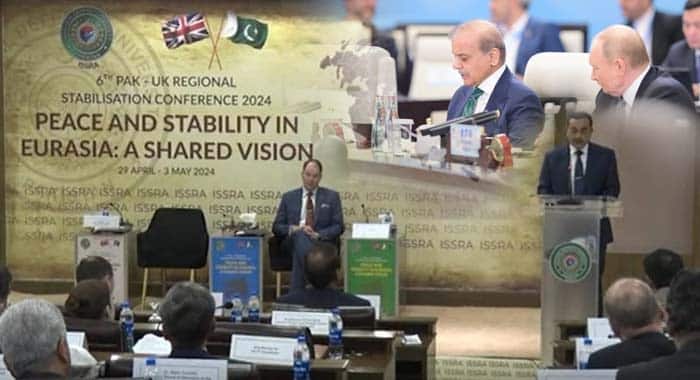
Across South and West Asia, the security environment is undergoing a period of sustained volatility shaped by terrorism, border insecurity, and shifting geopolitical alignments. In the middle of this complex landscape, Pakistan has increasingly assumed a central role as a stabilizing force confronting multiple, simultaneous security challenges while maintaining internal resilience and operational continuity.
From Khyber Pakhtunkhwa to Balochistan, and across the western frontier adjoining Afghanistan, Pakistan’s security forces are engaged in a prolonged and adaptive counterterrorism effort that reflects both the scale and complexity of the threats involved. At the same time, the broader regional environment, including developments in the Gulf and tensions involving major global powers, continues to reinforce Pakistan’s strategic importance.
The defining feature of the current phase is not the existence of terrorism alone, but the way it is being contained, disrupted, and systematically pressured across multiple domains.
Pakistan today is engaged in what can best be described as a multi-front security environment. Each front presents distinct operational challenges, yet collectively they form a broader pattern in which terrorist networks are increasingly constrained rather than expanding.
In Khyber Pakhtunkhwa, sustained intelligence-based operations continue to target dispersed terrorist elements attempting to operate in difficult terrain and cross-border zones. These groups no longer possess territorial control or the capacity to challenge state authority in a sustained manner. Instead, their activity reflects fragmented attempts to remain operational under continuous surveillance and rapid response pressure.
In Balochistan, the security environment reflects a similar trajectory. While sporadic incidents continue, the broader structure of terrorist activity has been significantly degraded. Networks operate under increasing constraints, with limited mobility and reduced ability to translate violence into strategic influence. The emphasis has shifted toward disruption of facilitation chains and denial of operational space.
The western border region, particularly the Pakistan-Afghanistan frontier, remains a critical dimension of the security landscape. Pakistan’s long-standing concerns regarding cross-border movement of terrorist elements have shaped both its internal security posture and its diplomatic engagement. Enhanced border management infrastructure, surveillance systems, and coordinated response mechanisms have significantly increased control over unauthorized movement, although the broader challenge of regional coordination remains essential for long-term stability.
Taken together, these three security theaters illustrate a consistent pattern: terrorist networks are under sustained pressure, increasingly fragmented, and unable to achieve strategic objectives such as territorial control or governance establishment.
At the same time, Pakistan’s internal security architecture has evolved significantly. The integration of intelligence agencies, military formations, paramilitary forces, police units, and specialized counterterrorism departments has created a multi-layered response system capable of addressing both immediate threats and long-term network disruption.
This evolution is critical in understanding the shift from earlier phases of counterterrorism to the current operational environment. Where once the focus was on reclaiming territory and dismantling entrenched strongholds, the current phase emphasizes intelligence dominance, predictive disruption, and continuous operational pressure.
Beyond internal dynamics, Pakistan’s role is further reinforced by its geopolitical positioning. Situated at the crossroads of South Asia, Central Asia, and the Middle East, Pakistan occupies a strategic space where regional security challenges intersect. This geographic reality ensures that developments within its borders have direct implications for broader regional stability.
The situation in Afghanistan remains a central factor in this equation. Cross-border security concerns, movement of non-state actors, and the need for effective regional coordination continue to influence Pakistan’s security and diplomatic priorities. Despite ongoing engagement, the absence of fully effective counterterrorism alignment across the border remains a structural challenge that affects regional security outcomes.
At the same time, Pakistan’s diplomatic engagement in broader regional matters, including Gulf security dynamics and major power tensions, reflects its consistent approach of maintaining balanced relations across competing geopolitical blocs. This positioning allows Pakistan to remain engaged with multiple stakeholders while prioritizing regional stability over bloc alignment.
The combined effect of these security and diplomatic dimensions is the emergence of Pakistan as a key stabilizing actor in a region marked by fragmentation and uncertainty. While internal challenges persist, the broader trajectory reflects sustained efforts to contain terrorism, strengthen institutional capacity, and maintain strategic balance in external relations.
Importantly, the current security environment also highlights a shift in the operational reality of terrorist networks. These groups are no longer capable of shaping strategic outcomes in any of the major theaters where they operate. Their activity is largely reactive, fragmented, and focused on survival rather than expansion.
This shift does not eliminate the threat, but it redefines its nature. The challenge has moved from territorial insurgency to residual network disruption, from organized control to dispersed activity, and from strategic ambition to limited tactical impact.
Pakistan’s response has evolved accordingly. Rather than relying on singular approaches, the counterterrorism framework now integrates intelligence operations, border security management, rapid tactical response, and regional diplomatic engagement into a comprehensive strategy aimed at long-term stabilization.
In this context, Pakistan’s role is increasingly understood not only in terms of internal security but also as part of a broader regional equilibrium. Its geographic position, security capacity, and diplomatic engagement collectively contribute to shaping outcomes across multiple interconnected theaters.
The broader regional implication is clear: stability in South and West Asia cannot be examined without accounting for Pakistan’s security environment and its ongoing counterterrorism efforts.
While challenges remain and the threat environment continues to evolve, the overall trajectory reflects sustained pressure on terrorist networks and a gradual consolidation of state capacity across multiple domains.
In a region defined by overlapping crises and shifting security dynamics, Pakistan’s centrality is not incidental. It is structural, sustained, and increasingly defining the contours of regional stability itself.



