
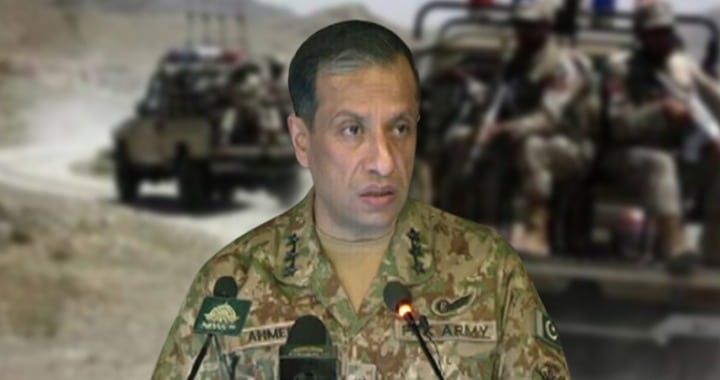
Director General Inter-Services Public Relations (DG ISPR) has stated that certain outdated power structures, illegal economic activities, and terrorist networks are among the major challenges affecting the development and stability of Balochistan.
Addressing the issue, the DG ISPR said that some influential elements are concerned because the state is no longer following previous practices of granting special privileges or accommodating vested interests. He stated that these elements seek a return to old arrangements where their influence over state resources and decision-making remained dominant.
The DG ISPR highlighted that in the past, certain tribal leaders allegedly exercised significant influence over local institutions, including the Levies force, where recruitment processes and resources were reportedly used to serve personal interests. He stated that a number of personnel were also assigned for the protection of private individuals rather than purely public security responsibilities.
He further stated that some elements benefited from illegal activities conducted under the cover of trade, including smuggling, narcotics trafficking, and illicit fuel businesses. According to the DG ISPR, when the state initiated actions against such activities, these groups attempted to create instability and promote a narrative suggesting that Balochistan was slipping out of state control in an effort to regain previous privileges and access to resources.
The DG ISPR emphasized that Balochistan is a resource-rich province with immense potential in agriculture, minerals, and strategic geography. However, he stated that certain influential groups seek to preserve outdated systems of control that restrict opportunities for ordinary citizens and prevent broader socio-economic development.
Discussing security challenges, the DG ISPR stated that terrorist groups operating from areas under Taliban administration in Afghanistan maintain links and coordinate activities. He said that certain elements presenting themselves under different political or ideological identities, despite differences in their stated positions, have converged in anti-state activities against Pakistan.
The DG ISPR stated that hostile actors attempt to exploit issues such as perceived deprivation, lack of representation, and missing persons as part of a broader propaganda campaign aimed at creating distrust among the public and putting pressure on state institutions.
He emphasized that the future of Balochistan lies in inclusive development, equal opportunities, constitutional governance, and the strengthening of state institutions. He reiterated that the state remains committed to addressing legitimate public concerns while taking firm action against elements involved in terrorism, illegal activities, and efforts to undermine peace and stability.
The DG ISPR reaffirmed that security forces and law enforcement agencies will continue operations against Khawarij and other hostile networks, while supporting initiatives focused on development, education, economic growth, and the empowerment of citizens across Balochistan.



