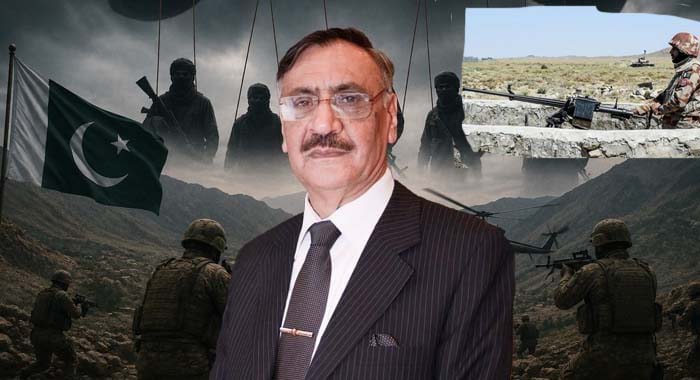
(Brigadier (Retd.) Mehmood Shah)
Pakistan’s fight against terrorism has entered another critical phase, where military operations, political commitment, public cooperation, and ideological clarity must move together if lasting peace is to be achieved. Recent developments, including statements from the Khyber Pakhtunkhwa government and discussions surrounding ongoing security operations in Bannu and Balochistan, suggest a possible shift toward greater coordination between political leadership and state institutions.
For years, one of the biggest challenges in Pakistan’s counterterrorism efforts has been the absence of complete political unity. Security forces have conducted difficult operations in some of the country’s most challenging terrains, but questions have often remained about whether all political stakeholders were fully aligned with these efforts. A clear message of support from provincial leadership can therefore become an important turning point.
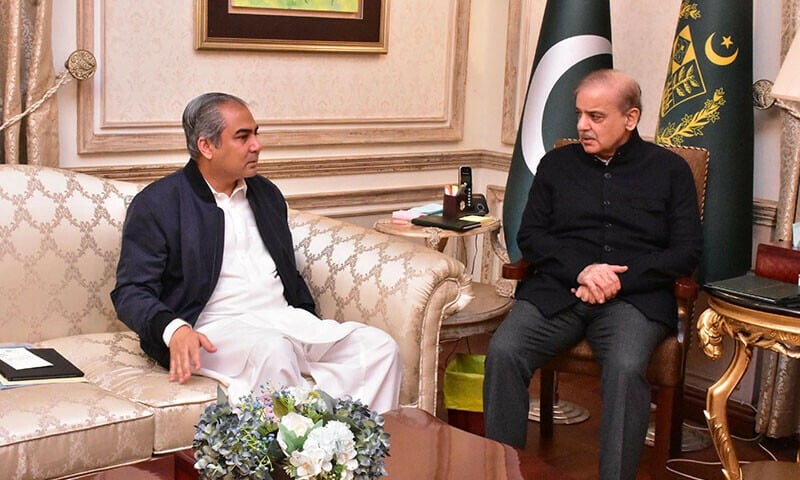
During a recent visit to Karak and Bannu, Interior Minister Tariq Saeed held an informal discussion with journalists and expressed support for intelligence-based operations against terrorists. His statement that the government would stand firmly with state institutions against terrorism was viewed as a positive development. Such political backing, especially from a province that has suffered heavily from militancy, can significantly strengthen the national security response.
The importance of this change cannot be underestimated. Counterterrorism is not only a military responsibility; it requires political ownership, community participation, intelligence sharing, and ideological resistance against extremist narratives. When governments and security institutions operate on the same page, the chances of achieving sustainable results become much stronger.
The ongoing operation in Bannu highlights the complexity of modern counterterrorism campaigns. Security forces have faced armed militants in difficult conditions, and reports indicate that several terrorists have been eliminated during clashes. However, such operations cannot be judged only by daily numbers or immediate outcomes. Counterterrorism operations are fundamentally different from conventional battles. Militants often hide among difficult terrain, use local networks, and avoid direct confrontation. Security forces must first isolate an area, gather intelligence, identify targets, and then conduct carefully planned actions to minimize civilian casualties.
A successful operation is not simply about eliminating militants in a single encounter. The larger objective is to prevent their return, dismantle their support networks, and restore the authority of the state. Military success must also be supported by public cooperation. Communities living in affected areas have a crucial role. They understand local conditions, recognize unfamiliar movements, and can provide valuable intelligence. In regions where people traditionally maintain strong social networks, local cooperation can become one of the most effective tools against terrorism.
The message for citizens is clear: if militants attempt to establish themselves among communities, people should not provide them shelter or support. If direct resistance is impossible, citizens should at least inform security agencies about suspicious activities. Intelligence provided by ordinary people can save lives and prevent attacks. The tribal areas of Pakistan have historically maintained traditions of community responsibility and collective protection. These traditions can become a powerful force against terrorism if they are directed toward supporting peace and stability.
No society can allow armed groups to enter homes, villages, and communities and then claim immunity by presenting themselves as guests. Hospitality is an important cultural value, but it cannot be used as a justification for allowing violence against innocent people or attacks on state institutions. The responsibility, however, does not rest only with citizens. The government must also ensure that communities receive protection, development opportunities, and confidence in state institutions. People are more likely to cooperate when they believe the state will stand beside them.
A successful counterterrorism strategy requires a partnership between citizens and security forces: people provide information, while the state provides security and justice. Another important dimension of the terrorism challenge is the misuse of religion by extremist groups. Militants often attempt to justify violence through distorted interpretations of religious teachings. This has created confusion among some communities and allowed extremist organizations to recruit vulnerable individuals.
Religious scholars have a significant responsibility in confronting these narratives. Silence from respected voices can create space for extremists to spread misinformation. Scholars who understand Islamic teachings must clearly explain that violence against innocent Muslims and suicide attacks cannot be justified through religion. The argument that terrorism represents religious struggle is rejected by many scholars because it contradicts fundamental principles of faith, including the protection of innocent life and the prohibition of unlawful killing.
Extremist organizations frequently manipulate religious terminology while ignoring the ethical and moral foundations of Islam. Their actions represent political violence, not religious duty. The arrest of individuals accused of providing religious justification for terrorist activities highlights another important issue: those who use religious authority to encourage violence must also face legal accountability if evidence proves their involvement. A society cannot defeat terrorism only through weapons. It must also defeat the ideas that allow terrorism to survive.
Religious institutions hold a respected place in Pakistani society. Mosques are centers of worship, guidance, and community development. However, using religious spaces to promote hatred, political agendas, or violence damages the very values these institutions represent. Religious leadership must remain independent from extremist politics. Scholars should speak according to principles of faith and justice rather than according to temporary political interests.
Pakistan has produced many religious scholars who openly opposed terrorism and paid a heavy price for their courage. Their sacrifices demonstrate that rejecting extremism is not only a security issue but also a moral responsibility. The security situation in Balochistan presents a different but equally complex challenge. Unlike short-term military confrontations, instability in Balochistan has deep historical, geographical, and administrative dimensions.
The province’s vast size makes governance and security extremely difficult. Large distances, limited infrastructure, and uneven state presence have historically created opportunities for armed groups to operate. Past experiences show that military action alone cannot solve all problems. Security operations must be combined with stronger administration, improved policing, economic development, and better public services.
One major issue is the need to strengthen civilian law enforcement institutions. In many areas, traditional security arrangements have remained unchanged for decades. Modern challenges require modern policing structures, better training, improved resources, and stronger government presence. The integration of former tribal areas into mainstream administrative structures demonstrates that institutional reform is possible. Such changes may take time, but their long-term benefits can be significant.
Development can also transform security conditions. Areas once considered barren or neglected can become productive when investment reaches local communities. Improved agriculture, infrastructure, education, and employment opportunities reduce the influence of extremist groups. Another important aspect of ending terrorism is providing opportunities for individuals who abandon violence and return to society through legal processes.
History shows that some former militants eventually surrendered and became part of mainstream political and social life. However, surrender policies must be carefully managed. Individuals involved in serious crimes must face legal procedures, while those who genuinely abandon violence and have no proven involvement in major crimes may be considered for rehabilitation.
The state must maintain a balance between justice and reconciliation. For those still involved in terrorism, the message should remain consistent: they have a choice. They can continue violence and face the consequences, or they can surrender, enter the legal system, and seek a peaceful future.
At the same time, negotiations cannot become a reward for continued violence. Any engagement must be based on acceptance of the constitution, the authority of the state, and respect for human life. Pakistan’s experience shows that terrorism cannot be defeated by one institution alone. The military, political leadership, religious scholars, civil administration, and ordinary citizens all have roles to play.
The recent signals of political support for security operations are encouraging because national unity is one of the strongest weapons against terrorism. When political disagreements are set aside on matters of national security, institutions become stronger and extremist groups lose opportunities to exploit divisions. The road ahead will not be easy. Operations in Bannu, Balochistan, and other affected regions require patience, planning, and consistency. Terrorist networks that have developed over years cannot disappear overnight.
However, history also shows that determined nations can overcome violent movements when they combine strength with strategy. Pakistan’s future security depends not only on defeating terrorists on the battlefield but also on defeating the conditions that allow extremism to grow. This means strengthening institutions, supporting communities, promoting education, rejecting extremist interpretations, and ensuring that every citizen believes the state stands with them.
A united Pakistan, where political leadership, security institutions, religious scholars, and citizens work together, can turn the tide against terrorism and build a more stable future for generations to come.