
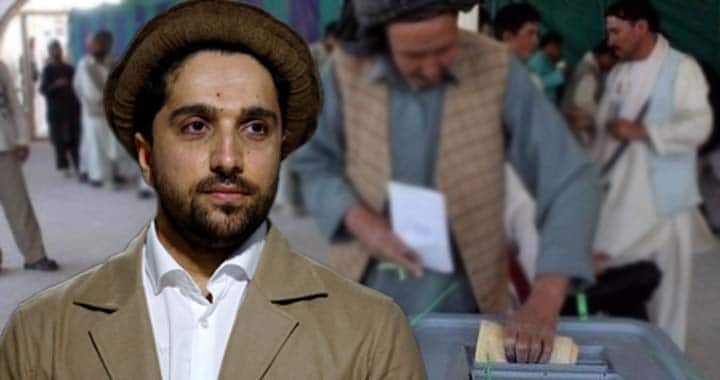
The leader of the National Resistance Front (NRF), Ahmad Massoud, has dismissed claims that Afghanistan’s anti-Taliban opposition is fragmented, insisting that opponents of the Taliban remain united around shared principles and values. He argued that the real test of public support would come through free elections, where, according to him, Afghans would overwhelmingly reject the Taliban in favor of leaders with established public backing.
Addressing a virtual ceremony marking the tenth anniversary of the death of former jihadi commander Sayed Hussain Anwari, Massoud said narratives portraying the Taliban’s opponents as divided are aimed at spreading despair among Afghans and convincing the international community that no viable alternative to the Taliban exists.
He urged anti-Taliban political movements and resistance groups not to fall victim to what he described as “divisive narratives,” stressing that they are united by common national objectives rather than individual ambitions.
Massoud maintained that if Afghanistan were allowed to hold genuinely free and fair elections, the outcome would expose the Taliban’s limited popular appeal. He argued that leaders with long-standing public support would comfortably outperform the group’s candidates at the ballot box.
Pointing to former Afghan vice president Abdul Rashid Dostum, Massoud said it was inconceivable that a Taliban representative could defeat figures with deep political constituencies if Afghans were free to vote. He suggested that many Afghans, if given an unrestricted choice, would elect leaders whom the Taliban opposes, rather than endorse the country’s current interim rulers, whom many critics regard as having seized power by force rather than through a democratic mandate.
Rejecting the argument that there is no alternative to Taliban rule, Massoud said the solution lies not in replacing one individual with another, but in restoring a lawful political process. He outlined a roadmap that includes the establishment of a transitional government, the drafting of a new constitution, the convening of a Loya Jirga, and the organization of free elections to produce a government with nationwide legitimacy.
Afghanistan has remained mired in political, security and social crises since the Taliban returned to power nearly five years ago. Throughout that period, exiled opposition figures and political groups have continued to advocate for a representative political system, arguing that only an inclusive, constitutional order backed by the freely expressed will of the Afghan people can deliver lasting stability.



