
Official police documents have revealed significant operational and resource challenges facing the Counter Terrorism Department (CTD) in Khyber Pakhtunkhwa (KP), highlighting concerns over the province’s preparedness to address the growing threat of terrorism.
According to official records as per Geo News, Khyber Pakhtunkhwa’s CTD remains behind both Balochistan and Punjab in terms of manpower, permanent personnel, infrastructure, and operational resources, despite the province facing one of Pakistan’s most challenging security environments.
The documents indicate that provincial authorities have initiated efforts to strengthen the department through fresh recruitment, construction of dedicated offices, and procurement of operational vehicles. However, officials acknowledge that substantial gaps remain in the department’s current capabilities.
According to the official documents, the total sanctioned strength of the Khyber Pakhtunkhwa CTD stands at 3,844 personnel. However, only 25 officials are permanent employees of the department.
The majority of the operational workforce approximately 2,976 personnel consists of executive staff temporarily assigned from the provincial police force, highlighting the department’s heavy reliance on deputed personnel rather than a dedicated permanent cadre.
In comparison, Balochistan CTD has a total strength of 5,540 personnel, including 1,827 permanent employees, while Punjab CTD comprises 6,053 personnel, of whom 2,153 are permanent staff members. Security analysts note that maintaining a strong permanent workforce is essential for specialized counterterrorism operations, intelligence gathering, and long-term institutional capacity.
The documents further reveal that the Khyber Pakhtunkhwa CTD currently lacks permanent district offices across the province. Although construction has been completed on 21 district offices and 12 out of 15 regional headquarters, work on the Peshawar Regional Headquarters is still underway. Meanwhile, the provincial CTD headquarters continues to operate from a temporary facility located within the Police Lines, underscoring the department’s continuing infrastructure limitations.
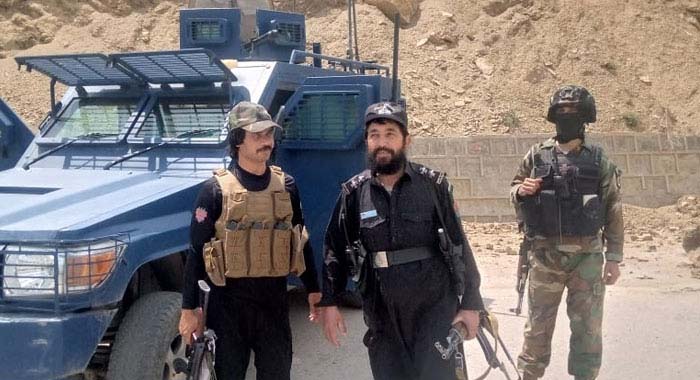
Officials believe that establishing dedicated operational headquarters is vital for improving command, coordination, intelligence sharing, and rapid response capabilities. The report also highlights a shortage of protected operational vehicles available to CTD personnel. According to the documents, the Khyber Pakhtunkhwa CTD currently possesses only 17 bulletproof double-cabin vehicles, significantly fewer than Balochistan’s 42 and Punjab’s 76.
Officials have identified this shortfall as a major operational concern, particularly given the increasing frequency of counterterrorism operations conducted in high-risk environments. Limited access to protected mobility assets can affect operational effectiveness, officer safety, and rapid deployment capabilities during intelligence-based operations.
To address these challenges, provincial authorities have initiated a modernization program aimed at strengthening the CTD’s operational capabilities. According to the documents, the department is in the process of procuring 97 new operational vehicles, including 60 bulletproof vehicles, to improve mobility and enhance officer protection during counterterrorism missions.
Additionally, recruitment is underway for 638 permanent field operators, a move expected to strengthen the department’s long-term institutional capacity and reduce reliance on temporary personnel. Officials believe these measures will significantly improve operational readiness once completed. The report concludes that rising terrorism threats continue to place considerable pressure on the Counter Terrorism Department in Khyber Pakhtunkhwa.
Officials identify shortages in permanent manpower, secure transportation, modern operational resources, and dedicated infrastructure as major challenges affecting the department’s ability to respond effectively to evolving security threats. Security experts emphasize that strengthening specialized counterterrorism institutions remains critical to maintaining public safety, improving intelligence-led operations, and ensuring rapid responses to emerging threats across the province.
The ongoing recruitment, infrastructure development, and procurement initiatives represent important steps toward enhancing the CTD’s operational effectiveness. However, officials acknowledge that sustained investment will be required to ensure the department is fully equipped to address the province’s complex and evolving security environment.



