
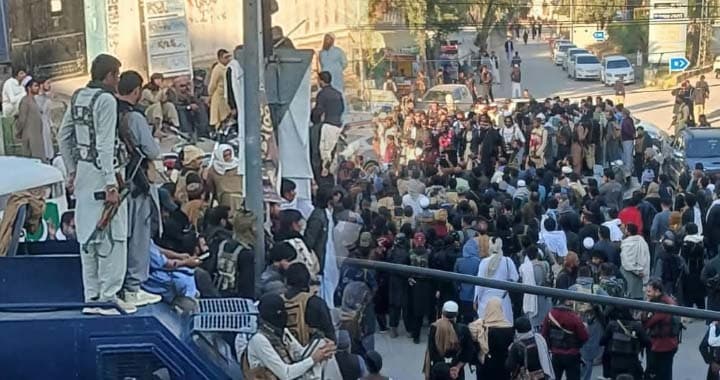
Serious questions are being raised over the activities and conduct of so-called Police Peace Committees in Khyber Pakhtunkhwa, particularly in Bannu and Lakki Marwat, amid allegations of kidnappings, extortion, extrajudicial killings, intimidation of serving police officers and open defiance of official authority.
A disturbing situation has reportedly emerged in which individuals operating under the banner of police peace committees are accused of using government-issued weapons, official vehicles and their association with law enforcement to exercise authority beyond their legal mandate.
The fundamental question is no longer simply about the functioning of these committees. It is whether certain elements within them are attempting to establish a parallel power structure, challenge the authority of the police department and operate beyond the reach of the law.
According to the available information, members of these committees have reportedly refused to comply with official instructions and have challenged the authority of senior police officers.
More seriously, allegations have emerged that police officers who have demonstrated resistance to these activities are being openly threatened and intimidated.
The situation has reportedly escalated to the point where a serving Superintendent of Police (SP), Investigation, is allegedly being held in the custody of members of a police peace committee.
There are also allegations surrounding the kidnapping, torture and killing of Constable Javed Khan, with members of the committee being accused of involvement.
These developments, if established, would represent an extremely serious challenge to departmental discipline, law enforcement authority and the rule of law.
The latest developments have further intensified tensions within the police department.
According to reports, members of the police peace committees from Bannu and Lakki Marwat are travelling to Kohat, where 52 police personnel have already been suspended over alleged negligence and dereliction of duty.
Meanwhile, committee members are reportedly threatening police officers and maintaining that no departmental action against any committee member will be tolerated.
Such a position raises serious concerns about attempts to obstruct departmental accountability and prevent the enforcement of official orders.
Reports also indicate that the so-called peace committees have withdrawn from an agreement reached in August 2026, further complicating an already tense situation.
The controversy surrounding these committees is not new. Their activities in Bannu and Lakki Marwat have previously been linked to serious allegations involving abductions, torture, extortion, unlawful killings and the exercise of authority outside the legal framework.
Two particularly serious cases have been highlighted:
Asad Yar, a resident of Gambar village in Bannu, was reportedly abducted from his home by individuals alleged to be associated with the police peace committee.
According to the available account, he was subjected to severe torture before being killed. His tortured body was subsequently recovered from the banks of the Kurram River.
Another disturbing case involves Qari Rashid, who was reportedly abducted from outside the district courts on July 27 and subsequently transferred to Lakki Marwat.
His body was recovered on August 23 near Malang Adda, Ibadat Colony.
The supplied account alleges that his killing was connected to a Rs. 9 million bribery transaction involving members of the Bannu Police Peace Committee.
These allegations demand serious investigation, accountability and the establishment of the facts surrounding both cases.
The alleged activities attributed to these committees extend beyond confrontations with police officials.
Repeated road blockades, disruption of public movement, coercive protests, alleged abductions and intimidation have reportedly created an atmosphere of fear and uncertainty among ordinary citizens.
Public roads and essential routes cannot be turned into instruments of pressure, nor can citizens be forced to endure repeated disruption because certain groups seek to impose their demands through intimidation.
Peace committees, by their very purpose, should assist the state, support law enforcement agencies and contribute to stability. They cannot claim the authority to threaten police officers, abduct citizens, engage in unlawful activities or obstruct departmental proceedings.
The most alarming aspect of the situation is the reported assertion that no committee member should face departmental accountability or legal action.
No individual, organisation or informal group can claim immunity from the law simply because of its association with government institutions or its possession of official weapons and vehicles.
Government-issued uniforms, salaries, weapons and vehicles carry responsibilities, not unlimited authority. Any individual accused of abusing these privileges must be answerable under the law.
The reported threats against serving police officers and the alleged detention of a senior police official make it imperative that the relevant authorities establish the facts and ensure that no official is prevented from performing lawful duties through intimidation or coercion.
The reported decision by the federal and provincial governments to take strict action against elements accused of unlawful activities is a significant development.
The state cannot allow parallel power structures to emerge under the cover of public service or peacekeeping arrangements.
Any individual or group found involved in kidnapping, extortion, torture, unlawful killings, threats against public officials or obstruction of justice must face appropriate legal and departmental proceedings.
At the same time, it is important to recognise that the majority of the police force reportedly has no involvement in these activities and should not be held responsible for the alleged conduct of a limited number of individuals.
The issue confronting Khyber Pakhtunkhwa is straightforward: Can any group operating under the banner of a police peace committee claim the right to intimidate serving officers, abduct citizens, obstruct official orders and resist departmental accountability?
A peace committee cannot become a parallel police force. An association with the state cannot become a licence for lawlessness. And no individual or group can be permitted to establish a state within a state.
The authority of the state, the integrity of the police institution and the protection of ordinary citizens must remain above personal influence, armed pressure and informal power structures.



