
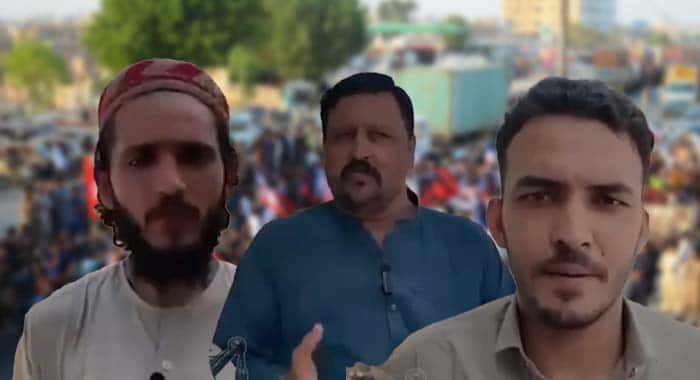
Police peace committees in southern Khyber Pakhtunkhwa were ostensibly created to strengthen security and help maintain peace in areas facing persistent security challenges. But the ongoing protests by members of the Bannu Police Peace Committee have raised a much more troubling question: what happens when those expected to uphold law and order begin defying official orders and disrupting public life themselves?
Public reaction to the situation has been increasingly critical. Citizens have questioned the decision by protesting police personnel to block the Indus Highway, arguing that such a move does nothing to promote peace and instead imposes serious hardships on ordinary people.
For residents of Dera Ismail Khan and other southern districts, the consequences are not merely political. Blocking a major highway affects commuters, transporters, students, patients and families trying to reach hospitals. One citizen described the road blockade as an act that was creating problems for the very public these personnel were supposed to serve.
The controversy has intensified following reports that police personnel rejected transfer orders issued by senior authorities. Transfers are a routine part of government service, particularly within a disciplined force such as the police. If an employee has genuine reservations about a transfer, there are administrative and legal mechanisms available to challenge the decision. Taking the dispute onto public roads, however, shifts the burden from the department to ordinary citizens.
A Uniform Is Not Optional
Another issue drawing strong public criticism is the reported refusal by some members of the committees to wear police uniforms while carrying weapons in public.
This has understandably raised questions about accountability and public confidence. A police uniform is not merely clothing. It identifies an individual as a member of a state institution and places that person within a clearly defined chain of command and legal framework.
Walking around in plain clothes while carrying weapons, particularly during an ongoing protest, can create fear and uncertainty among residents. The question being asked by citizens is straightforward: if these personnel remain government employees, receive government salaries and benefits, and exercise police powers, on what basis are they refusing to follow institutional discipline?
The contradiction becomes even sharper when the very people responsible for maintaining order become involved in blocking roads and disrupting traffic.
A senior citizen summed up the frustration by pointing out that those responsible for clearing roads and facilitating movement are themselves accused of shutting them down. In a region already facing serious security pressures, such a situation can create an additional vulnerability, because a blocked highway is not simply an inconvenience. It can affect emergency movement, commercial activity and the ability of security and emergency services to respond quickly.
Protest Cannot Become Paralysis
There is certainly a legitimate place for grievances within any institution. Police personnel, like other government employees, can raise concerns about transfers, postings and working conditions. But institutional grievances must be pursued through institutional channels.
A disciplined security force cannot function on the principle that every transfer order becomes negotiable through street protests. Nor can public roads become bargaining tools in an employment dispute.
This is particularly important in Bannu and Lakki Marwat, where the security environment remains fragile and where ordinary citizens already live with the consequences of terrorism and instability. At a time when police officers are expected to stand on the front lines against terrorists, internal indiscipline only compounds the challenges facing the region.
Citizens are therefore asking the protesting personnel to return to uniform, resume their duties and use lawful channels to address their grievances. That is not an unreasonable demand. In fact, it is the minimum expected from members of a state security institution.
There is also a larger question for the provincial authorities. If a body carrying the word “peace” in its name becomes associated with road blockades, defiance of official orders and public disruption, then its structure and purpose deserve serious scrutiny.
Peace cannot be established by making life harder for the public. And security cannot be strengthened by weakening discipline within the very institutions responsible for providing it.
The message emerging from the public is therefore clear: grievances may be heard, orders may be challenged through lawful means, but neither police discipline nor the rights of ordinary citizens can be held hostage to an internal dispute. In a region struggling to preserve peace, those entrusted with protecting the public must first demonstrate that they themselves remain committed to the law, discipline and the institution they represent.



