
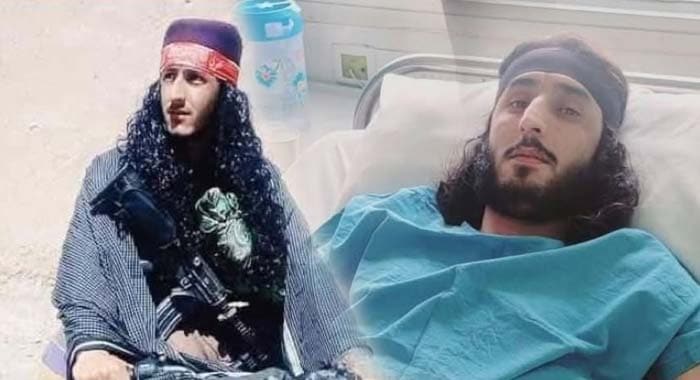
The presence of Taqwa Mohajer, an Afghan Taliban member affiliated with the Gul Bahadur faction of Tehrik-e-Taliban Pakistan (TTP), in India for medical treatment raises serious questions about India’s engagement with individuals connected to anti-Pakistan terrorist networks.
Mohajer, a resident of Zermet district in Afghanistan’s Paktia province, obtained a visa from the Indian Embassy in Kabul in September and subsequently travelled to India, where he underwent surgery and is currently receiving medical treatment.
More significantly, a photograph has surfaced showing Mohajer alongside Abdul Raziq Azhar, an Afghan national who carried out the March 2025 suicide bombing targeting a military installation in Bannu, Khyber Pakhtunkhwa, Pakistan. This association further highlights the connections among individuals linked to terrorist networks operating against Pakistan.
The matter assumes particular significance in the context of persistent concerns regarding anti-Pakistan terrorist elements operating from Afghan territory. The fact that an individual affiliated with a TTP faction travelled to India through an official visa channel and received medical treatment there raises serious questions about the nature and extent of India’s engagement with individuals connected to anti-Pakistan terrorist organizations.
The international community must take serious note of the growing nexus involving individuals associated with anti-Pakistan terrorist networks and the channels facilitating their international movement. Providing access, mobility, and assistance to individuals linked to such organizations raises grave concerns about regional security and the sincerity of commitments to counterterrorism.
Pakistan’s concerns over cross-border terrorism are grounded in concrete security challenges and cannot be brushed aside. The international community must demand transparency and accountability regarding the movement, connections, and activities of individuals associated with terrorist organizations.
The presence of TTP-linked individuals in India, alongside their connections with figures involved in terrorist attacks against Pakistan, demands serious scrutiny. Such developments further reinforce the need to examine the broader networks and external connections sustaining anti-Pakistan terrorist activities.



