
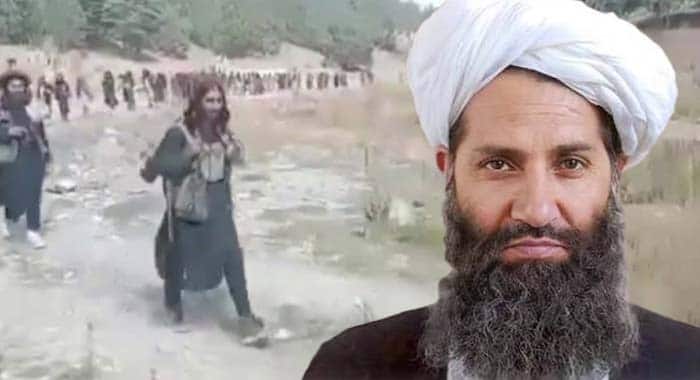
The Afghan Taliban leadership faces mounting questions over its continued failure to take decisive action against Tehreek-e-Taliban Pakistan (TTP), as the religious teachings of its own Supreme Leader, Mullah Hibatullah Akhundzada, stand in stark contradiction to the group’s armed campaign against Pakistan.
An opinion article published by Eurasia Review, an independent international news and analysis platform, has highlighted fundamental inconsistencies between the religious doctrines articulated by Akhundzada and the ideological narrative employed by the TTP to justify its campaign of violence in Pakistan.
Drawing on Akhundzada’s 179-page Pashto book, Da Ahl al-Sunnah wal-Jama‘ah Aqeedah, the article identifies several core religious principles that directly challenge the TTP’s justification for armed violence, rebellion and attacks against fellow Muslims.
On pages 131–132, Akhundzada emphasizes the prohibition of taking up arms against fellow Muslims and stresses the sanctity of their lives and property. This religious position stands in direct contradiction to the TTP’s persistent attacks against Pakistani civilians, security personnel, law enforcement officials and state representatives.
The contradiction becomes even more pronounced on page 133, where the book discourages rebellion against rulers, even in circumstances of injustice. This teaching fundamentally challenges the TTP’s armed insurgency against Pakistan’s state institutions and its attempts to justify violence through religious arguments.
Furthermore, pages 108–109 caution against declaring fellow Muslims unbelievers (Takfir) merely on account of their sins. This principle challenges the ideological practice of using religious accusations to delegitimize opponents and provide a pretext for violence. Similarly, pages 135–139 emphasize Muslim unity and reject sectarian divisions, while page 141 underscores the religious obligations of justice, fulfilling commitments and maintaining trustworthiness.
Taken together, these teachings expose a glaring ideological contradiction between the religious doctrine articulated by the Afghan Taliban’s supreme leader and the violent activities of the TTP, which draws ideological inspiration from the Afghan Taliban.
The question confronting Kabul is both fundamental and unavoidable: If the Afghan Taliban’s supreme leader himself discourages armed rebellion, condemns unjustified Takfir and emphasizes the sanctity of Muslim lives, why has his leadership failed to take meaningful action against a group whose armed campaign directly contradicts these very principles?
This contradiction goes beyond religious interpretation. It raises serious questions about political responsibility, regional security and the credibility of the Afghan Taliban leadership’s stated religious commitments. The continued failure to address the TTP’s activities undermines claims of adherence to the very principles that Kabul’s leadership publicly upholds.
Kabul cannot selectively invoke religious teachings, Muslim unity and the sanctity of life while failing to demonstrate tangible action against a group whose activities threaten Pakistan’s security and the lives of its citizens. Religious pronouncements must be reflected in practical measures, not merely rhetorical commitments.
The contradiction is clear: The TTP’s armed campaign against Pakistan stands in direct conflict with the religious doctrine of the Afghan Taliban’s own supreme leader. Kabul must reconcile its stated beliefs with its actions and demonstrate an unequivocal commitment to preventing its territory from being used for activities threatening Pakistan’s peace and security.



