
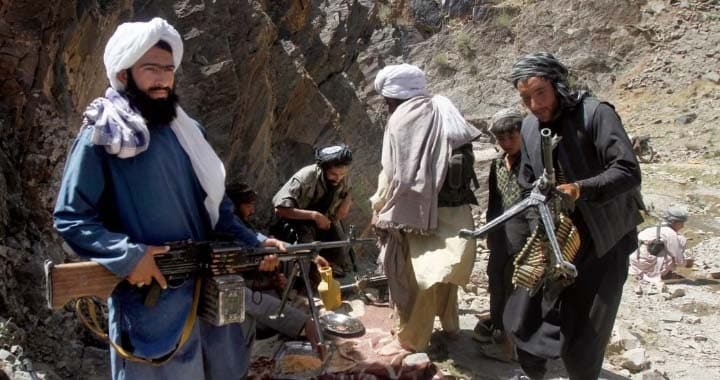
The Taliban’s takeover of Kabul in August 2021, following the withdrawal of United States and NATO forces, fundamentally altered the regional security landscape and provided Tehreek-e-Taliban Pakistan (TTP) with renewed strategic depth, operational space and opportunities to strengthen its presence inside Afghanistan.
The developments have raised serious concerns about the use of Afghan territory as a sanctuary for terrorist networks targeting Pakistan, with United Nations monitoring reports repeatedly highlighting the presence, activities and growing capabilities of TTP militants across Afghanistan.
Following the Taliban takeover, Afghanistan increasingly became an environment in which TTP elements could reportedly access safe havens, training facilities, weapons stockpiles, financial networks and cross-border mobility. The TTP leadership also publicly renewed its allegiance to the Afghan Taliban-led Islamic Emirate, further underscoring the ideological and organisational relationship between the two groups.
United Nations monitoring reports have estimated that approximately 6,000 TTP fighters are present in Afghanistan, with concentrations reported in provinces including Kunar, Nangarhar, Paktika, Khost and Paktia.
Subsequent assessments also reported the relocation of approximately 2,000 TTP fighters and their families to areas deeper inside Afghanistan. Such movements reportedly reduced their visibility near the Pakistan-Afghanistan border without necessarily disrupting the group’s organisational presence or operational activities.
These developments raise serious questions about the continued availability of sanctuary and support structures for a terrorist organisation responsible for attacks against Pakistan.
The threat is not limited to the presence of militants. UN monitoring assessments have also highlighted TTP’s access to sophisticated military equipment, including M4 rifles, advanced optical equipment and night-vision devices.
The reported availability of such equipment points to a significant enhancement in the group’s capabilities and raises concerns about the sources, channels and networks through which these weapons and technologies are reaching militant elements.
Continued reports of training activities, weapons transfers and logistical assistance further underscore the importance of examining the broader support environment sustaining TTP’s activities in Afghanistan.
Behind the group’s operational activities lies a financial infrastructure that enables its leadership and affiliated networks to maintain their organisational capacity.
According to UN monitoring assessments, TTP leadership has reportedly received financial assistance from elements within the Afghan Taliban, with some reports referring to monthly transfers amounting to tens of thousands of dollars.
In addition to these reported transfers, the group’s financing mechanisms reportedly include extortion, smuggling, hawala-based transactions and contributions from overseas supporters. Cryptocurrency wallets have also emerged as a potential component of the wider financial ecosystem associated with militant networks.
The existence of multiple funding channels makes financial transparency, monitoring and international cooperation essential to disrupting the resources available to terrorist organisations.
Another particularly concerning dimension of TTP’s evolving capabilities is its increasing use of unmanned aerial systems.
The reported similarities between drones used by TTP and those operated by the Afghan Taliban have raised questions about possible shared supply networks, technology transfers and the movement of technical expertise between the two groups.
These similarities warrant closer examination by relevant security authorities, particularly regarding the origins of equipment, procurement channels and any evidence of organised assistance.
The continued presence of TTP elements in Afghanistan, combined with reported access to weapons, financial resources, training opportunities and advanced technology, represents a significant security concern for Pakistan and the wider region.
The international community, particularly the United Nations and relevant counterterrorism institutions, must give serious attention to the findings contained in successive monitoring assessments and ensure that commitments against terrorism translate into measurable action.
Afghan territory must not become a sanctuary for organisations responsible for cross-border terrorism. The protection, financing or facilitation of terrorist networks poses a direct threat to regional stability and undermines international efforts to combat violent extremism.
Pakistan’s security concerns cannot be addressed through statements alone. They require verifiable action against terrorist sanctuaries, financial support structures, weapons networks and cross-border militant infrastructure.



