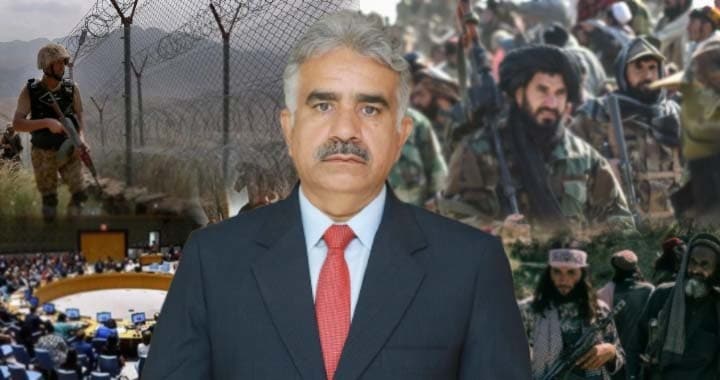
Pakistan is confronting a complex and increasingly interconnected security challenge, one that extends beyond its borders and reaches deep into the country’s political, institutional, educational and social structures. The persistence of terrorist violence, the activities of militant organisations operating from Afghan territory, the reported loss of more than 4,700 Pakistani lives over the past three years, and the renewed effort to regulate religious seminaries collectively highlight the urgent need for a comprehensive national response. These developments are not isolated events. They represent different dimensions of a wider struggle over the authority of the state, the protection of citizens, the prevention of extremism and the future direction of Pakistan.
At the centre of this challenge lies a fundamental question: how can Pakistan secure its sovereignty, protect its population and strengthen its internal institutions when terrorist networks continue to exploit regional instability, ideological divisions and weaknesses in governance? The answers require more than military operations, diplomatic statements or temporary political arrangements. They demand consistency, accountability, institutional coordination and a clear commitment to the rule of law.
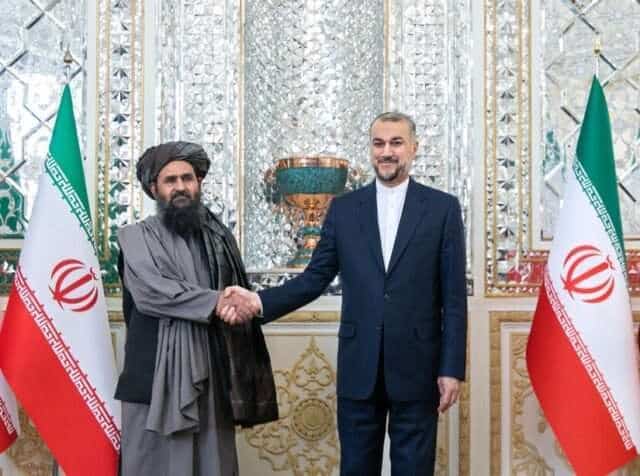
One of the most significant developments in this context concerns reports of a closed-door engagement between elements of the Afghan Taliban leadership and the Tehreek-e-Taliban Pakistan (TTP). Although reports circulating on social media have generated considerable speculation, and claims of certain diplomatic engagements have not received official confirmation, the broader developments suggest that pressure is mounting on the Afghan Taliban authorities to address the presence and activities of militant organisations on Afghan soil.
This pressure is coming from several directions. Pakistan has repeatedly expressed serious concerns about cross-border terrorism. The international community has also called for meaningful action against terrorist networks. Meanwhile, neighbouring countries, including China, Russia and the Central Asian republics, have increasingly recognised the security implications of militant organisations operating from Afghanistan.
The concerns are not limited to Pakistan. The presence of Daesh-Khorasan, in particular, has emerged as a major threat to regional stability. Its recruitment activities and operational presence in Afghanistan have raised alarm among countries that fear the spread of extremist violence beyond Afghan borders. Russia’s concerns about Daesh-Khorasan demonstrate that the security problem cannot simply be dismissed as a bilateral disagreement between Islamabad and Kabul.
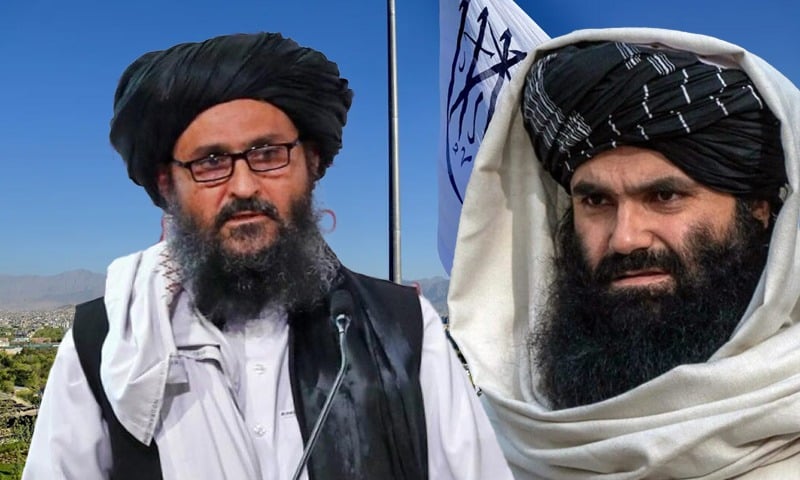
There is also an important internal dimension within the Afghan Taliban movement. Differences over governance, authority and the treatment of the population have reportedly generated pressure within its own ranks. Criticism by Sirajuddin Haqqani of the concentration and exercise of authority under the Taliban leadership reflects wider questions about the sustainability of a governing model based on coercion and restrictions.
A government cannot establish lasting stability merely through force. Public confidence, economic opportunities, institutional credibility and political inclusion are essential elements of sustainable governance. The Afghan Taliban authorities therefore face a challenge that goes beyond their relationship with Pakistan: they must demonstrate whether they can transform their movement into a responsible governing administration capable of maintaining security and meeting the expectations of their population.
Against this backdrop, reports of measures concerning TTP-linked individuals and their families in border areas deserve careful examination. According to the information discussed, some families are being relocated from sensitive areas of Paktia, Kunar and Khost towards locations including Ghazni and designated camps. Another reported measure involves preventing Afghan students from participating in TTP operations.
These steps, if implemented effectively, could represent an attempt to respond to some of Pakistan’s concerns. However, relocation alone cannot resolve the underlying problem. Moving families from one location to another does not automatically dismantle militant networks, eliminate their operational capabilities or prevent their members from organising attacks. Nor does restricting the participation of students necessarily address the broader recruitment and support structures that sustain militant organisations.
The central issue is the continued existence of these networks, their leadership structures, their access to weapons and their ability to operate across borders. Pakistan’s position, as reflected in the discussion, is that meaningful engagement cannot be separated from verifiable action against the leadership and infrastructure of terrorist organisations.
The fragmented nature of militant groups makes this challenge even more complicated. The TTP is not necessarily a perfectly unified organisation operating under an uninterrupted central command. Different factions, splinter groups and associated networks may retain independent operational capabilities. Groups associated with Hafiz Gul Bahadur and different factions connected to Noor Wali Mehsud illustrate the difficulties involved in securing compliance across a fragmented militant landscape.
Consequently, even an understanding reached with senior leadership may not guarantee that attacks will stop. An agreement is meaningful only when it produces measurable changes on the ground. The elimination of safe havens, the disruption of recruitment networks, the prevention of cross-border movement and the removal of operational capabilities must form part of any credible arrangement.
Another serious concern involves the weapons left behind following the withdrawal of US-led NATO forces from Afghanistan. Pakistan has reportedly presented evidence that sophisticated military equipment, originally valued at approximately $7.9 billion to $10 billion, has found its way into the hands of militants and has been used in attacks against Pakistani security personnel.
The reported equipment includes drones, night-vision devices, sniper rifles and other advanced weapons. If these capabilities are being used against police checkpoints and law-enforcement installations, the implications are extremely serious. Terrorist groups equipped with advanced technology can inflict greater damage, complicate security operations and threaten personnel who are already operating under difficult conditions.
This issue requires international attention. The weapons left behind in Afghanistan should not become instruments of regional instability. Their movement, distribution and potential use by militant organisations must be investigated through credible monitoring and international cooperation.
The wider consequences of terrorism are reflected in the reported figure presented by Pakistan at the United Nations Security Council: more than 4,700 Pakistani casualties over the past three years in terrorist violence. This figure represents an extraordinary national burden and underlines the human cost of persistent insecurity.
Behind every casualty is a family, a community and a life disrupted by violence. Police officers, soldiers, security personnel and ordinary citizens have all suffered the consequences. Pakistan’s sacrifices in combating terrorism cannot be reduced to statistics or diplomatic talking points. They represent years of loss, resilience and an ongoing struggle to protect the country.
Equally concerning is the continuing disagreement over the presence of terrorist organisations in Afghanistan. The discussion points to reports by the United Nations monitoring system, Russian security assessments and concerns expressed by China regarding militant networks operating from Afghan territory. The appearance of militant leaders in public settings in Kabul and their reported associations with influential Taliban figures have further intensified questions about the extent to which these groups are present and able to function.
The Afghan Taliban authorities must understand that denying a problem does not make it disappear. If terrorist organisations are operating from Afghan territory, their activities create consequences for the entire region. Whether the victims are Pakistani citizens or people in neighbouring countries, the responsibility to prevent the use of national territory for terrorist activities is fundamental to responsible governance.
Pakistan’s concern is not that Afghanistan should surrender its sovereignty or become subject to external control. The essential demand is that Afghan territory should not be used as a platform for attacks against Pakistan. A stable Afghanistan and a secure Pakistan should be complementary objectives, not competing interests.
Indeed, the Afghan economy has much to lose from continued hostility with Pakistan. Border closures and disruptions in trade have affected commercial activity, particularly agricultural exports such as pomegranates and grapes. Traders, transporters and ordinary businesses suffer when political and security tensions interrupt established economic routes.
There is an obvious contradiction in promoting ambitious plans for trade with Russia, China, India and the Central Asian republics while allowing relations with an immediate neighbour to deteriorate. Regional connectivity requires trust, predictable policies and secure borders. No country can fully realise its economic potential while its neighbourhood remains unstable.
The Afghan Taliban authorities must therefore recognise that the cost of tolerating militant networks is not limited to diplomatic criticism. It also includes lost trade, economic uncertainty, reduced investment opportunities and growing internal dissatisfaction.
Afghanistan itself faces additional security challenges, including reported attacks by opposition groups such as the Afghan Resistance Front and the Afghan Freedom Front. The reported expansion of attacks across multiple provinces suggests that internal stability remains a serious concern. These developments reinforce the argument that lasting peace cannot be achieved through coercion alone.
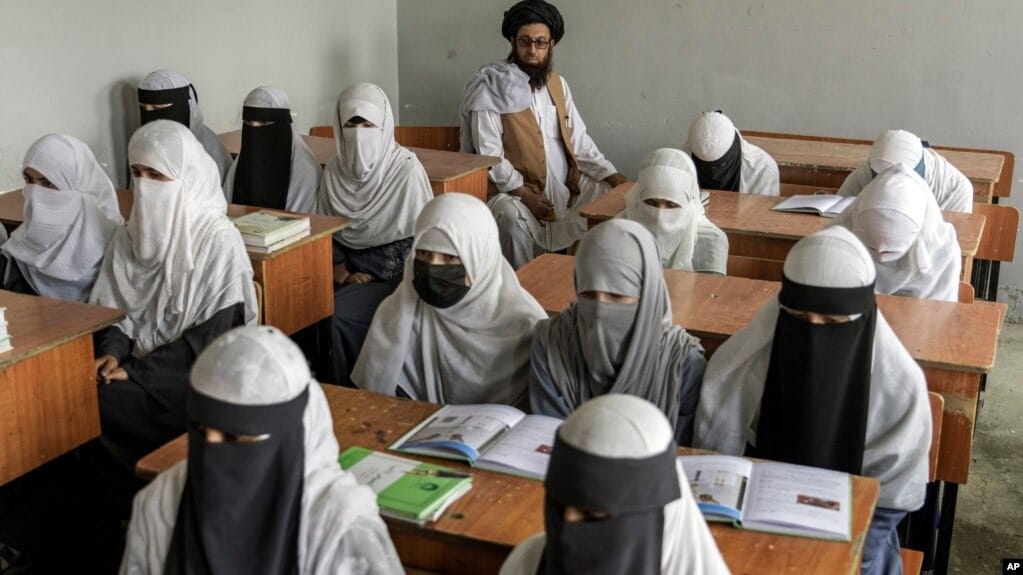
The second major issue facing Pakistan is the presidential ordinance concerning the registration and regulation of religious seminaries, commonly known as madrassas. This development deserves equal attention because the fight against terrorism cannot succeed through border security and military operations alone. It must also address the institutional and ideological conditions that allow extremism to survive.
The registration of madrassas has been an important element of Pakistan’s National Action Plan since 2015. However, implementation has remained difficult. Figures cited in the discussion indicate that approximately 7,172 madrassas were counted in Khyber Pakhtunkhwa, of which around 4,500 were reportedly unregistered.
The central problem has been resistance to comprehensive regulation, particularly concerning financial transparency, bank accounts, funding sources, educational curricula and institutional oversight. Some religious organisations have argued that registration under the Directorate General of Religious Education is unnecessary because their institutions are already affiliated with religious education boards.
However, affiliation with a private or religious board should not automatically exempt an institution from reasonable state regulation. Every educational institution operating within Pakistan should be accountable to the country’s legal and constitutional framework.
The reported presidential ordinance, associated with the Societies Act registration framework, seeks to address some of these outstanding concerns, particularly those relating to registration, financial oversight and accountability. Its broader significance lies in the possibility of establishing a more transparent system for religious educational institutions.
The question is straightforward: why should any institution providing education to thousands of children remain outside a reasonable system of registration, financial auditing and administrative accountability?
Transparency does not constitute an attack on religion. Financial auditing does not undermine religious education. Providing information about institutional funding and educational curricula does not amount to interference in legitimate religious practice. These are ordinary responsibilities that accompany the operation of educational institutions in a modern state.
The real objective should be to ensure that madrassas provide students with an education that prepares them for peaceful, productive and responsible participation in society. Religious instruction can coexist with science, English, information technology, computer education and other conventional subjects.
In fact, integrating these subjects into madrassa education could create opportunities for students that might otherwise remain inaccessible. Young people should not be confined to a narrow range of future prospects because of the type of institution they attend. They deserve the skills and knowledge necessary to participate in the wider economy and contribute to national development.
Curriculum reform is equally important. No educational institution should promote sectarian hatred, religious intolerance, extremism or violence. The objective is not to eliminate religious identity or diminish the importance of faith. It is to ensure that religious education contributes to ethical conduct, social harmony, intellectual development and peaceful coexistence.
Pakistan’s National Action Plan, introduced in 2015 and subsequently revised in 2021, recognised the importance of addressing these issues. However, policies cannot produce results simply because they have been announced. Their success depends on implementation, monitoring and the willingness of all stakeholders to honour their commitments.
The government must therefore ensure that the ordinance is implemented fairly, consistently and within the law. Religious institutions should receive clear guidance about registration requirements, financial reporting and educational standards. At the same time, resistance to lawful regulation should not become an excuse for maintaining institutions outside the national legal framework.
The debate must also avoid an unfair generalisation that associates all madrassas or religious students with extremism. The vast majority of students pursuing religious education should not be treated with suspicion because of the actions of militant organisations. The purpose of regulation is to protect students, improve educational standards and prevent the misuse of institutions, not to stigmatise religious education.
A particularly important point is that Pakistan’s own Muslim population has suffered enormously from terrorism and extremism. Mosques, religious gatherings, security installations and ordinary communities have been repeatedly targeted. The victims of extremist violence are not separate from the wider Muslim community; they are an integral part of it.
This reality makes the fight against radicalisation an internal national responsibility. Pakistan must protect its religious institutions from being exploited by those who attempt to use faith as a justification for violence. It must also protect the country’s international reputation by demonstrating that its religious and educational institutions operate under transparent and responsible standards.
The protection of religious freedom must remain central to this process. Christians, Hindus, Sikhs and other religious communities are entitled to live according to their beliefs and enjoy equal protection under the law. A society based on religious harmony is stronger than one divided by sectarian hostility.
Ultimately, the three major developments discussed together reveal the need for a comprehensive approach to national security. Pakistan cannot depend exclusively on military operations while ignoring the financial, educational and ideological networks that sustain extremism. Nor can it expect diplomatic engagement with Afghanistan to produce lasting results without concrete action against terrorist organisations.
The Afghan Taliban must demonstrate through verifiable measures that Afghan territory will not be used for terrorism against Pakistan or other neighbouring countries. Pakistan, meanwhile, must continue strengthening its security institutions, improving intelligence coordination, protecting its citizens and pursuing diplomatic efforts without compromising its sovereignty.
At home, the government must translate the National Action Plan into meaningful action by ensuring madrassa registration, financial transparency, educational reform and the elimination of extremist content. Religious scholars, political parties, educational institutions and civil society must become partners in this effort rather than treating every reform initiative as a confrontation.
There is no contradiction between protecting religion and protecting the state. There is no contradiction between religious education and modern knowledge. And there is certainly no justification for allowing a small number of extremist elements to determine the future of an entire population.
Pakistan is a country of approximately 240 million people, and its future cannot be dictated by a relatively small number of individuals or organisations that reject peaceful coexistence and constitutional authority. The state must protect the rights of its citizens while making it clear that violence, terrorism and the promotion of hatred have no legitimate place in society.
The road towards stability will not be easy. It requires political courage, institutional discipline, regional cooperation and a consistent commitment to accountability. But the choice is unavoidable: either Pakistan addresses the interconnected challenges of terrorism, extremism and weak institutional oversight through a comprehensive national strategy, or it continues paying the human, economic and diplomatic price of unresolved security threats.
The ultimate objective should be a Pakistan where borders are secure, educational institutions are accountable, religious differences are respected, trade flourishes and citizens can live without fear. That is not merely a security objective; it is a national responsibility and a necessary foundation for a peaceful, prosperous and stable future.