
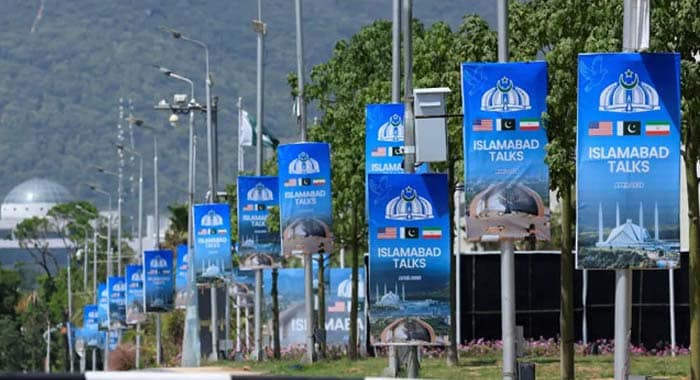
Islamabad is expected to host a significant round of high-stakes diplomatic engagement as international media reports indicate that the second round of negotiations between the United States and Iran may take place in the Pakistani capital on Wednesday.
According to American media outlets, U.S. Vice President J.D. Vance is likely to arrive in Pakistan later today, while the Iranian negotiating delegation is also expected to reach Islamabad within the same timeframe. Although no official confirmation has yet been issued by either government, the development signals a potentially critical moment in ongoing efforts to address escalating tensions between Washington and Tehran.
The anticipated talks come against the backdrop of firm statements from U.S. President Donald Trump, who has reiterated his administration’s uncompromising stance on securing a new agreement with Iran. In recent remarks shared via social media, President Trump emphasized that any future deal would surpass previous arrangements, particularly criticizing the earlier agreement negotiated under former President Barack Obama and continued under Joe Biden.
President Trump stated that the United States would maintain strategic pressure, including the continued blockade of the Strait of Hormuz, until favorable terms are achieved. He underscored that his administration is “under no pressure” to finalize an agreement prematurely, asserting that negotiations would only conclude once “the best possible conditions” are secured.
“Our deal will be one the world can be proud of,” President Trump said, adding that a new agreement with Iran would ensure global peace, security, and stability. He reiterated Washington’s longstanding position that Iran must not acquire nuclear weapons, while also suggesting that a “wise leadership” in Tehran could pave the way for a more prosperous future for the country.
The U.S. President further warned that failure to reach an agreement could significantly heighten the risk of conflict, stating that the likelihood of extending the current ceasefire arrangements remains minimal. “If no deal is reached, the prospect of war becomes inevitable,” he cautioned, while maintaining that his administration would avoid entering into any agreement made in haste or under unfavorable terms.
In a parallel statement, the White House affirmed that President Trump would not lead the United States into what it described as another “disastrous deal.” Officials emphasized that any agreement negotiated under the current administration would guarantee peace and security not only for Israel and the Middle East but also for Europe and the United States.
Analysts view the possible hosting of US–Iran talks in Islamabad as a notable diplomatic development, reflecting Pakistan’s potential role as a facilitator in complex international negotiations. However, uncertainties remain regarding the scope, agenda, and outcomes of the expected discussions.



