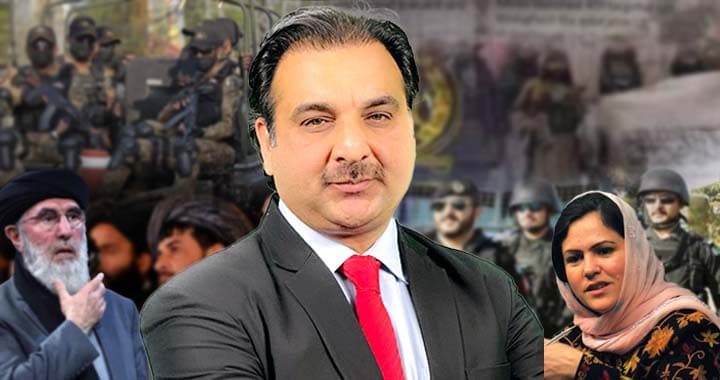
The border areas of Pakistan, particularly Bannu and Lakki Marwat, appear to be slipping back into the grip of terrorism. On one hand, security forces claim to have eliminated several terrorist commanders, while on the other, developments inside Afghanistan point toward growing instability within the Taliban setup.
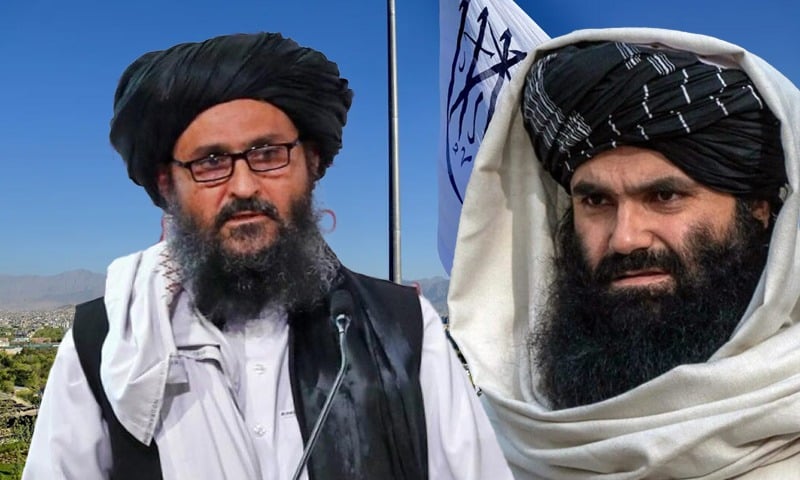
Even before recent criticism by Gulbuddin Hekmatyar, the arrest of Motasim Agha Jan had already exposed internal divisions within the interim Taliban administration. These developments underline a widening rift, suggesting that the power structure in Afghanistan is far from cohesive.
When asked about the persistence of terrorism in Bannu and Lakki Marwat despite ongoing operations, the central issue becomes clear: local support, whether voluntary or coerced. Such activity cannot sustain itself without some level of facilitation on the ground.
A February 26 terrorist incident, in which Lieutenant Gulfaraz was martyred, also revealed the presence of foreign terrorists operating within these areas. One such terrorist, Wahidullah alias Mukhtiar, was eliminated, raising critical questions. If he remained active in the area for that long, who provided him shelter? Who enabled his movement? These are not peripheral questions, they strike at the heart of local enforcement and intelligence gaps.
Recent intelligence-based operations have neutralized key threats, including a suicide bomber. However, reports indicate that terrorists have now confined themselves to specific regions, blending into local populations or retreating across borders when pressured. Their presence in villages is rarely independent, it exists within a network of fear, coercion, and survival.
Civilians, often caught in the middle, act under duress. When terrorists enter homes demanding food or shelter, resistance is not a simple choice. Fear dictates compliance. Yet, a shift is visible. Public resistance is emerging. Gatherings in affected areas show that locals are increasingly unwilling to tolerate the presence of terrorists, signaling a turning point in community response.
From Battlefield Pressure to Political Fracture
Attention then shifts to Afghanistan, where political fault lines are becoming more visible. Gulbuddin Hekmatyar has openly declared the current system unacceptable, calling for political reforms and early elections.
At the same time, prominent Afghan leaders abroad, including Ashraf Ghani, Abdul Rashid Dostum, Atta Mohammad Noor, Abdul Rab Rasul Sayyaf, Mohammad Mohaqiq, Karim Khalili, and Fawzia Koofi have echoed calls for restructuring governance and restoring political normalcy.
Public dissatisfaction within Afghanistan continues to grow. In cities like Herat, frustration is increasingly visible. The fact that previously silent figures are now openly criticizing the system suggests internal pressure is building.
If political leaders mobilize their respective constituencies, even conservatively estimated in the hundreds of thousands, the balance of power could shift dramatically. Compared to that, the numerical strength of the Taliban remains limited. A unified political movement could pose a serious challenge to their hold on power.
However, such a scenario carries risk. The likelihood of conflict, even civil war, cannot be dismissed. The arrest of Motasim Agha Jan in Kandahar, reportedly due to perceived political activity, reflects the regime’s sensitivity to internal dissent.
The question remains whether opposition figures abroad will return and actively lead a movement, or whether their statements will remain rhetorical.
When asked whether elections could stabilize Afghanistan, the answer remains uncertain. The current system, not rooted in electoral legitimacy, is unlikely to concede power easily. Transitioning into a political framework where the Taliban function as a party among others would require a fundamental shift, one that does not appear imminent.
If internal stakeholders fail to reach consensus, external actors such as China, Pakistan, or Russia may attempt facilitation. Yet, durable stability cannot be imposed from outside, it must emerge from within.
Meanwhile, as regional diplomacy evolves and talks involving China move forward, the question persists: will terrorism inside Pakistan decline?
At present, such attacks are not viewed as an existential threat but rather as a continuation of proxy dynamics. Elements reportedly backed by foreign intelligence networks continue to experiment with new strategies, including narrative warfare and digital propaganda, aiming to create divisions within Pakistani society.
Despite these efforts, the overall assessment remains that these groups lack the capacity to achieve their broader objectives. Their actions reflect persistence, not strength, and their ambitions, more illusion than reality.