
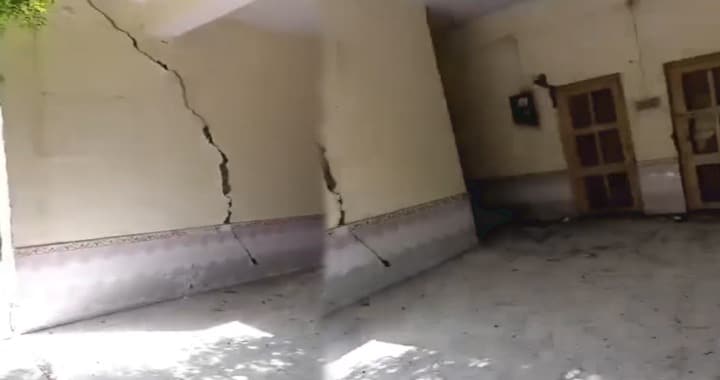
The destruction of the Basic Health Unit at Badamir Abbas in Bannu highlights a recurring reality of terrorism often overlooked amid discussions of security operations and militant violence.
The target was a building.
The victim was an entire community.
For decades, terrorist organizations operating in Pakistan have repeatedly targeted institutions associated with public welfare. Schools, healthcare centers, markets, sports facilities and development projects have all found themselves in the crosshairs.
The attack on the health facility in Mandan follows a familiar pattern. The building itself possessed no military value. It housed no security installation. It represented healthcare, community welfare and state services reaching rural populations.
That is precisely why such institutions are targeted.
Development Challenges Extremism
Extremist ideologies thrive in environments marked by fear, isolation and institutional weakness.
A functioning school expands opportunity.
A health center improves quality of life.
Roads connect communities.
Sports facilities provide alternatives for youth.
Economic development reduces vulnerability to radical recruitment.
Each of these developments undermines the conditions upon which extremist narratives depend.
Security experts argue that attacks on educational and healthcare infrastructure are therefore not random acts of destruction. They are strategic efforts to impede social progress and weaken public confidence.
The objective extends beyond physical damage. Terrorists seek to create psychological effects that outlast the blast itself.
When a clinic is destroyed, residents lose access to treatment.
When a school is attacked, parents fear sending children to class.
When development projects are disrupted, communities are pushed toward uncertainty.
Yet experience across Pakistan has repeatedly shown that such attacks rarely achieve their long-term objectives. Communities rebuild, institutions recover and public resistance to extremist violence often grows stronger following attacks on civilian infrastructure.
In that sense, the destruction of a health facility is not merely an assault on a building. It is an assault on the idea of progress itself.



