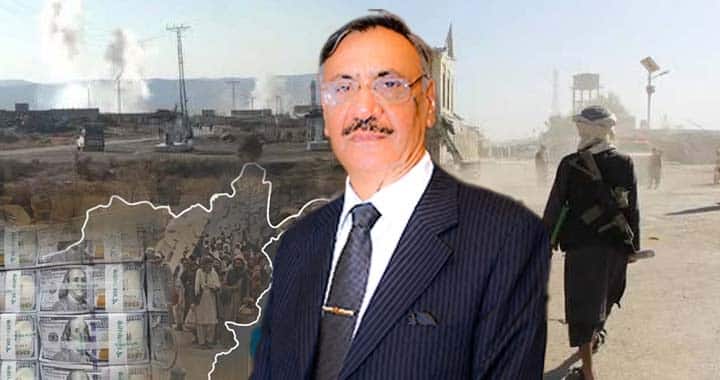
The attack on civilians in Angur Adda, South Waziristan, is a grim reminder that the consequences of militancy are borne most heavily by ordinary people. Five people were martyred and a family member was injured in the reported incident, attributed to the Afghan Taliban. Beyond the immediate human tragedy, the attack raises serious questions about the conduct of armed groups, the protection of border communities, the responsibilities of those exercising authority in Afghanistan and Pakistan’s continuing struggle against extremism.
Yet the challenge confronting Pakistan extends beyond border security. The relationship between religious seminaries, political influence and extremist ideologies also demands serious public debate. These issues must be addressed without emotional exaggeration or collective blame. Pakistan must protect its citizens from violence while ensuring that religious education remains a source of knowledge, moral guidance and social responsibility rather than a vehicle for political mobilisation or extremist recruitment.
The two subjects may appear distinct, but they intersect at a fundamental point: the state must protect its people, uphold the rule of law and create institutions that offer citizens security, opportunity and a meaningful stake in their future.
The reported attack in Angur Adda is particularly troubling because of the distinction between military positions and civilian settlements in the area. The geographical circumstances described in connection with the incident indicate that the Pakistani side contains populated settlements, while the Afghan side consists largely of open ground, with only a distant house visible several miles away. A small security post also stands near a mosque.
This distinction matters. Armed confrontation does not eliminate the obligation to distinguish between military positions and civilian populations. Ordinary families travelling through a border area should not be treated as legitimate targets simply because they live near a security installation or within a region affected by conflict.
Targeting civilians cannot be justified as an act of military strength. If armed groups direct fire towards areas inhabited by families, the resulting violence raises grave questions about their judgment, their regard for human life and their understanding of the responsibilities that accompany the use of force.
The reported deaths and injuries in Angur Adda are not merely figures in a security briefing. They represent the human cost of violence in communities where daily life is already shaped by insecurity. For residents of border districts, the consequences of conflict extend beyond the immediate danger of gunfire. Fear, disruption and uncertainty become part of everyday existence.
Civilians cannot be expected to live indefinitely between the threat of armed groups and the uncertainty of border tensions. Their homes must remain places of safety, their families must be protected, and their right to live without fear must be treated as a fundamental responsibility of those exercising power.
A central argument in the debate surrounding Angur Adda concerns the distinction between engaging a military position and directing violence towards civilians. These are not interchangeable acts, and treating them as such undermines the basic principles that should govern armed confrontation.
The reported presence of a security post near the affected area makes this distinction especially relevant. A military position and a civilian settlement have different purposes and different legal and moral considerations. The proximity of one to the other does not erase that distinction.
The account of the incident also brings to mind an important principle associated with the conduct of warfare: civilians must not be deliberately targeted. This principle is not a matter of courtesy between opposing forces. It reflects the recognition that people who are not participating in hostilities should not be made to pay for the actions of armed actors.
The recollection of the 1971 war, in which firing was reportedly stopped to allow women, children and other fleeing civilians to pass to safety, illustrates the importance of restraint even during intense conflict. Whatever the circumstances of a particular confrontation, protecting civilians must remain a priority.
The lesson is clear: strength cannot be measured solely by the ability to fire weapons or create fear. Restraint, discipline and respect for civilian life are equally important measures of responsible conduct.
For communities along the Pakistan-Afghanistan border, this distinction is not theoretical. It determines whether people can travel, work, attend to family responsibilities and maintain some semblance of normal life despite the presence of armed forces and militant groups.
The attack has also prompted questions about the intentions and conduct of the Afghan Taliban and other armed elements operating in the region. One interpretation is that attacks against civilians may reflect desperation when military positions are difficult to challenge directly. Such an interpretation should be treated as an assessment rather than an established explanation of the attackers’ motives.
Whatever the motivation, the consequences for civilians remain unacceptable. No political objective, military calculation or ideological claim can remove the responsibility to protect ordinary people from deliberate violence.
Authorities exercising power must also be judged by their responsibilities towards the populations under their influence. Governance is not simply a matter of controlling territory, maintaining armed formations or issuing political statements. It requires attention to people’s security, welfare and everyday needs.
The Afghan people, like people everywhere, deserve a future in which their safety and well-being are central concerns. When armed confrontation dominates political life, the needs of ordinary citizens risk being pushed aside. The same danger exists wherever political actors place their institutional interests above the welfare of the population.
Pakistan’s response to incidents along the border must therefore combine vigilance with a clear focus on civilian protection. Security arrangements are necessary, but the ultimate objective should be to make communities safer, not to normalise a permanent state of fear.
The discussion surrounding Angur Adda also raises questions about border management and the wider administrative arrangements affecting Pakistan’s border districts. Military preparedness is an important component of national security, but effective border governance cannot depend on military readiness alone.
Border communities require functioning civilian institutions, accessible public services and administrative arrangements that reflect their geographical realities. Security and governance must reinforce one another. Where people struggle to access government offices, development opportunities or basic services, administrative shortcomings can deepen existing frustrations.
Questions about provincial and administrative restructuring in Khyber Pakhtunkhwa therefore deserve careful consideration. Proposals involving additional administrative units or changes in the organisation of districts should not be assessed solely on paper. Their practical consequences for residents must be examined before decisions are implemented.
The question of district headquarters is especially important. If residents of distant districts, including Bajaur and Mohmand, are required to travel long distances to access administrative services, the resulting arrangements could create additional difficulties for communities that already face geographical and economic constraints.
Administrative reform should bring government closer to the people rather than make access more complicated. A model that appears efficient from a central administrative perspective may prove burdensome for citizens who must travel considerable distances to resolve routine matters.
The same principle applies to development planning in southern districts, including Lakki Marwat, Dera Ismail Khan and Tank. Development priorities should be based on local needs, practical feasibility and the equitable distribution of resources.
The wider lesson is that administrative restructuring must be transparent, workable and responsive to public concerns. A successful model should improve service delivery, strengthen public confidence and demonstrate that government institutions can make people’s lives easier. The needs of border communities cannot be separated from the broader question of effective governance.
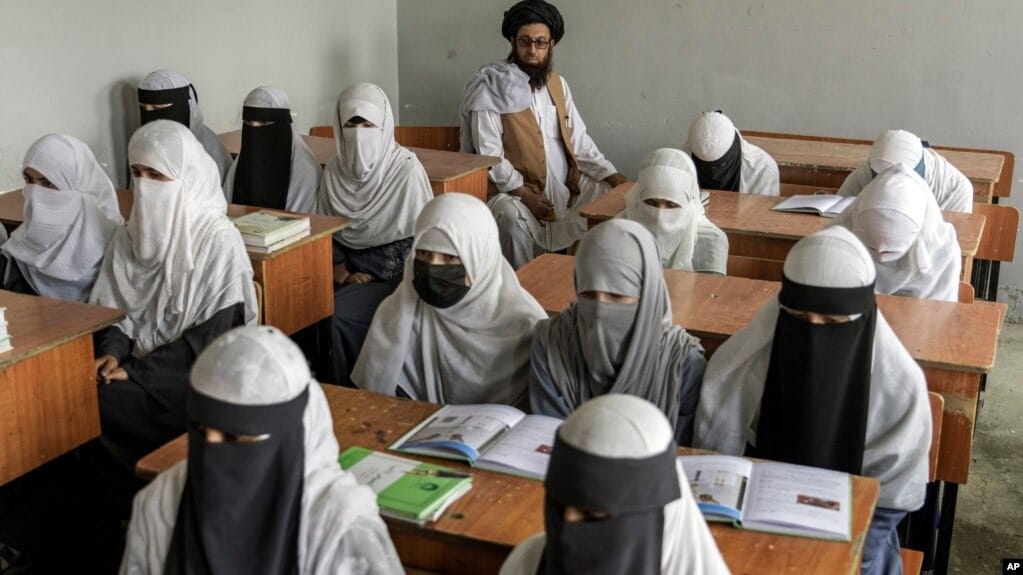
Alongside the immediate question of civilian protection lies another difficult issue: the relationship between religious seminaries, political influence and extremist ideology. Religious seminaries, commonly known as madaris, occupy an important place in Pakistan’s educational and social landscape. They provide religious instruction to many students, including children from economically disadvantaged families. For some households, these institutions offer an accessible educational option when the cost of mainstream schooling is beyond their means.
However, the existence of religious education does not remove the need to examine the political and ideological environments in which some institutions operate. Where religious institutions become instruments of partisan mobilisation or provide space for extremist narratives, legitimate questions arise about accountability, educational standards and the responsibilities of those exercising influence over students.
It is essential, however, to distinguish between religious education itself and the misuse of religious authority. A madrasa student should not automatically be viewed with suspicion, nor should every religious institution be associated with militancy. Such generalisations would be unfair to students, teachers and religious scholars who fulfil legitimate educational and community roles.
The concern is not that people study religion. The concern is whether educational institutions equip young people with the knowledge, critical thinking and practical opportunities needed to participate constructively in society, or whether particular environments restrict their prospects and expose them to political or extremist exploitation.
This distinction is vital if Pakistan intends to address extremism without alienating the very communities whose cooperation is essential to lasting progress.
The political influence exercised through religious institutions deserves particular scrutiny. Mosques are places of worship, spiritual reflection and community life. Madaris are institutions of religious learning. Their social value should not be undermined by turning them into instruments for acquiring political power.
When religious authority becomes closely intertwined with partisan interests, the distinction between spiritual guidance and political mobilisation can become blurred. Congregations and students may find themselves exposed to political agendas that have little to do with their educational or spiritual needs.
Religious and political parties have every right to participate in lawful democratic processes. Religious beliefs are also a legitimate part of public life. The problem emerges when institutional influence is used to pressure the state, monopolise public discourse or present a particular political agenda as beyond criticism because it is expressed in religious terms.
No political organisation should be exempt from scrutiny merely because it invokes religion. Equally, the state must not treat religious identity as grounds for discrimination. The appropriate standard is the same for all: respect for the law, transparency, accountability and the protection of citizens’ rights.
The experience of European history, including the prolonged religious conflicts that shaped political development, offers a broader lesson about the dangers of allowing religious authority and political power to become inseparable. Historical experiences cannot simply be transferred from one society to another, but they demonstrate why institutional boundaries and accountable governance matter.
Pakistan’s task is not to remove religion from society. It is to ensure that religious belief does not become a tool for coercion, political intimidation or the justification of violence.
Pakistan cannot address extremism through security measures alone, just as it cannot resolve educational inequalities through criticism of religious institutions alone. A sustainable response requires a combination of effective law enforcement, educational reform, economic opportunity and accountable governance.
Where violence threatens civilians, the state must act to protect them and ensure that those responsible are held accountable under the law. Where institutions are used to promote violence or facilitate extremist activity, credible evidence should guide appropriate legal and administrative action. Such measures must be applied fairly and consistently, without treating entire communities as responsible for the actions of individuals.
At the same time, the government must expand access to affordable education, especially in economically disadvantaged and conflict-affected areas. Families should not have to choose between feeding their children and sending them to school. Students should not be denied opportunities because they come from poor households or have studied in religious institutions.
Religious leaders also have an important responsibility to ensure that places of worship remain spaces of spiritual guidance and community service rather than instruments of intimidation or partisan pressure. Political parties, in turn, should compete through lawful democratic participation and public service instead of exploiting religious sentiment to avoid scrutiny.
These responsibilities are complementary. Security without opportunity can leave the underlying causes of vulnerability untouched. Education without accountability can fail to address the misuse of institutions. Governance without public trust can weaken the cooperation needed to confront extremism.
The objective must be to build a society in which violence is rejected, educational opportunities are accessible and public institutions serve citizens without discrimination.
The tragedy in Angur Adda and the debate over religious seminaries ultimately return to one central question: are institutions serving the people, or are ordinary citizens being made to serve the interests of powerful actors?
Families living near the border should not have to fear being caught in gunfire. Children from poor households should not be denied educational opportunities because mainstream schooling is too expensive. Religious institutions should not become instruments for political coercion, and political authority should not be used to shield extremist activity from accountability.
These goals require practical decisions rather than rhetorical declarations. Civilian protection must remain central to border security. Administrative reforms must make public services more accessible. Affordable schools must be established where they are most needed. Religious education must be treated with fairness while concerns about political exploitation and extremism are addressed through evidence, transparency and the rule of law.
Pakistan’s future depends on its ability to pursue these objectives together. The protection of civilians and the reform of educational opportunities are not competing priorities. Both are essential to a society in which citizens can live with dignity, participate in public life and pursue a future beyond violence and deprivation.
The message from Angur Adda is that civilian lives must never become expendable in the pursuit of political or military objectives. The message from the madrasa debate is that education and religion must serve human development rather than become instruments of division or extremism.
Pakistan must defend its people at the border, open the doors of affordable education to its children and ensure that neither weapons nor the misuse of religious authority determines their future. Only through security, opportunity, accountability and responsible governance can the country move towards a more peaceful and stable society.