
For years, terrorist organizations operating in Pakistan relied on a model that extended far beyond violence alone.
Weapons could inflict casualties, but sustaining an insurgency required something more valuable: fear, silence, and the ability to operate within communities without facing consistent resistance. Terrorist groups needed recruits, facilitators, transport networks, safe houses, financial support systems, and populations too intimidated to challenge their presence.
Recent developments across Khyber Pakhtunkhwa and Balochistan suggest that this environment may be becoming increasingly difficult for them to maintain.
From Bannu and North Waziristan to Panjgur, Turbat, Kech, and Tump, a series of events over recent months has revealed a pattern that deserves closer attention. While terrorist organizations remain capable of carrying out attacks and causing loss of life, they are increasingly encountering a challenge that military operations alone cannot create: growing resistance from the very communities they claim to represent.
The significance of this shift should not be underestimated.
Security forces can eliminate terrorists, recover weapons, disrupt plots, and dismantle hideouts. These operations remain indispensable. However, history demonstrates that the long-term survival of any terrorist movement depends heavily on its ability to preserve influence among local populations.
When communities begin questioning that influence, exposing facilitators, rejecting propaganda, and refusing intimidation, the operational environment changes dramatically.
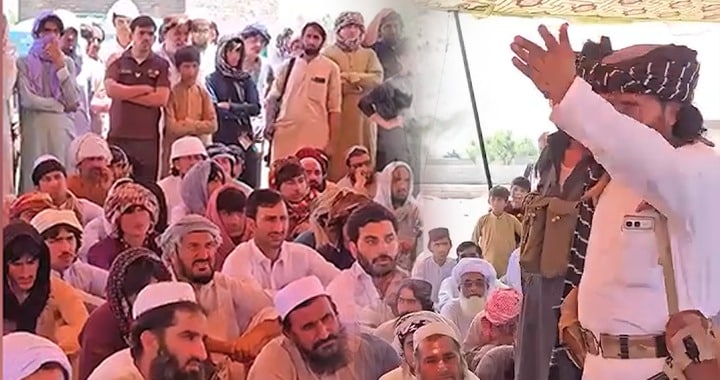
Recent developments in Bannu offered a powerful example.
Following deadly terrorist attacks that claimed innocent lives, tribal elders and local leaders publicly condemned Fitna al Khawarij and issued strong warnings against both terrorists and those who facilitate them. Such declarations matter because they indicate that local populations increasingly view terrorist violence not as a distant security issue but as a direct threat to their own families, livelihoods, and futures.
The attacks themselves reinforced this reality.
The victims were not decision-makers, military commanders, or political figures. They were ordinary Pakistanis. Every such incident widens the gap between terrorist propaganda and public perception.
Groups that claim to be fighting for communities increasingly find themselves accused of harming those same communities.
A similar trend can be observed in Balochistan.
Recent intelligence-based operations in Panjgur and other districts have exposed aspects of terrorist activity that receive less attention than attacks themselves but may be equally important.
One operation resulted in the recovery of improvised explosive devices, rocket fuzes, and communication equipment from an abandoned vehicle believed to be linked to terrorist infrastructure. Another operation in the Balicha area of Tump forced terrorists to abandon weapons, ammunition, motorcycles, and operational equipment while fleeing advancing security forces.
These incidents are noteworthy for what they reveal.
Modern terrorist organizations survive through networks rather than individuals. Every recovered explosive device, abandoned motorcycle, seized communication system, or disrupted facilitation route represents a setback not merely for a single operative but for the broader infrastructure supporting violence.
Midway Subheading
The Real Battlefield Extends Beyond the Gunfight
Recent revelations concerning hidden compartments inside fuel transport vehicles further illustrate this reality.
According to information released from Balochistan, specially modified fuel carriers were allegedly being used to facilitate terrorist movement and operations. Reports suggested the existence of concealed spaces equipped with seating arrangements, observation points, and firing positions.
Whether viewed as an operational tactic or a logistical innovation, the revelation highlights an important reality: terrorist organizations increasingly depend on covert infrastructure to sustain their activities.
This dependence may itself reflect a growing challenge.
Organizations enjoying genuine public support rarely need to conceal themselves inside hidden compartments.
The more terrorist groups lose freedom of movement, the more they must rely on secrecy, deception, and clandestine logistics.
The human consequences of this conflict have also become increasingly difficult to ignore.
One of the most disturbing recent incidents involved the reported killing of a young couple, Shazib and Zainab, during an attack allegedly carried out by BLA-linked terrorists. According to available accounts, the attack targeted a family home and resulted in the deaths of both husband and wife.
Regardless of political narratives surrounding the conflict, such incidents leave lasting impressions on local communities.
Families understand the difference between rhetoric and reality.
When violence reaches homes, villages, markets, schools, and places of work, public perceptions inevitably change.
Similarly, attacks targeting civilian property in areas such as Hassan Khel have reinforced concerns regarding the impact of terrorist violence on ordinary citizens. Damage to homes, community infrastructure, and civilian spaces often generates resentment that extends far beyond immediate victims.
This dynamic creates a difficult dilemma for terrorist organizations.
Violence may attract attention, but it can simultaneously erode legitimacy.
Each attack that harms civilians creates new critics. Each act of intimidation creates new opponents. Each attempt to coerce communities increases the risk of broader rejection.
The growing focus on facilitators and support networks also reflects an important evolution in Pakistan’s counterterrorism approach.
For many years, public attention naturally focused on armed terrorists. Increasingly, however, authorities appear focused on the infrastructure that enables attacks.
Facilitators, recruiters, transporters, propagandists, financiers, and logistical support networks often play roles that are just as important as those of armed operatives.
Without such support systems, terrorist organizations struggle to recruit, move personnel, transport weapons, and sustain operations.
This broader approach may prove particularly significant in Balochistan, where recent legal proceedings, investigations, and security operations have increasingly highlighted the importance of examining the ecosystem surrounding terrorist activity rather than focusing exclusively on armed encounters.
None of this suggests that the threat has disappeared.
Far from it.
Recent attacks demonstrate that terrorist organizations retain both intent and capability. They continue seeking opportunities to target civilians, security personnel, and public infrastructure. They remain capable of recruitment, planning, and propaganda.
However, the environment in which they operate may be changing.
Communities that have endured years of violence increasingly understand the practical consequences of terrorism. They have witnessed economic disruption, displacement, extortion, insecurity, and loss of life. Many have seen development projects delayed, businesses affected, and educational opportunities reduced.
These experiences shape public attitudes more effectively than any official statement.
Ultimately, the struggle against terrorism is not decided solely on battlefields.
It is also decided in villages, towns, markets, tribal councils, universities, and homes. It is decided when communities refuse intimidation, reject extremist narratives, expose facilitators, and refuse to provide the social space that terrorist organizations require.
Recent developments from Bannu to Turbat suggest that this process may already be underway.
Security operations will continue to play a central role in protecting citizens and disrupting threats. Yet the growing unwillingness of communities to tolerate violence may prove equally important.
For terrorist organizations that depend on fear, silence, and influence to survive, a population that increasingly refuses all three represents one of the most serious challenges they can face.



