
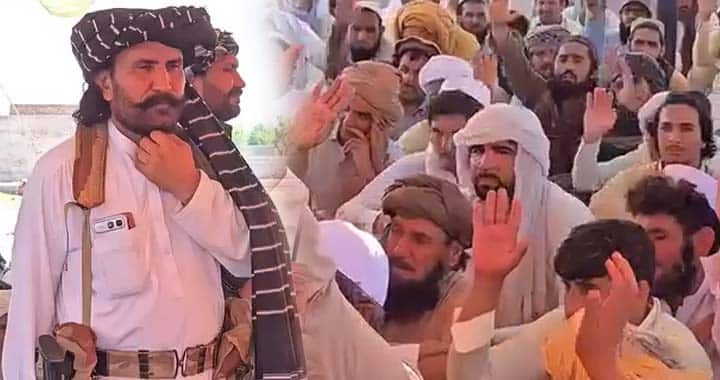
The funeral prayers of seven members of the Hathi Khel tribe martyred in the recent twin explosions in Bannu turned into a powerful display of public anger and tribal resolve, as local elders announced what many described as a decisive break with the fear that terrorist groups have long sought to impose on the region.
Addressing mourners, tribal elder Malik Tuwani Wazir said the victims had been targeted and martyred by terrorists of the banned TTP (Fitna al Khawarij), adding that the perpetrators were not outsiders but individuals linked to the same broader region.
“Their atrocities have gone on for too long,” he told the gathering. “From today onwards, they will receive a strong response.”
The remarks came amid growing outrage following the attack that killed seven members of the Hathi Khel tribe and injured several others in Bannu’s Domel area.
Witnesses described the funeral gathering as one of the largest tribal assemblies seen in the area in recent months, with elders, community leaders, and residents united in condemning the killing of civilians.
A Rare and Public Tribal Consensus
What distinguished the gathering was not only grief, but the unusually direct language employed by tribal leaders.
Several speakers declared that the time had come for communities to stand united against terrorist violence, arguing that continued silence and fear only embolden those responsible for attacks on civilians.
Tribal elders announced the formation of a lashkar (tribal force), saying communities would work collectively to resist terrorist influence and deny space to those seeking to destabilize the area.
Participants also vowed social action against individuals accused of facilitating terrorist activities, reflecting growing frustration within local communities over the role of support networks that enable violence.
A Turning Point in Public Sentiment?
For years, terrorist groups have relied on intimidation, targeted killings, and fear to maintain influence in parts of southern Khyber Pakhtunkhwa. Yet the response witnessed in Bannu suggests that public patience may be wearing thin.
The killing of seven members of a single tribe appears to have struck a particularly sensitive nerve, transforming mourning into a collective declaration that civilian communities can no longer remain passive spectators to violence.
Security analysts note that terrorist networks often struggle when local populations openly reject their presence and deny them social acceptance, concealment, or logistical support.
The Message From Bannu Was Clear
Beyond the funeral prayers, the gathering sent a broader message.
The anger expressed by tribal elders was not directed only at the perpetrators of the attack, but at the wider climate of fear that has repeatedly allowed terrorist violence to disrupt daily life across the region.
Whether the declarations made at the funeral translate into lasting action remains to be seen. However, one point was unmistakable: the families burying their dead were no longer speaking solely in the language of grief.
They were speaking in the language of resistance.
For a region that has paid a heavy price in lives over the years, that may prove to be one of the most significant developments to emerge from the tragedy.



