Arif Yousafzai
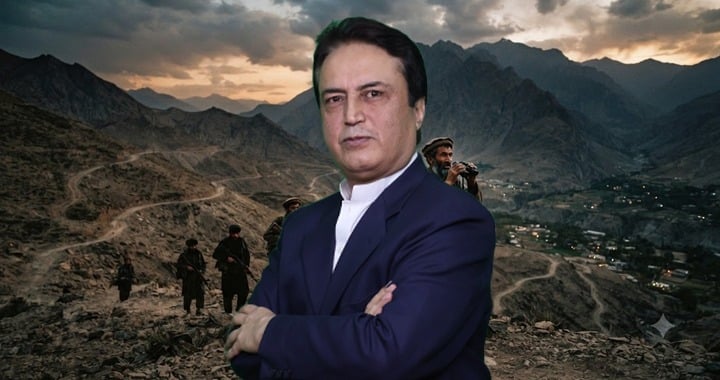
The political and security landscape of Afghanistan and Pakistan is once again entering a critical phase. Nearly five years after the Taliban returned to power in Kabul, a new challenge appears to be emerging from within Afghanistan itself. The rise of resistance groups, growing unrest in several provinces, and increasing militant activity across Pakistan indicate that the region is moving into a period of uncertainty where old conflicts are taking new forms.
The latest developments from Afghanistan suggest that opposition forces, particularly those associated with the Freedom Front and other resistance groups, are becoming more visible and active. Reports of their activities in Badakhshan, Baghlan, and Nuristan have created serious concerns for the Afghan Taliban government. While it would be premature to suggest that these groups are in a position to overthrow the Taliban administration, their growing presence represents a significant political and security challenge.
The question facing Kabul today is not simply whether it can defeat these armed groups militarily. The deeper question is why resistance movements are finding space to grow after years of Taliban control. History shows that governments can maintain power through force for a period of time, but lasting stability requires public confidence, political inclusion, economic opportunity, and effective governance.
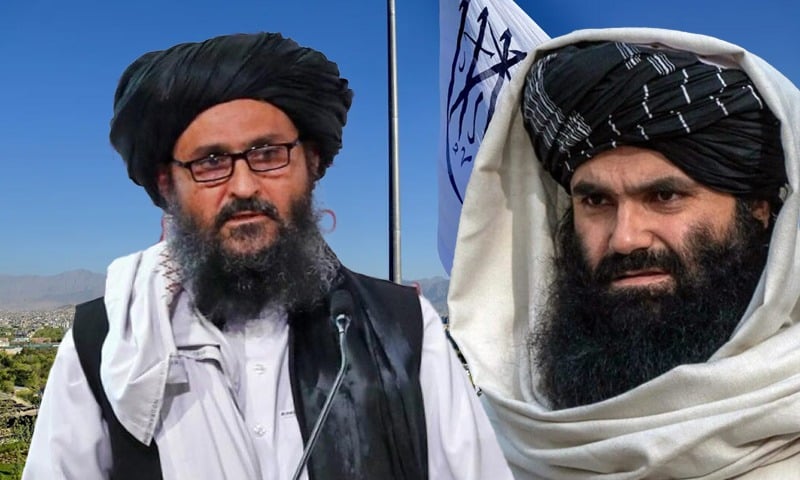
The fifth year of Taliban rule is becoming a defining moment. August carries particular symbolism because it marks the month when the previous Afghan government collapsed and the United States completed its withdrawal from Afghanistan. The Taliban’s victory in 2021 created the image of an unstoppable movement that had defeated one of the world’s strongest military powers.
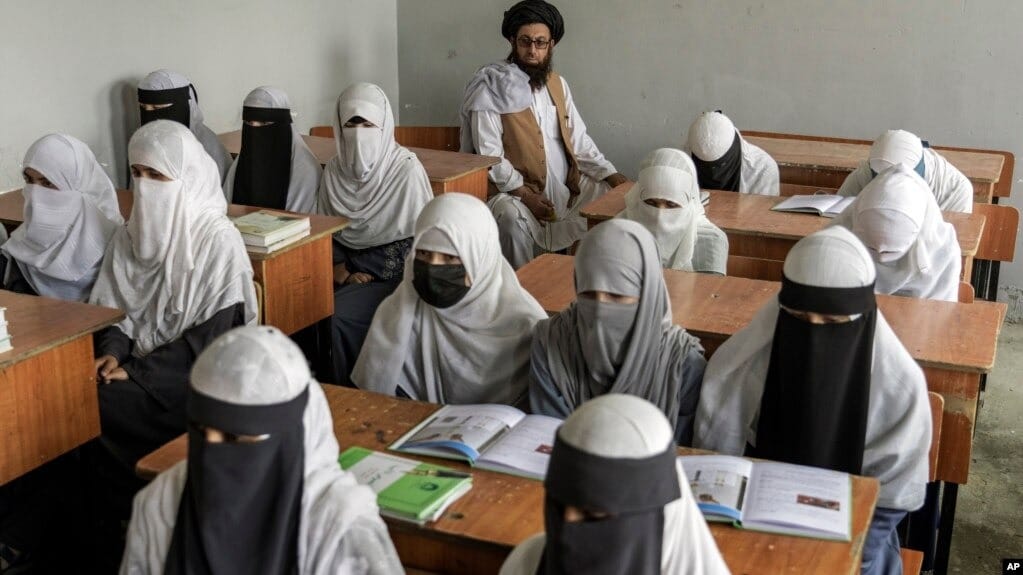
However, controlling a country is very different from capturing power. Governance brings challenges that battlefield victories cannot solve. Economic hardship, restrictions on citizens, political isolation, and dissatisfaction among different communities have created pressure on the Taliban administration.
The emergence of resistance activities reflects this changing environment. Previously, many opponents of the Taliban remained silent because of fear. After the Taliban’s rapid takeover, many former security officials, commanders, and political figures avoided confrontation because they believed resistance would bring immediate consequences.
Now, however, groups linked to former government personnel and local fighters appear more confident. Many of the individuals involved previously held positions within Afghanistan’s security institutions, including command and military roles. Their experience and networks provide them with organizational ability.
This does not mean the Taliban government is facing an immediate collapse. The Taliban still controls state institutions, security structures, and major urban areas. But the return of armed opposition after years of silence is a warning sign that cannot be ignored.
Among Afghanistan’s provinces, Badakhshan has become one of the most sensitive areas. The region’s geography, its historical importance, and the presence of resistance networks make it strategically significant. The killing of the head of the Information and Culture Department in Badakhshan was viewed as another alarm signal for the Taliban authorities. Following such incidents, resistance fighters have attempted to expand their influence by appearing in public spaces, speaking with communities, and presenting themselves as representatives of a wider struggle.
Their message focuses on accusations that the Taliban have damaged Afghanistan’s identity, controlled national resources, and failed to represent all sections of society. The area of Zebak has emerged as a particularly sensitive location. Earlier developments in Yaftal also highlighted the continuing security competition between Taliban forces and resistance groups. The Taliban responded by deploying senior military officials and launching operations aimed at preventing the spread of opposition.
At present, there is no evidence that resistance groups are close to taking full control of Badakhshan or surrounding provinces. Their military capability remains limited compared with the Taliban’s resources. However, the symbolic importance of their activities is significant. Five years after the Taliban takeover, a spark of organized resistance has appeared. For the Taliban leadership, this is an uncomfortable reminder that military victory alone does not automatically guarantee permanent stability.
Another important development is the progress on the Wakhan Corridor connecting Afghanistan and China. The region has strategic importance because of its geographical location and potential economic links. Construction work in the corridor is usually limited because extreme winter conditions make operations difficult for several months. However, increased activity has raised attention toward this remote area. The opening of better connectivity between Afghanistan and China could provide economic opportunities. At the same time, it may create new security challenges. Any expansion of infrastructure in sensitive regions can become a target for groups seeking attention or strategic influence.
The possibility of attacks in Wakhan, whether against Taliban forces or Chinese interests, remains a concern. Resistance groups may attempt to demonstrate that the Taliban government cannot fully secure Afghanistan’s territory. The coming months will show whether Wakhan becomes a symbol of regional cooperation or another arena of conflict.
While Afghanistan faces internal resistance, Pakistan is dealing with its own serious security crisis. The recent briefing by the Inter-Services Public Relations (ISPR) highlighted thousands of intelligence-based operations and ongoing counterterrorism efforts. Pakistan’s security forces, including the military, paramilitary organizations, and police, continue operations against militant groups. However, despite these efforts, attacks have increased in areas such as Khyber Pakhtunkhwa and Balochistan.
The resurgence of militant activity has become more organized. Large-scale attacks against security installations, compounds, and fortified positions indicate that militant groups are adopting more coordinated strategies. In Khyber Pakhtunkhwa, attacks linked to the Tehreek-e-Taliban Pakistan (TTP) have remained a major concern. In Balochistan, separatist groups, including the Baloch Liberation Army and its specialized units, have increased their operations.
Recent attacks demonstrate that militants are no longer relying only on traditional hit-and-run tactics. They are attempting complex operations designed to create maximum impact, damage security infrastructure, and challenge the state’s authority.
One major factor contributing to Pakistan’s security challenges is geography. Both Khyber Pakhtunkhwa and Balochistan contain difficult mountainous terrain, remote valleys, and areas where state presence has historically been limited. Such geography provides militant groups with opportunities for hiding, movement, and planning operations.
However, geography alone does not explain the persistence of militancy. Security experts and analysts have repeatedly pointed toward deeper political, social, and economic issues. A state’s strength depends not only on military capability but also on the relationship between citizens and institutions. When people lose confidence in government systems, extremist narratives can find space.
One of the biggest questions facing Pakistan is whether counterterrorism has become only a military responsibility. Security forces continue to sacrifice lives and conduct operations, but long-term solutions require political ownership. Governments at federal and provincial levels must play a stronger role in addressing security challenges. A common pattern after major attacks is that political leaders express concern, demand reports, and promise action. However, many critics argue that this approach is insufficient. A serious security crisis requires planning, accountability, governance reforms, and public engagement.
The National Action Plan, introduced after the devastating terrorist attack on the Army Public School in Peshawar, was designed to create a comprehensive national strategy against extremism. Yet questions remain about how fully its recommendations have been implemented.
Counterterrorism cannot succeed through force alone. It requires education, economic development, justice reforms, and stronger civilian institutions.
The situation in Balochistan represents one of Pakistan’s most complex challenges. Militancy there cannot be viewed only through a security lens. Political grievances, economic inequality, unemployment, and feelings of marginalization also influence the environment. When citizens feel disconnected from the state, extremist organizations attempt to exploit that frustration. The recruitment strategies of militant groups often depend on exploiting anger and disappointment among young people. This makes addressing social and economic conditions essential. A successful counterterrorism strategy must combine security measures with development and political engagement. Winning public trust is as important as defeating armed groups.
Security problems are often connected with economic realities. Unemployment, poverty, and lack of opportunities create conditions where frustration can grow. A country cannot expect permanent stability if large sections of society feel excluded from economic progress.
Regional trade, particularly between Pakistan, Afghanistan, and Central Asia, could create opportunities for millions of people. Open borders, legal trade routes, and economic cooperation can reduce the influence of extremist narratives by giving communities alternatives.
When people have jobs, businesses, and hope for the future, militant organizations find it harder to recruit supporters. Afghanistan and Pakistan are both facing defining moments. Afghanistan’s Taliban government must understand that political stability cannot be achieved only through security control. Inclusive governance and public confidence are essential. Pakistan must recognize that terrorism cannot be defeated permanently without addressing governance weaknesses, economic challenges, and public distrust.
The region has experienced decades of conflict. Military operations may remove immediate threats, but sustainable peace requires stronger institutions and responsible leadership. The warning signs are visible. Rising resistance in Afghanistan, increasing militancy in Pakistan, economic frustration, and declining public trust are interconnected challenges.
The solution requires courage, competence, and long-term thinking. Governments must focus on delivering services, reducing corruption, strengthening institutions, and restoring citizens’ confidence. A nation becomes strong not only through its weapons or security forces but through the trust between the state and its people. The future stability of Afghanistan and Pakistan depends on whether leaders can understand this reality and act before another cycle of instability begins.