
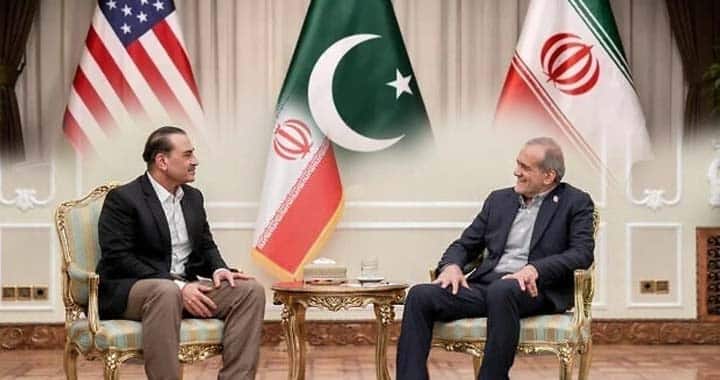
Pakistan is cautiously optimistic about efforts to mediate between Iran and the United States, with Field Marshal Syed Asim Munir’s two visits to Tehran this month pointing to potentially positive developments in the diplomatic process, Inter-Services Public Relations (ISPR) Director General Lieutenant General Ahmed Sharif Chaudhry has said.
In his first interview with Reuters, the military spokesperson said the repeated visits suggested that there were positive possibilities behind Pakistan’s diplomatic engagement with Iran, although he stopped short of predicting the outcome of the mediation effort.
Field Marshal Asim Munir visited Tehran twice this month, with his latest visit also involving Saudi Arabia’s Defense Minister Prince Khalid bin Salman and Türkiye’s intelligence chief Ibrahim Kalin. The diplomatic engagement comes as the conflict between Iran and the United States enters its eighth month, heightening concerns about a wider regional confrontation.
Lieutenant General Ahmed Sharif Chaudhry cautioned that influential actors opposed to ending the conflict could complicate mediation efforts. He said some powerful elements believed their interests were served by continued tensions, potentially creating obstacles to a diplomatic settlement.
The military spokesperson declined to disclose the details of discussions with Iranian officials or clarify whether the United States had supported the latest visit. His remarks nevertheless indicated that Pakistan remained engaged in efforts to encourage dialogue at a time when regional tensions continue to pose significant security risks.
Pakistan’s mediation efforts carry implications beyond the immediate confrontation between Washington and Tehran. A prolonged conflict could deepen instability across the region, complicate relations among neighboring countries and create additional security and economic pressures. A negotiated settlement, by contrast, could help reduce the risk of escalation and open space for broader regional engagement.
The participation of senior Saudi and Turkish figures in the latest visit also underscored the regional dimension of the diplomatic effort. However, the extent to which these contacts can translate into concrete progress remains uncertain, particularly given the competing interests that continue to shape the conflict.
The interview also touched on regional defense cooperation and the possibility of expanding the existing security arrangement involving Pakistan and Saudi Arabia.
Lieutenant General Ahmed Sharif Chaudhry said the agreement did not bar new members. Asked whether Iran could join, he said countries sharing a common vision of regional peace would be welcome, while stressing that any decision would rest with the political leadership of the three founding parties.
On the possibility of deploying additional Pakistani troops to Saudi Arabia, he said the matter would depend on circumstances and decisions by the political leadership of both countries. He reaffirmed Pakistan’s commitment to Saudi Arabia’s defense, including the protection of Islam’s holy sites in Makkah and Madinah.
He also clarified that Pakistan was not a party to Yemen’s conflict, describing it as a struggle among domestic parties.
Pakistan’s diplomatic engagement with Iran is unfolding alongside its broader regional security commitments. Whether the latest contacts can produce tangible progress in US-Iran mediation will depend on the willingness of the parties to pursue a settlement and their ability to overcome opposition to ending the conflict.



