
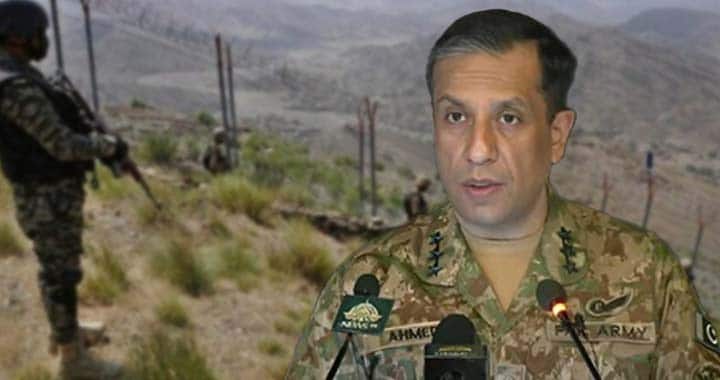
Pakistan will expand intelligence-based counterterrorism operations across Khyber Pakhtunkhwa as security forces step up efforts to eliminate terrorist threats in the province, Inter-Services Public Relations (ISPR) Director General Lieutenant General Ahmed Sharif Chaudhry has said.
In an interview with Reuters, the military spokesperson said counterterrorism operations in KP were conducted on the basis of intelligence information, indicating that security forces would continue targeted actions against terrorist networks and their facilitators.
The announcement comes as Pakistan continues efforts to dismantle terrorist infrastructure and prevent attacks in Khyber Pakhtunkhwa, where security forces and law enforcement agencies have been conducting intelligence-based operations against the banned Tehreek-e-Taliban Pakistan (TTP) and other terrorist groups.
The expansion of operations is expected to maintain pressure on terrorist networks, disrupt their activities and strengthen security in areas vulnerable to infiltration and attacks. Intelligence-led actions also enable security forces to identify specific threats and target terrorist hideouts while limiting the risks associated with broader operations.
Lieutenant General Ahmed Sharif Chaudhry also discussed Pakistan’s diplomatic engagement with Iran and regional security developments during the interview. He described Field Marshal Syed Asim Munir’s two visits to Tehran during the month as a sign of potentially positive developments in efforts to mediate between Iran and the United States.
He said Pakistan remained cautiously optimistic about the mediation process, while warning that influential actors opposed to an end to the conflict could complicate diplomatic efforts.
The military spokesperson declined to disclose details of discussions with Iranian officials or say whether Washington had supported the latest visit.
On the regional security framework involving Pakistan and Saudi Arabia, he said the agreement’s provisions did not prohibit additional countries from joining. Asked whether Iran could become a member, he said countries sharing a common vision of regional peace would be welcome, while emphasizing that the decision rested with the political leadership of the three founding parties.
Regarding the possible deployment of additional Pakistani troops to Saudi Arabia, he said any such decision would depend on prevailing circumstances and the decisions of the political leadership of both countries.
He reiterated Pakistan’s commitment to Saudi Arabia’s defense, including the protection of Islam’s holiest sites in Makkah and Madinah, and said Pakistan was not a party to Yemen’s internal conflict.



