
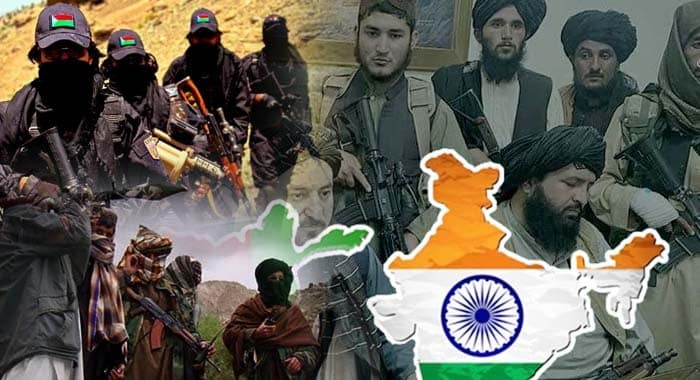
A classified intelligence document reviewed by The News has alleged a continuing arrangement involving India’s Research and Analysis Wing (RAW), Afghanistan’s intelligence apparatus and senior Taliban leadership to provide training, financing and safe havens to terrorist groups targeting Pakistan.
According to Pakistani intelligence officials cited in the report, the alleged network is operating through proxy groups and using Afghan territory to facilitate terrorist attacks in Khyber Pakhtunkhwa and Balochistan. The allegations include the provision of training, financial resources and shelter to groups involved in attacks inside Pakistan.
The document reportedly identifies the banned Balochistan Liberation Army (BLA) and banned Tehreek-e-Taliban Pakistan (TTP) among the principal proxy groups allegedly connected to the arrangement. It also claims that al-Qaeda in the Indian Subcontinent (AQIS) forms part of the wider network and is being maintained for operations against targets in Pakistan.
The intelligence assessment reportedly places the emergence of a closer BLA-TTP nexus around 2025 and links its development to training camps already operating in Afghanistan. According to the document, those camps allegedly received support from Afghanistan’s General Directorate of Intelligence (GDI).
The document further alleges that the arrangement involves senior elements of the Taliban administration and that RAW has played a role in facilitating contacts and financing for groups involved in attacks against Pakistan. These claims could not independently be verified, and neither the Indian government nor the Taliban administration has accepted the allegations.
The report comes against the backdrop of Pakistan’s longstanding accusations that terrorist groups operating against the country have found sanctuary and logistical space in Afghanistan. Islamabad has repeatedly raised the issue with Afghan authorities and at diplomatic forums, while India and the Taliban administration have previously rejected Pakistani allegations of state-backed terrorism.
The latest intelligence claims are also significant because they describe the alleged relationship not simply as separate instances of assistance but as a coordinated network involving multiple terrorist organizations.
According to The News report, the document alleges that the BLA-TTP nexus was developed around an existing infrastructure of training camps in Afghanistan. It further claims that the Afghan GDI provided support to these facilities, while AQIS was incorporated into the wider network for operational purposes.
The alleged links between the groups are particularly significant in light of recent assessments by the UN Security Council’s monitoring mechanisms. A 2026 UN monitoring report warned that continued support provided by the Afghan Taliban to the TTP had contributed to an increase in the frequency and lethality of terrorist attacks in Pakistan. The report also highlighted increasingly blurred operational and facilitation links involving the TTP, al-Qaeda, ISIL-K and the BLA.
The intelligence claims also come amid repeated attempts by terrorists to cross the Pakistan-Afghanistan border. Security forces have recently intercepted infiltration attempts in Khyber Pakhtunkhwa, including in Kurram and North Waziristan, while Afghan nationals have been identified among terrorists killed during some of those operations.
The reported intelligence network would, if independently corroborated, add another dimension to the security challenge facing Pakistan: the alleged convergence of separate terrorist organizations operating from Afghan territory, alongside claimed external financing and intelligence support.
For Islamabad, the allegations also revive questions about commitments made by the Taliban administration concerning the use of Afghan territory against neighboring countries. Pakistan has repeatedly demanded verifiable action against terrorist groups operating from Afghanistan, while Kabul has maintained that it does not allow its territory to be used against other countries.
The latest claims therefore place renewed focus on the gap between those assurances and the continued allegations of terrorist infrastructure, training facilities and operational networks inside Afghanistan.
The allegations regarding RAW are particularly contested. India has consistently rejected Pakistani accusations of sponsoring terrorism in Pakistan, while the Taliban authorities have also rejected allegations that they facilitate anti-Pakistan terrorist groups. The latest document represents an assessment attributed to Pakistani intelligence sources, rather than independently established evidence.
If the allegations concerning a standing arrangement between RAW, Afghan intelligence structures and senior Taliban figures are substantiated, they would point to a considerably more organized cross-border support mechanism than isolated instances of terrorist sanctuary. For now, however, the specific claims contained in the classified document remain allegations requiring independent corroboration.



