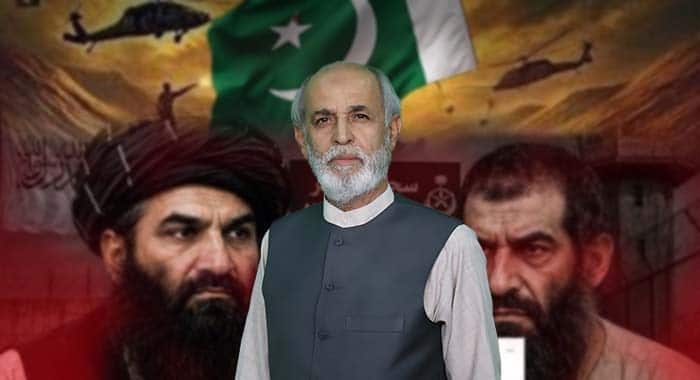
(Shamim Shahid)
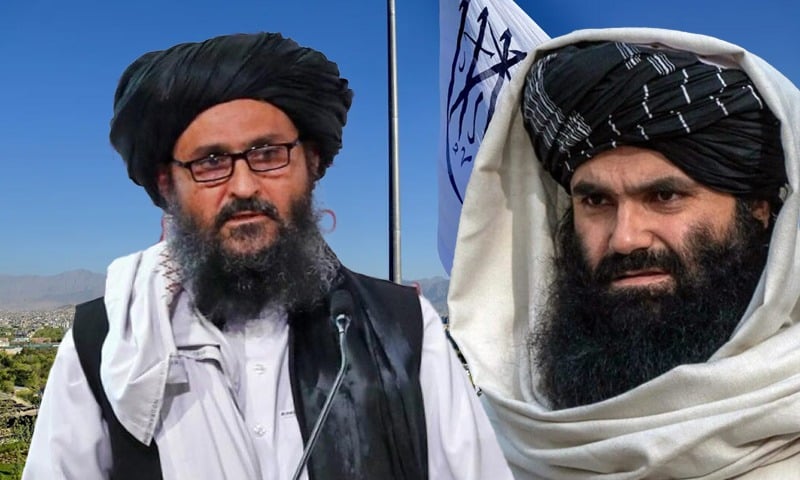
The security landscape of Pakistan and the wider region has entered another critical phase. Events unfolding across Afghanistan, Pakistan’s western borderlands, and Balochistan are no longer isolated developments. They are interconnected pieces of a much larger puzzle involving militancy, regional rivalries, governance failures, and political instability. Recent reports regarding a meeting between Afghanistan’s Interior Minister Sirajuddin Haqqani and a senior Daesh commander in Saudi Arabia have once again raised troubling questions about the evolving relationships among militant organizations operating across the region.
At the same time, Pakistan is facing growing security challenges in Khyber Pakhtunkhwa and Balochistan, while political divisions continue to undermine governance and policymaking. These developments demand serious reflection because they collectively point towards a reality that policymakers can no longer afford to ignore: military responses alone cannot deliver lasting peace, nor can political instability coexist indefinitely with effective governance and security.
The reported meeting between Sirajuddin Haqqani and a senior Daesh figure has generated considerable debate. Whether viewed from a security, intelligence, or geopolitical perspective, such an encounter inevitably invites scrutiny. Throughout the history of militancy in the region, ideological divisions among extremist organizations have often been overstated. While groups may differ in strategy, leadership, or operational priorities, their networks frequently overlap. Rivalries certainly exist, but cooperation has also been a recurring feature of militant ecosystems.
The evolution of militancy in the region demonstrates this complexity. The anti-Soviet jihad produced a generation of fighters who later dispersed into various organizations. Al-Qaeda emerged as a transnational militant movement. The Afghan Taliban consolidated their influence inside Afghanistan. Later, Daesh attempted to establish its own foothold by attracting fighters from multiple countries, including Afghanistan and Pakistan. Despite public disagreements and occasional clashes, these organizations have often shared logistical channels, recruitment networks, and operational spaces.
The reality of militancy is rarely as simple as official narratives suggest. Groups may compete for influence while simultaneously benefiting from each other’s presence. They may denounce one another publicly while maintaining channels of communication behind the scenes. This pattern has been observed in conflict zones across the Middle East, Africa, and South Asia.
The significance of the reported Saudi meeting therefore lies not merely in the identities of the participants but in what it may reveal about ongoing strategic calculations. When senior figures associated with different militant networks engage with one another, questions naturally arise regarding future alignments, operational cooperation, and regional security implications.
The rise and persistence of Daesh in Afghanistan remains one of the most important security developments of the past decade. Following the territorial losses suffered by Daesh in Iraq and Syria, Afghanistan emerged as an alternative theatre for the organization’s ambitions. Nangarhar province became a major center of activity, and Afghan authorities launched extensive operations against the group.
Before the Taliban returned to power in August 2021, Afghan security forces had detained thousands of militants linked to Daesh. However, the collapse of the former Afghan government dramatically altered the security environment. The opening of prisons during the Taliban takeover allowed numerous detainees to regain their freedom. Security analysts have repeatedly highlighted how such developments contributed to the reorganization of militant networks throughout the region.
Today, Daesh remains active in Afghanistan despite Taliban claims of having weakened the organization. Attacks continue to occur in various parts of the country, including regions that were once considered relatively secure. The group’s operational capacity may fluctuate, but its presence remains a concern not only for Afghanistan but for neighboring countries as well.
Pakistan faces the consequences of these developments more directly than most. The porous border, historical ties among militant networks, and the movement of fighters across the region create persistent security challenges. Incidents in Khyber Pakhtunkhwa, North Waziristan, Bannu, and Lakki Marwat reflect a troubling trend: militancy has adapted rather than disappeared.
The debate surrounding external support for militant organizations also continues. Across the region, competing narratives accuse various international powers of exploiting militant groups to advance strategic objectives. While such claims require careful examination and evidence-based analysis, one fact remains undeniable: great power competition has historically influenced conflicts in this region. Afghanistan, in particular, has repeatedly served as an arena where regional and global rivalries intersect.
The withdrawal of international forces from Afghanistan did not eliminate geopolitical competition. Tensions involving major powers, regional influence, border security, and economic corridors continue to shape strategic calculations. In such an environment, militant organizations often seek opportunities to exploit instability, while states struggle to secure their interests.
Yet the security challenge confronting Pakistan is not limited to militancy alone. Political instability has emerged as an equally serious concern. Khyber Pakhtunkhwa’s political landscape currently reflects growing tensions within the provincial leadership. Differences among elected representatives, disagreements over governance priorities, and internal divisions within political parties have created uncertainty at a time when the province requires unity and decisive action.
Budgetary processes, governance reforms, and administrative effectiveness depend upon political cohesion. When internal disputes dominate the political agenda, governance suffers. Public services decline, development slows, and citizens lose confidence in institutions.
The debate surrounding Imran Khan’s political future illustrates a broader challenge facing Pakistan’s political system. Regardless of one’s political preferences, it is increasingly evident that prolonged political confrontation benefits no one. Political disputes are ultimately resolved through dialogue, negotiation, and institutional engagement. Attempts to manage political crises solely through legal, administrative, or coercive mechanisms rarely produce durable outcomes.
Pakistan’s political history repeatedly demonstrates that unresolved political conflicts tend to deepen over time. The longer divisions persist, the greater the cost to governance, economic stability, and public trust. Khyber Pakhtunkhwa, already facing significant security challenges, can ill afford prolonged political paralysis.
If the political leadership remains consumed by internal disputes, attention will inevitably be diverted from pressing issues such as security, economic recovery, and public welfare. Political maturity requires recognizing that dialogue is not a sign of weakness but a prerequisite for democratic stability.
Meanwhile, the situation in Balochistan demands urgent national attention. The province continues to face a complex mix of insurgency, insecurity, governance deficits, and social grievances. Incidents targeting civilians, public servants, and professionals contribute to a climate of fear that undermines both governance and development.
The recent attack on a female doctor is particularly disturbing. Such incidents represent more than individual acts of violence; they strike at the very foundations of public service. Doctors, teachers, and other professionals serve communities under often difficult circumstances. When they become targets, the consequences extend beyond personal tragedy. Entire communities lose access to essential services, and public confidence in state institutions weakens further.
Women working in public institutions deserve protection, respect, and security. Any attack against them must be investigated thoroughly and prosecuted effectively. Failure to ensure accountability not only emboldens perpetrators but also discourages talented professionals from serving in vulnerable areas.
However, focusing solely on individual incidents risks overlooking the larger crisis. Balochistan’s security challenges have persisted for nearly two decades. Thousands of lives have been affected, including civilians, security personnel, and local residents caught between competing forces. The human cost has been immense.
Experience from conflict zones around the world demonstrates that purely military approaches rarely resolve long-running insurgencies. Security operations may suppress violence temporarily, but lasting peace requires addressing political grievances, economic exclusion, and social alienation. Dialogue is often difficult and politically sensitive, yet sustainable solutions usually emerge through political engagement rather than perpetual confrontation.
The same lesson applies to Pakistan’s tribal districts and border regions. Security operations have been conducted repeatedly over the years. Many have achieved important tactical successes. Yet the persistence of militancy suggests that deeper structural issues remain unresolved.
Recent operations in North Waziristan, Bannu, and Lakki Marwat highlight the continuing seriousness of the threat. Security forces confront determined adversaries who exploit difficult terrain, cross-border dynamics, and local vulnerabilities. Their sacrifices deserve recognition. However, operational success alone cannot guarantee long-term stability.
The experience of Swat offers valuable lessons. The eventual improvement in security there was not achieved solely through force. It involved public support, local participation, political consensus, and targeted action against militant networks. Community cooperation proved essential. Citizens felt invested in restoring peace because they were treated as partners rather than spectators.
This principle remains relevant today. Counterterrorism efforts are most effective when local communities trust state institutions. Intelligence gathering improves. Extremist narratives lose credibility. Public cooperation increases. Conversely, when communities feel marginalized or excluded, militant groups find opportunities to exploit resentment and distrust.
Trust, therefore, is not merely a political concept; it is a security necessity.
Pakistan today stands at a crossroads. The country faces interconnected challenges that cannot be addressed in isolation. Militancy in Afghanistan affects security in Pakistan. Political instability weakens governance. Governance failures create space for extremism. Economic difficulties intensify public frustration. Regional rivalries complicate strategic calculations.
Addressing these challenges requires a comprehensive national strategy built upon several pillars.
First, there must be an honest assessment of evolving militant networks and their regional connections. Security policy must be informed by facts rather than assumptions. Second, political dialogue must be prioritized. Prolonged political confrontation weakens institutions and distracts from national priorities. Third, Balochistan requires a renewed focus on political engagement, economic inclusion, and institutional reform. Security measures alone cannot address decades-old grievances. Fourth, counterterrorism strategies must emphasize community partnership and public trust. Local populations are not merely stakeholders; they are essential partners in achieving lasting peace.
Finally, policymakers must recognize that stability is not simply the absence of violence. True stability emerges when citizens have confidence in institutions, when political disputes are resolved through dialogue, when public servants can perform their duties without fear, and when communities feel included in the national project.
The challenges confronting Pakistan are formidable, but they are not insurmountable. History shows that nations overcome crises when they combine security with political wisdom, strength with inclusiveness, and authority with accountability.
The region is entering a period of uncertainty. Militant networks continue to evolve. Political tensions remain unresolved. Security concerns persist. Yet uncertainty should not lead to despair. It should instead serve as a reminder that sustainable peace requires more than military victories or political slogans. It requires vision, dialogue, and a commitment to addressing the root causes of instability.
That is the challenge before Pakistan today and how it responds may well determine the country’s security and political trajectory for years to come.