
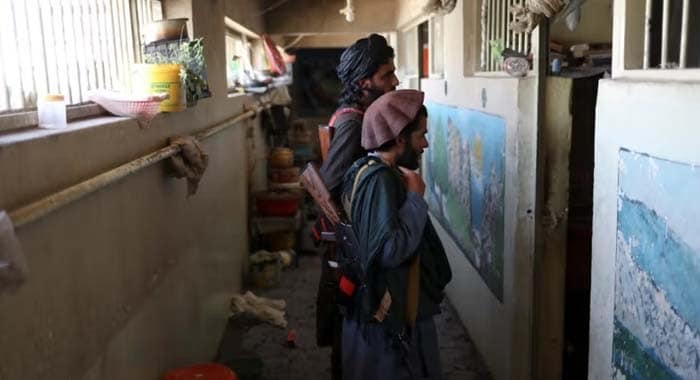
Former detainees, human rights advocates and United Nations officials have renewed grave allegations against the Taliban regime, accusing its officials and security personnel of involvement in sexual violence, torture, forced confessions, and systematic abuse inside detention facilities across Afghanistan.
The latest concerns were raised by the United Nations Special Rapporteur on Human Rights in Afghanistan, Richard Bennett, who said his office has confirmed cases of sexual violence attributed to Taliban officials, particularly inside detention centers. According to Bennett, victims identified during human rights investigations included women and girls as well as men and boys, underscoring the breadth of the alleged abuses.
The revelations add to growing international scrutiny of the Taliban’s human rights record and come amid mounting evidence suggesting that abuse inside Taliban-controlled detention facilities remains widespread despite repeated denials by the regime.
According to a recent report presented to the United Nations Security Council, Taliban officials and security personnel have been implicated in acts of sexual violence against women. The report cited documentation gathered by the United Nations Assistance Mission in Afghanistan, which recorded 21 cases of sexual violence during 2025, including allegations of gang rape involving 15 women and six girls.
Bennett warned that the documented cases likely represent only a fraction of the actual scale of abuse.
“The reality is far more serious and significantly underreported,” he indicated, noting that social stigma, fear of retaliation, and concerns for personal safety discourage many victims from speaking publicly about sexual violence.
Human rights investigators say reporting remains particularly difficult because victims often face threats, intimidation, and social ostracism. According to Bennett, Taliban officials have allegedly warned victims against discussing abuses or cooperating with human rights researchers, creating additional barriers to accountability.
Because of these risks, investigators often collect testimonies only when survivors are located in secure environments and have access to psychological and medical support services.
The allegations emerge only days after the UN Security Council reported that protesting women detained by Taliban authorities had been subjected to arbitrary imprisonment, torture, mistreatment, and sexual violence.
The findings also reinforce a broader pattern of abuse previously documented by former prisoners and human rights defenders.
In recent weeks, former Taliban detainees and relatives of prisoners from across Afghanistan described a detention system marked by arbitrary arrests, severe mistreatment, and forced confessions. Several former detainees alleged they were detained without evidence, blindfolded, shackled, subjected to electric shocks, and pressured into making confessions during interrogations.
Former detainees further claimed that abuse often continued after transfer to formal prison facilities, while relatives of prisoners reported cases in which detainees were allegedly tortured and later pressured to act as informants.
Women’s rights activist and former Taliban prisoner Zarifa Yaqoubi has also publicly challenged Taliban denials regarding prison conditions. She previously stated that she and fellow detainees experienced various forms of torture and were forced to provide confessions while held by Taliban intelligence authorities. Yaqoubi has said that the psychological effects of her detention continue to impact her long after her release.
The latest allegations stand in direct contrast to repeated assertions by Taliban spokesman Zabihullah Mujahid, who has publicly denied reports of torture and mistreatment inside detention facilities, maintaining that abuse of detainees is prohibited under Taliban regulations.
However, human rights observers argue that growing testimony from former prisoners, findings by UN bodies, and reports from international investigators collectively paint a troubling picture of conditions inside Taliban-run detention centers.
Bennett acknowledged that resource limitations have restricted the ability of his office to conduct comprehensive investigations across Afghanistan but stressed that available evidence already points to serious human rights concerns requiring urgent international attention.
The latest accusations add to a widening body of allegations against the Taliban regime. Recent investigations have documented claims of torture, forced confessions, arbitrary detentions, and severe mistreatment of prisoners. Separate reporting has also highlighted the Taliban’s decision to restrict public disclosure of corporal punishment statistics after findings revealed that tens of thousands of lashes had allegedly been carried out since the group’s return to power in August 2021.
Human rights advocates warn that the combination of sexual violence allegations, torture claims, forced confessions, arbitrary detention practices, and corporal punishments raises profound concerns about accountability, due process, and the protection of fundamental rights under Taliban rule.
As international scrutiny intensifies, rights groups continue to call for independent investigations, protection for victims and witnesses, and greater transparency regarding conditions inside Afghanistan’s detention system. They argue that without meaningful accountability, allegations of abuse are likely to remain a defining feature of the human rights crisis unfolding under Taliban control.



