
Russia has called for eliminating terrorist threats from Afghanistan and stabilizing the country’s security situation, warning that international terrorist organizations, particularly the Islamic State’s Khorasan branch (ISIS-K), continue to operate in the country.
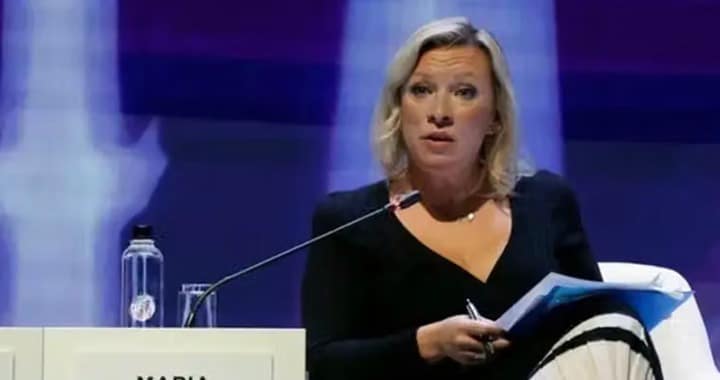
Russian Foreign Ministry spokesperson Maria Zakharova made the remarks during a press briefing in Moscow on Friday, November 20. She said international efforts to combat terrorism must be pursued without ulterior motives or hidden agendas, emphasizing Moscow’s commitment to the principle of “regional solutions to regional problems.”
Zakharova said Russia remained ready to discuss specific counterterrorism measures and assist in their implementation on the basis of firm agreements.
Highlighting cooperation with Pakistan, she described Islamabad as one of Moscow’s key partners in combating terrorism in South Asia, including Afghanistan. She said the two countries maintained close dialogue and coordination, both bilaterally and through multilateral mechanisms.
The spokesperson identified the Moscow Format of Consultations on Afghanistan as a priority for Russia, describing it as the most inclusive regional mechanism for addressing the Afghan situation. The forum brings together Russia, Afghanistan, Pakistan, India, Iran, China and the five Central Asian states: Kazakhstan, Kyrgyzstan, Tajikistan, Turkmenistan and Uzbekistan.
Commenting on tensions between the Afghan Taliban authorities and Pakistan, Zakharova said Moscow was closely monitoring developments and consistently supported resolving disputes through political and diplomatic channels. She added that Russia was prepared to facilitate dialogue between Islamabad and the Taliban if both sides requested its assistance.
Her remarks followed a warning by Russia’s representative to the United Nations Security Council that the threat posed by ISIS-K remained despite counterterrorism operations conducted by the Taliban authorities. The representative said the group retained significant military capabilities, which had been strengthened through foreign financial support and the presence of foreign fighters, particularly those with combat experience in Syria and Iraq.
The Russian representative also said the activities of groups such as the banned Tehreek-e-Taliban Pakistan (TTP) and the East Turkestan Islamic Movement (ETIM) aligned with ISIS-K’s objectives.
Separately, Alexandre Zouev, the United Nations Acting Under-Secretary-General for Counter-Terrorism, warned of growing terrorist capabilities and activity in Afghanistan. He said ISIS-K was putting pressure on the Taliban authorities and appeared to be rebuilding its operational capabilities.
Zouev added that information provided by some UN member states indicated that ISIS-K had access to modern tactical equipment, including drones.
The statements came as Russian President Vladimir Putin and Tajik President Emomali Rahmon met in Dushanbe on Friday to discuss developments in Afghanistan, regional security threats and cooperation on border security.
The Taliban authorities have repeatedly denied that ISIS-K operates freely in Afghanistan, claiming that their security forces have largely eliminated the group’s presence and capabilities. However, the warnings from Russian and UN officials indicate continuing concerns over the group’s ability to operate and rebuild its strength.



