
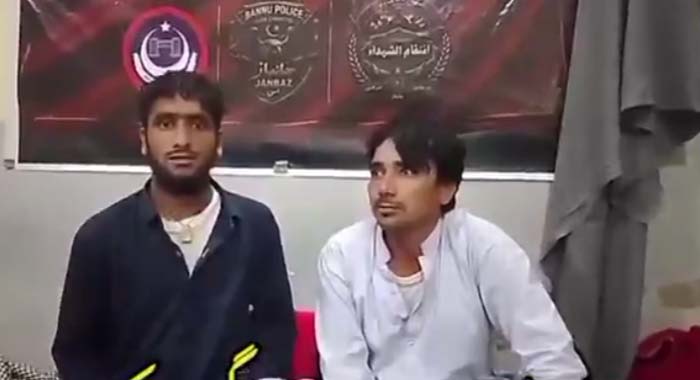
A minor youth identified as Shahzeb, alias “Gas,” has reportedly surrendered before the Bannu Police Peace Committee, expressing remorse over his alleged association with the Khawarij and pledging to end any further involvement, cooperation or facilitation of their activities.
According to the Peace Committee spokesperson, Shahzeb appeared before local elders accompanied by his brother and publicly expressed his decision to distance himself from the network. He reportedly acknowledged the consequences of his association and committed himself to following the law and contributing to peace and stability in the area.
The case has drawn attention to concerns surrounding the alleged recruitment and exploitation of underage youth by armed networks operating in parts of Khyber Pakhtunkhwa. According to the account provided by the committee, Shahzeb said that the Khawarij use intoxicants and other inducements to lure vulnerable and underage young people into their activities.
The committee spokesperson further stated that Shahzeb alleged that young people are subsequently exposed to coercion and pressure to facilitate activities on behalf of the network. Such allegations highlight the vulnerability of minors in conflict-affected communities, where armed groups can attempt to exploit young people through manipulation, coercion, financial incentives or substance abuse.
Shahzeb also reportedly described the economic pressure allegedly imposed on local communities. According to his account, residents have faced demands for money, grain and bread, placing additional burdens on families already dealing with difficult economic and security conditions.
The reported surrender therefore represents more than the withdrawal of one individual from an armed network. It also provides an account, according to the Peace Committee, of the methods allegedly used to recruit and retain young people and extract resources from local communities.
During his appearance before the committee, Shahzeb, accompanied by his brother, pledged to completely disassociate himself from the Khawarij and to cease providing any form of cooperation, facilitation or support. His decision was reportedly welcomed by local elders, who emphasized the importance of lawful conduct and peaceful reintegration.
Members of the Bannu Police Peace Committee reportedly urged the youth to remain within the framework of the law and to use the opportunity to rebuild his life through constructive and peaceful activities. The elders stressed that young people have an important role to play in restoring stability and strengthening social cohesion within communities affected by insecurity.
The episode also underscores the importance of community-level mechanisms in encouraging individuals to abandon armed networks. Local elders and peace committees can provide channels through which individuals seeking to disengage from violent organizations can publicly renounce their affiliations and reconnect with their communities.
The alleged recruitment of minors remains a particularly serious concern because young people may be especially vulnerable to manipulation and coercion. When armed networks target underage individuals, the consequences can extend beyond the individual recruit, affecting families, schools and the wider social fabric of affected communities.
Shahzeb’s reported account that intoxicants are used to lure underage youth raises additional concerns regarding the methods allegedly employed to weaken resistance and facilitate recruitment. Such allegations warrant careful attention from relevant law-enforcement, community and child-protection authorities.
The reported claims concerning forced collection of money, grain and bread also point to the broader impact of insecurity on local populations. When communities are subjected to coercive demands for basic necessities, the resulting pressure can deepen poverty, disrupt household livelihoods and undermine the ability of residents to maintain normal economic activity.
Against this backdrop, the decision by Shahzeb to publicly distance himself from the Khawarij carries significance at the community level. His reported commitment to abandon cooperation and facilitation demonstrates the possibility of individuals disengaging from armed networks and returning to lawful civilian life.
The Peace Committee’s response also reflects an emphasis on rehabilitation and social stability. Rather than allowing a former associate of an armed network to remain isolated from the community, local elders have reportedly encouraged Shahzeb to follow the law, reject further involvement and contribute positively to the restoration of peace.
The incident in Bannu highlights the importance of preventing vulnerable youth from becoming targets of armed-group recruitment. Families, community elders, educational institutions and local authorities all have a role in identifying warning signs, protecting young people from exploitation and providing constructive alternatives to those at risk of being drawn into violent activities.
For communities in Khyber Pakhtunkhwa, sustained peace depends not only on security measures but also on preventing the recruitment of the next generation into cycles of violence. Protecting young people from coercion, manipulation and exploitation can help weaken the social foundations upon which armed networks depend.
The reported surrender of Shahzeb is consequently being viewed by local elders as an opportunity for a young individual to leave his alleged association behind and pursue a lawful and peaceful future. His public pledge, made alongside his brother before the Peace Committee, reinforces the message that disengagement from armed networks and cooperation with lawful institutions can provide a path back into the community.
The Bannu Police Peace Committee has urged Shahzeb to honor his commitment, remain within the law and play a constructive role in maintaining peace. The committee has also emphasized the broader responsibility of the community to discourage the exploitation of young people and to support efforts aimed at preventing further recruitment.



