
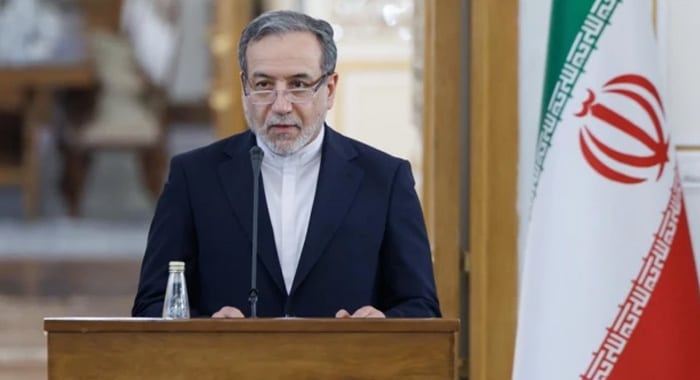
Diplomatic activity intensified across multiple international capitals as Abbas Araghchi, Foreign Minister of Iran, continued a high-frequency series of engagements aimed at sustaining indirect diplomatic channels between Tehran and the United States, amid broader regional tensions and an evolving ceasefire environment.
According to official sources, Araghchi departed Islamabad for Moscow on Sunday. He is scheduled to meet Vladimir Putin and senior Russian officials to discuss ongoing regional developments, ceasefire dynamics, and the status of diplomatic efforts.
His Moscow visit follows a tightly packed sequence of diplomatic stops, including a recent engagement in Muscat and repeated visits to Islamabad within a short timeframe, reflecting the urgency and fluidity of ongoing mediation efforts.
While no direct U.S.–Iran negotiations have been confirmed, multiple diplomatic sources indicate that indirect communication channels remain active. Reports suggest that Iran transmitted written messages to the United States through mediating partners, including Pakistan.
These communications are reported to have outlined Tehran’s positions on key strategic issues, including nuclear parameters, maritime security in the Strait of Hormuz, and broader regional constraints. Officials emphasized that these messages were not formal negotiations, but part of ongoing diplomatic signaling intended to clarify positions during a sensitive period.
Iranian sources have also indicated that additional envoys were dispatched to Tehran for internal consultations to refine positions related to ending hostilities and shaping any future framework for de-escalation.
Pakistan has emerged as a central facilitation hub in the ongoing diplomatic process. During his visits to Islamabad, Araghchi held multiple high-level meetings, including two engagements within 24 hours with Chief of Army Staff and Chief of Defence Forces Asim Munir, as well as discussions with Prime Minister Shehbaz Sharif.
Iran’s ambassador to Pakistan, Reza Amiri Moghaddam, publicly praised Pakistan’s leadership, military, government, and people, expressing gratitude for their “tireless efforts” in facilitating diplomatic engagement and ensuring a secure environment for negotiations and consultations.
He further described Pakistan’s role as professionally managed and diplomatically effective, highlighting Islamabad’s “competent coordination, planning, and execution” in supporting the visiting delegation.
Araghchi’s diplomatic outreach also extended to key regional actors. He held consultations with counterparts in Saudi Arabia and Qatar, reflecting Gulf states’ growing interest in ensuring that any potential agreement incorporates their security and economic concerns.
Turkey has also been actively involved in de-escalation efforts through diplomatic communication with U.S. negotiators.
In parallel, regional coordination continues with broader international engagement, including consultations across Eurasian capitals, as stakeholders seek to prevent further escalation and maintain strategic stability.
Donald Trump has publicly acknowledged Pakistan’s mediation efforts, praising Prime Minister Shehbaz Sharif and Field Marshal Asim Munir for their involvement in facilitating dialogue between Washington and Tehran.
At the same time, Trump confirmed the cancellation of a planned visit by U.S. negotiators Steve Witkoff and Jared Kushner to Islamabad, stating there was “no point in talking without progress,” while also indicating that communication channels remain open via secure and direct lines if required.
The development reflects a recalibration of U.S. engagement strategy, even as indirect diplomatic mechanisms continue to operate. Iranian media reports indicate that messages conveyed through intermediaries included references to strategic red lines, particularly regarding nuclear policy, sanctions frameworks, and maritime security in the Strait of Hormuz a critical global energy corridor.
Separately, international concern has grown over disruptions to shipping routes following reported restrictions in the region, with global economic and energy markets showing sensitivity to developments in the Gulf. Keir Starmer, along with other international leaders, has stressed the urgent need to restore stability in maritime trade routes, citing implications for global supply chains, energy prices, and cost-of-living pressures.
In related developments, U.S. Central Command reported intercepting a vessel linked to a broader network allegedly involved in transporting Iranian energy exports, underscoring heightened enforcement activity in maritime corridors.
Meanwhile, wider regional impacts have been observed, including energy policy adjustments in Egypt and strategic diplomatic tours by Australian Foreign Minister Penny Wong across Asia aimed at strengthening energy and trade ties amid supply pressures.
Despite the absence of formal direct negotiations, diplomatic engagement between Washington and Tehran continues through multiple intermediaries. Analysts describe the current phase as “structured ambiguity,” where strategic silence and indirect messaging are being used to preserve negotiation space.
Sources indicate that neither side is currently seeking renewed escalation, with growing recognition that an open-ended ceasefire framework may provide the necessary conditions for addressing complex disputes over time.
With Araghchi’s continued travels between Islamabad, Moscow, and other regional capitals, the diplomatic process remains active, fluid, and highly sensitive — with multiple stakeholders working simultaneously to prevent escalation and preserve channels for future agreement.
The situation remains dynamic, with further developments expected as consultations continue across key global capitals.



