
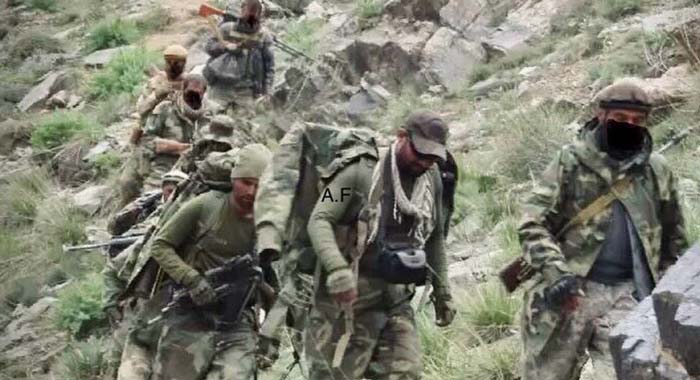
Armed resistance groups opposing Afghanistan’s Taliban authorities have reported an intensification of operations across multiple provinces, claiming to have carried out more than 18 attacks between 7 and 18 October targeting Taliban security positions, intelligence personnel, military vehicles, commanders, and logistical facilities.
According to statements attributed to several opposition groups, the reported operations took place across 12 Afghan provinces and resulted in more than 38 Taliban personnel being killed, with dozens more reportedly wounded. The groups also claimed responsibility for destroying military vehicles, attacking checkpoints, targeting intelligence-linked personnel, and disrupting logistical infrastructure.
The reported incidents indicate continued armed opposition to Taliban rule in different parts of Afghanistan. However, the casualty figures, operational claims, and extent of the alleged damage have not been independently verified. The available information does not establish that all reported incidents were connected or that the Taliban authorities’ overall security capabilities have deteriorated.
According to claims issued by various anti-Taliban organisations, the reporting period witnessed attacks in a number of strategically significant areas, including Kandahar, Helmand, Ghor, Baghlan, Panjshir, Logar, Nangarhar, Farah, Wardak, Badghis, Herat, and Bamiyan. The reported targets included security checkpoints, intelligence personnel, police facilities, military transport, logistical convoys, and individuals described by the groups as Taliban commanders or officials.
The organisations presenting these claims include the Afghanistan United Front, Afghanistan Freedom Front, National Resistance Front, Afghan Green Trend, National Independence Front, and Afghan Republic Front. Their statements describe a range of operations, from attacks on individual security personnel to assaults on checkpoints and military-related infrastructure. The claims suggest that armed opposition activity continues across several geographically dispersed areas, although the scale and effectiveness of these operations remain difficult to assess without independent confirmation.
The Afghanistan United Front has reported a series of operations in Kandahar and Helmand provinces, claiming responsibility for attacks on Taliban personnel and security infrastructure.
According to the group’s account:
- 11 October — Ghor: One Taliban member was reportedly killed and another wounded in an attack.
- 13 October — Arghandab, Kandahar: The group claimed that commander Rahimullah Rohani and a police officer were killed.
- 14 October — Spin Boldak, Kandahar: Attacks on three checkpoints allegedly left three personnel dead and three wounded, while a vehicle was reportedly destroyed.
- Helmand province: The group claimed that five Taliban personnel were killed and weapons were seized.
- 15 and 17 October — Lashkar Gah: The group reported separate attacks that allegedly killed two personnel, including an intelligence officer.
These claims, if verified, would indicate continued armed activity against Taliban-linked security positions in southern Afghanistan. However, independent evidence confirming the reported casualties, the identities of those killed, and the extent of the damage has not been established in the information available for this report.
The Afghanistan Freedom Front reported an attack on intelligence personnel near a police headquarters in Logar province on 13 October. According to the group, the incident resulted in three fatalities and two injuries. The reported targeting of intelligence-linked personnel highlights the continued vulnerability of security officials to attacks attributed to armed opposition groups. Nevertheless, the circumstances of the incident and the identities of those affected remain subject to independent verification.
The National Resistance Front claimed responsibility for operations in Baghlan and Panjshir provinces on 9 and 10 October. According to the organisation, the reported incidents resulted in two Taliban personnel being killed and two others wounded. Panjshir has been a prominent area of anti-Taliban resistance, while incidents reported in Baghlan have also featured in opposition groups’ accounts of armed activity in northern Afghanistan.
The latest claims indicate continued attempts by the National Resistance Front to challenge Taliban security positions. The precise locations, circumstances, and consequences of the reported operations have not been independently confirmed.
The Afghan Green Trend has claimed responsibility for attacks in Herat, Panjshir, and Lashkar Gah. According to the group’s statements, the reported operations involved attacks on police checkpoints and ranger vehicles, alongside claims of Taliban personnel being killed and vehicles destroyed. The reported incidents form part of a broader pattern of claims by opposition organisations describing attacks against security personnel and transport infrastructure. However, the information available does not provide a sufficiently detailed incident-by-incident breakdown to establish the precise number of casualties or the total extent of the alleged material losses attributed to the group.
The National Independence Front has reported operations in Nangarhar, Helmand, Farah, Wardak, Badghis, and Kandahar provinces. According to the organisation, its operations targeted a range of military-related assets and personnel, including a tank, military supply vehicles, an intelligence convoy, a ranger vehicle, and a Taliban commander. The group presented these incidents as part of its efforts to disrupt Taliban security and logistical activities.
Attacks on military transport and supply infrastructure can potentially affect the movement of personnel and equipment. However, the operational consequences of the incidents described by the National Independence Front cannot be determined from the claims alone, and no independently verified damage assessment has been provided.
The Afghan Republic Front claimed that it launched a rocket attack on a chromite storage facility under Taliban control in Bamiyan province. The group described the facility as a target associated with the Taliban authorities. Details regarding the extent of the damage, possible casualties, and the facility’s operational status were not included in the information available for this report. The claim adds an economic and infrastructure-related dimension to the broader series of reported incidents. Nevertheless, the target’s status, the outcome of the alleged attack, and any resulting disruption remain unverified.
The reported operations come amid continuing opposition to the Taliban authorities’ governance of Afghanistan. Resistance groups have linked their activities to grievances concerning political exclusion, restrictions on fundamental rights, and social and political conditions under Taliban rule. These organisations argue that such conditions contribute to public discontent and sustain opposition to the authorities.
At the same time, the existence of armed opposition activity does not, by itself, establish the scale of public support for these groups or demonstrate that the Taliban government’s overall control is weakening. A reliable assessment would require independently verified information about the incidents, the geographical reach of the groups, the authorities’ responses, and conditions affecting local communities.
The reported attacks also raise concerns about the safety of civilians living in areas affected by armed confrontations. Attacks on security facilities, transport routes, and other infrastructure can create risks for nearby residents, particularly where the circumstances of an incident or the presence of explosive weapons are unclear.



