
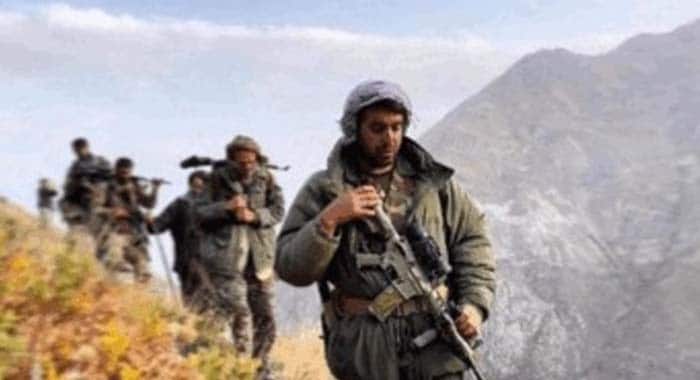
Afghanistan’s National Resistance Front (NRF) has claimed responsibility for an armed operation targeting Taliban personnel in Jalga District of Baghlan Province, reporting that one Taliban member was killed and another seriously injured. The claimed attack comes amid reports of increasingly diverse armed opposition to the Taliban administration across several parts of Afghanistan.
According to a statement attributed to the National Resistance Front, its fighters launched an operation against a Taliban position in Jalga District at approximately 8:30 p.m. The group claimed that the attack resulted in one fatality and one serious injury among Taliban personnel, after which its fighters withdrew to what it described as secure locations.
The reported incident underscores the continuing security challenges facing Afghanistan’s Taliban authorities, as opposition groups seek to demonstrate their operational presence beyond their traditional strongholds. However, the casualty figures and circumstances of the reported operation have not been independently verified.
The NRF stated that it would continue targeted operations in different parts of Afghanistan as part of its campaign against Taliban rule, which the organization describes as illegitimate.
Since the Taliban returned to power in August 2021, Afghanistan’s armed opposition has evolved from a relatively fragmented movement concentrated in a limited number of areas into a more geographically dispersed and organizationally diverse landscape. In the initial years following the Taliban takeover, resistance activity remained largely confined to particular northern and northeastern areas. The National Resistance Front and the Afghanistan Freedom Front (AFF) emerged as prominent opposition organizations, conducting or claiming responsibility for guerrilla attacks, targeted operations and assaults on Taliban personnel and installations.
By 2026, however, the landscape of armed opposition had become more complex, with established organizations, newly formed fronts and former Afghan security personnel reporting operations across a wider range of provinces. Claims of ambushes, attacks on Taliban facilities, targeted killings and recurring armed clashes have emerged from northern, northeastern, central, eastern, southern and western Afghanistan.
Badakhshan has remained a significant reported centre of resistance activity, while operations have also been claimed in Baghlan, Takhar, Nuristan, Panjshir, Kapisa, Kabul and several southern and western provinces. The geographical spread of these claims suggests that opposition activity is no longer confined exclusively to the areas most closely associated with the resistance following the Taliban takeover. Nevertheless, the number of claimed operations does not, by itself, establish the extent of territorial control, the operational strength of the groups involved or their ability to sustain a nationwide insurgency.
The National Resistance Front, led by Ahmad Massoud, remains one of the principal organizations opposing Taliban rule. The group has claimed operations in several provinces, including Panjshir, Herat, Baghlan, Parwan, Kapisa, Kunduz, Kabul and Badakhshan. Its reported activities have focused on targeted attacks against Taliban personnel and positions, reflecting a strategy centred on maintaining an armed presence and challenging the authorities’ security arrangements.
The latest claimed operation in Jalga District, Baghlan, forms part of this broader pattern of reported resistance activity. According to the NRF, its campaign is intended to challenge Taliban rule and bring about political change in Afghanistan. The group has repeatedly presented its operations as part of a wider struggle for the country’s future. The broader significance of the latest incident, however, will depend on whether further independently verifiable evidence emerges regarding the attack, its consequences and any subsequent security developments in the district.



