
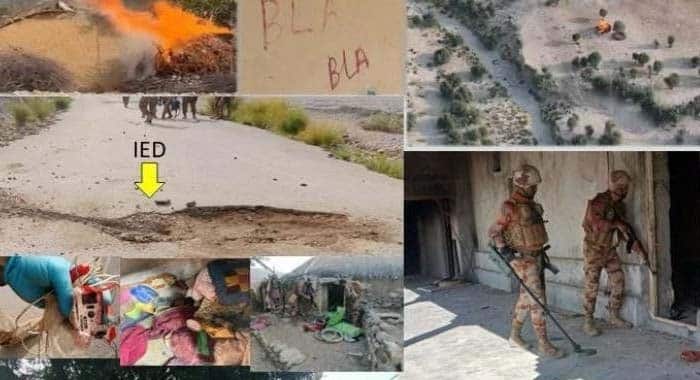
Security forces successfully conducted Counter-Terrorism Operation Pheri-II in the Pheri and Wam Tangi areas, of Balochistan eliminating 13 operatives belonging to Fitna al-Hindustan (FAH) following credible intelligence regarding their presence in the area.
The operation resulted in the recovery of a significant quantity of explosive materials, including seven improvised explosive devices (IEDs), six cans filled with explosives, and seven bags of urea, alongside a double-cabin vehicle and a motorcycle. The recoveries highlight the potential threat posed by the explosive materials and logistical resources associated with the group.
Acting on credible intelligence concerning the presence of Fitna al-Hindustan operatives in Pheri and Wam Tangi, security forces launched Counter-Terrorism Operation Pheri-II. The operation was aimed at locating and neutralising the identified threat and preventing hostile elements from using the area as a base for their activities. During the operation, security forces engaged the identified Fitna al-Hindustan elements, resulting in the killing of 13 operatives.
The outcome represents a significant operational development in efforts to counter the group’s presence and disrupt its activities in the targeted areas.
A key outcome of the operation was the recovery of explosive devices and materials from the targeted locations. The recovered items included:
- Seven improvised explosive devices (IEDs).
- Six cans filled with explosives.
- Seven bags of urea.
- One double-cabin vehicle.
- One motorcycle.
The recovery of seven IEDs and six cans containing explosives is particularly significant given the potential threat such materials can pose to security personnel and civilians if used in hostile activities. The presence of urea alongside explosive materials also warrants attention, although the precise intended use of the recovered bags has not been independently established. The recovered vehicles may provide further leads for investigating the group’s logistical arrangements and movements. The recovered explosive devices and materials can now be examined by the relevant authorities to establish their composition, intended use, and possible links to other activities.
The elimination of 13 Fitna al-Hindustan operatives, together with the recovery of explosive devices and associated materials, marks a substantial outcome of Counter-Terrorism Operation Pheri-II. Operations of this nature are intended to disrupt the operational capacity of hostile groups, restrict their access to resources, and reduce the risks they may pose to local communities and security personnel.
The recovery of multiple IEDs and explosive containers underscores the importance of intelligence-led counterterrorism efforts and the need to identify and secure potentially dangerous materials before they can be used to cause harm. The recovered vehicles and other items may also assist the relevant authorities in examining the group’s logistical resources and establishing further details about its activities.



