
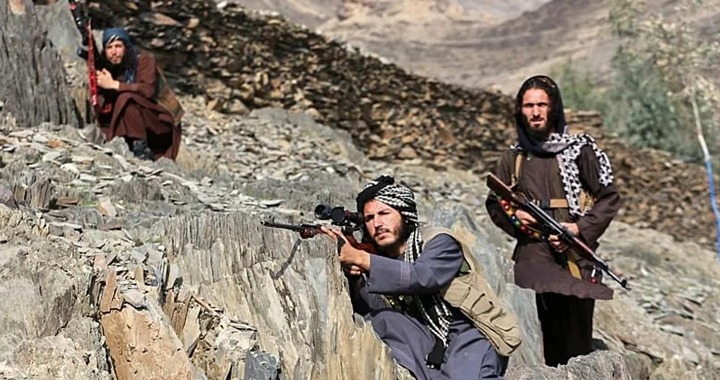
Anti-Taliban opposition fronts have reported a significant escalation in armed operations across Afghanistan, claiming responsibility for at least 15 attacks on Taliban positions across nine provinces during the past week and asserting that approximately 30 Taliban members were killed in the reported operations.
The attacks, according to claims issued separately by opposition groups, were reported across Badakhshan, Kunduz, Baghlan, Kabul, Faryab, Ghor, Herat, Kandahar, and Helmand, highlighting the geographical spread of armed resistance activity across northern, western, central, and southern parts of the country.
The reported escalation comes amid growing assessments that opposition groups are attempting to increase military pressure on the Taliban and expand their operational reach ahead of the fifth anniversary of the Taliban’s return to power.
The Afghanistan Freedom Front, United Front of Afghanistan, and National Resistance Front of Afghanistan have separately claimed responsibility for attacks against Taliban positions in different parts of the country. The groups have also released claims regarding casualties inflicted on Taliban personnel during their respective operations.
The Afghanistan Freedom Front has claimed responsibility for several attacks in different Afghan provinces over the past 10 days, stating that at least 12 Taliban members were killed in those operations.
The United Front of Afghanistan has separately claimed responsibility for eight attacks on Taliban positions across several provinces during the past week. According to the group’s claims, at least 14 Taliban members were killed in the reported attacks.
The National Resistance Front of Afghanistan has also claimed responsibility for two attacks in Herat and Badakhshan, stating that three Taliban members were killed.
The figures have been presented by the respective groups and have not been independently verified. The Taliban administration has not publicly commented on the individual attacks or the casualty claims.
The reported incidents nevertheless point to an increasingly active security environment in which multiple opposition formations are attempting to maintain pressure on Taliban positions across geographically dispersed areas.
The latest reports come amid assessments from security observers that armed opposition groups may be operating with greater access to resources, networks, and local support than in previous periods.
Security affairs analyst Bismillah Taban told Afghanistan International that opposition forces had gained greater access to resources and social support, allowing them to broaden their activities and attract increased public backing.
According to Taban’s assessment, growing frustration among sections of the Afghan population with the country’s prevailing political and economic conditions has contributed to what he described as a decline in the Taliban’s social support base.
Such assessments suggest that the current challenge facing the Taliban may extend beyond the battlefield. While the Taliban continues to assert that comprehensive security has been established throughout Afghanistan, the reported attacks indicate that opposition groups remain capable of carrying out operations in multiple provinces.
The activities attributed to the three opposition fronts also demonstrate the increasingly fragmented nature of Afghanistan’s anti-Taliban resistance landscape.
Rather than being concentrated in a single geographic area or conducted by one organization, reported attacks have emerged across a broad swath of the country. From Badakhshan and Kunduz in the north to Herat in the west and Kandahar and Helmand in the south, opposition groups have sought to demonstrate their ability to challenge Taliban positions in different operational environments.
The reported attacks in Kabul are particularly significant because of the capital’s political and security importance. Any sustained opposition activity in or around major urban centres could carry implications beyond the immediate tactical impact, potentially affecting perceptions of the Taliban’s security claims.
At the same time, the continued reporting of attacks in remote and strategically important provinces indicates that opposition groups are seeking to preserve operational flexibility and maintain pressure across multiple fronts.
The latest developments have also intensified the contrast between the Taliban’s public security narrative and claims emerging from opposition groups.
The Taliban administration has continued to maintain that Afghanistan enjoys nationwide security and that armed opposition no longer poses a significant threat to the country’s stability.
Opposition fronts, however, have sought to challenge that narrative through a series of claimed attacks against Taliban personnel and positions.
The absence of an official Taliban response to the latest claims makes it difficult to independently assess the precise scale of the reported fighting or verify the casualty figures. Nevertheless, the frequency and geographic distribution of the claims have drawn renewed attention from security observers monitoring Afghanistan’s evolving security environment.
The reported increase in attacks comes as Afghanistan approaches the fifth anniversary of the Taliban’s return to power, adding further political significance to the current wave of opposition activity.
A report cited from the US military publication Military previously noted that resistance groups in Afghanistan had increased attacks in different parts of the country as the anniversary approached.
The timing may provide opposition groups with an opportunity to demonstrate continued operational capability and challenge perceptions that armed resistance has been fully suppressed.
For the Taliban, maintaining its assertion of nationwide security remains central to its efforts to consolidate political control and demonstrate administrative effectiveness.
The latest wave of reported attacks does not necessarily indicate that Afghanistan is heading toward a nationwide armed conflict. However, the emergence of attacks across nine provinces and the involvement of several distinct opposition fronts demonstrate that the security environment remains more complex than a simple narrative of complete nationwide stability would suggest.
If opposition groups continue to expand their access to resources and local networks, they could potentially sustain a higher operational tempo and increase pressure on Taliban security infrastructure.
Conversely, the Taliban retains substantial territorial control, organizational capacity, and security resources. Its response—or lack thereof—to the latest attacks will be closely watched as an indicator of how the administration assesses the evolving threat.
The coming weeks may therefore prove significant in determining whether the reported attacks represent a temporary increase in opposition activity or the beginning of a more sustained phase of armed resistance.
For now, the reported 15 attacks across nine provinces, combined with opposition claims of approximately 30 Taliban casualties, underline the persistence of armed resistance in Afghanistan and raise fresh questions about the country’s long-term security trajectory.



