
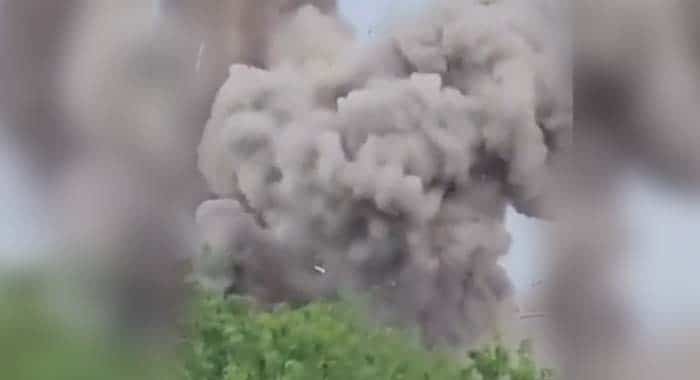
Security Forces have demolished the residence of Muslim Wazir, a commander of the banned terrorist organization Ittehad-ul-Mujahideen, in the Para Chamkani area of Gandao, Kurram district, as part of intensified efforts to dismantle terrorist networks and deny them local infrastructure.
The residence was targeted after being identified as being associated with the terrorist commander. The action forms part of continuing counterterrorism operations aimed at disrupting terrorist networks, their support structures and locations that can potentially be used to plan or facilitate attacks.
The latest action in Kurram comes amid a broader pattern of targeted measures against terrorist infrastructure across Khyber Pakhtunkhwa.
In Hangu, Security Forces and police recently demolished the residence of wanted terrorist commander Irfan alias Lezri in the Zargari area during a joint operation. The terrorist was wanted in connection with multiple attacks, including an attack targeting the District Police Officer and the Khazina Banda incident.
The demolition of the property represented a direct effort to deny terrorist networks physical infrastructure and potential safe locations from which attacks could be planned or facilitated.
Security Forces have also previously targeted the residence of a most-wanted terrorist, Abu Bakar, in Saidgai village of North Waziristan. The terrorist was linked to multiple attacks, including a suicide bombing in Ghulam Khan and the targeted killing of peace committee members in Miranshah.
The action in North Waziristan also demonstrated the importance of coordination with local communities. Following initial concerns among some residents, a jirga involving the civil administration and local elders helped defuse tensions and allowed the operation to conclude peacefully.
Taken together, the operations in Kurram, Hangu and North Waziristan point to an increasingly focused counterterrorism approach in which security personnel are targeting not only terrorists themselves but also the physical infrastructure associated with their networks.
Such measures are intended to prevent terrorist groups from re-establishing operational footholds, restrict their freedom of movement and disrupt the support structures required to sustain attacks.
Security Forces and law-enforcement agencies continue to maintain heightened vigilance across southern and tribal districts of Khyber Pakhtunkhwa, with intelligence-based operations and targeted actions being pursued to dismantle terrorist networks and prevent further attacks against civilians and security personnel.



