
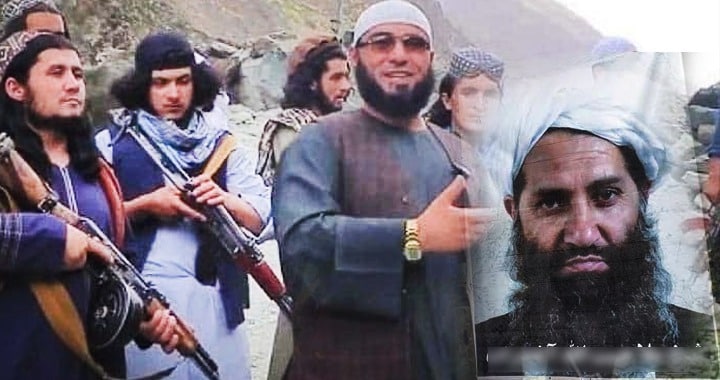
The Taliban’s reported efforts to create a new 8,000-member elite formation known as the Hibati Unit are being presented by supporters as evidence of growing institutional strength and improved security capabilities inside Afghanistan.
At first glance, such an interpretation appears reasonable.
An elite force operating under centralized leadership, equipped with advanced technology, specialized training, surveillance capabilities, and enhanced resources would normally indicate consolidation of authority rather than fragmentation.
Yet recent developments elsewhere in Afghanistan suggest a more complicated reality.
While reports describe efforts to strengthen central control through the creation of the Hibati Unit, reports from Badakhshan indicate growing tensions between elements of the Taliban leadership and influential commanders within the movement itself.
The reported challenge mounted by senior Taliban commander Juma Khan Fateh has introduced a potentially significant variable into Afghanistan’s security equation.
Taken together, these developments raise an important question.
Is Afghanistan witnessing the consolidation of Taliban power, or is it witnessing attempts to manage emerging internal fractures?
The answer may have significant implications not only for Afghanistan but also for neighboring countries, particularly Pakistan.
Centralization and Fragmentation at the Same Time
The reported Hibati Unit represents more than a military development.
Its proposed structure suggests a shift toward greater centralization around Taliban supreme leader Hibatullah Akhundzada.
Reports indicate that the force would operate with substantial autonomy while maintaining direct links to the highest levels of leadership.
Such arrangements often emerge when leadership seeks tighter control over strategic security functions.
However, the reported developments in Badakhshan point in a different direction.
Allegations of dissatisfaction regarding power distribution, regional influence, ethnic representation, and local grievances suggest that unity within the Taliban may not be as absolute as often portrayed.
The significance of these tensions extends beyond internal Taliban politics.
Afghanistan remains a critical factor in Pakistan’s security environment.
For years, Pakistan has expressed concerns regarding terrorist groups operating from Afghan territory and conducting attacks inside Pakistan.
Those concerns have intensified as cross-border terrorism has continued despite repeated diplomatic engagement.
From Islamabad’s perspective, the key issue is not simply who controls Afghanistan.
The key issue is whether Afghan territory is effectively governed and whether anti-Pakistan terrorist organizations are denied operational space. That challenge becomes more complicated if competing power centers emerge. A fragmented security environment can create opportunities for extremist organizations to exploit local disputes, governance gaps, and competing authorities.
At the same time, reports of Russian support for aspects of Afghanistan’s evolving security infrastructure introduce an additional geopolitical dimension.
Whether such support proves substantial or limited, the broader message remains clear.
Major regional powers continue to view Afghanistan as strategically important. Russia seeks stability. China seeks security for regional connectivity and economic projects. Pakistan seeks an end to cross-border terrorism. The Taliban seek legitimacy and durable control. These objectives overlap in some areas and diverge in others. The result is a complex environment in which security developments inside Afghanistan increasingly carry consequences beyond its borders.
The creation of new security institutions may improve operational capabilities. However, institutions alone do not guarantee stability. Long-term stability requires political cohesion, effective governance, economic opportunity, and credible mechanisms for managing internal disputes.
Recent reports suggest Afghanistan continues to face challenges in all of these areas.
For Pakistan, the lesson is straightforward. Security developments inside Afghanistan should not be viewed through a single lens. The emergence of a new elite force and the emergence of internal dissent are not contradictory developments.
They may, in fact, be connected.
One may be a response to the other.
If so, Afghanistan’s evolving security architecture may reveal less about certainty and more about the unresolved questions that continue to shape the country’s future.



