
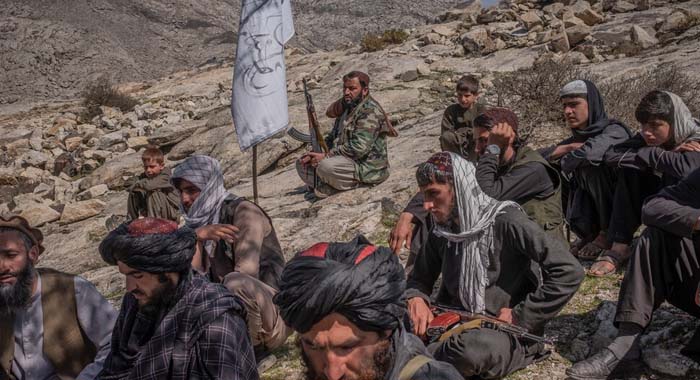
A Russian media commentary has raised serious allegations that Afghanistan’s Taliban authorities, through their intelligence agency, the General Directorate of Intelligence (GDI), may be presenting Chinese security agencies with an exaggerated picture of the ISIS-Khorasan (ISIS-K) threat in Afghanistan in an effort to obscure the emergence of an armed anti-Taliban resistance movement in the northern province of Badakhshan and encourage Beijing to provide greater military, financial, and political support to the Taliban regime.
The commentary alleges that the Taliban’s intelligence apparatus is attempting to shape the regional security narrative by portraying instability and armed opposition in northern Afghanistan primarily as an ISIS-K-related threat. According to the analysis, such a narrative could serve two interconnected purposes: concealing the growth of resistance against Taliban rule while convincing China that continued Taliban control is essential to protecting Chinese citizens, economic interests, and security priorities in Afghanistan.
The allegations have not been independently verified. In particular, the authenticity and contents of a diplomatic communication reportedly issued by the Chinese Embassy on August 27 could not be independently confirmed. Nevertheless, the Russian commentary argues that the alleged strategy reflects a broader incentive structure in which the Taliban could seek to transform concerns over ISIS-K and other security threats into an argument for expanded Chinese engagement and assistance.
The analysis places particular emphasis on Badakhshan, a strategically important province in northern Afghanistan bordering China, Tajikistan, and Pakistan-administered territory. According to the Russian commentary, the Taliban’s concern is not limited to ISIS-K. The author alleges that an emerging armed resistance in Badakhshan represents a growing challenge to Taliban authority and that Kabul may therefore have an incentive to frame developments in the province as part of the international ISIS-K threat.
Under this interpretation, presenting instability in Badakhshan through the lens of terrorism could encourage Beijing to see the Taliban government as an indispensable security partner rather than as a party facing an indigenous political and armed challenge. The distinction is significant.
If developments involving anti-Taliban groups are presented primarily as an ISIS-K threat, foreign governments may assess the situation through the framework of counterterrorism rather than through the increasingly complex question of political and armed opposition to Taliban rule. The Russian commentary argues that this distinction could potentially provide the Taliban with additional diplomatic leverage at a time when its position in parts of northern Afghanistan is being challenged.
The commentary claims that the Taliban’s GDI may be attempting to influence Chinese security assessments through a network extending beyond formal diplomatic channels. According to the report, intelligence narratives may allegedly be transmitted through Afghan students in China, Afghan businessmen working with Chinese partners, and contacts located in countries considered friendly or strategically important to the Taliban, including Iran, Russia, and Central Asian states.
The alleged purpose of such activity would be to create multiple apparently independent channels through which similar security assessments could reach Chinese officials while making it more difficult to determine the original source of the information. The Russian analysis suggests that, if such a strategy exists, it would represent an effort to shape the perception of the Afghan security environment rather than simply provide conventional intelligence reporting.
The underlying objective, according to the commentary, would be to persuade Chinese decision-makers that the principal threat facing Afghanistan is the expansion of ISIS-K and that the Taliban’s continued control is therefore necessary to contain that threat.
A central element of the Russian commentary is an August 27 note reportedly issued by the Chinese Embassy in Afghanistan to the Taliban Foreign Ministry. The communication allegedly identified a Syrian national known as “Sheikh Mumtaz” as a person planning potential attacks in Afghanistan.
According to the commentary, the alleged warning included concerns over possible attacks against restaurants in Kabul frequented by foreign nationals, with particular concern reportedly focused on Chinese citizens. The Russian author argues that the warning may have originated through the information channels allegedly being cultivated by the Taliban intelligence apparatus.
However, the diplomatic communication and its contents have not been independently verified, and no definitive conclusion can therefore be drawn regarding its authenticity, origin, or the accuracy of the intelligence it reportedly contained. The allegation nevertheless forms an important part of the broader argument advanced by the Russian commentary: that security warnings concerning ISIS-K could potentially be used to reinforce Beijing’s perception that Afghanistan faces an expanding terrorist threat requiring deeper Chinese security engagement.
China occupies a particularly important position in the Taliban’s strategic calculations. Beijing has significant economic and security interests in Afghanistan and has maintained engagement with the Taliban authorities despite not formally recognizing the Taliban government in the conventional diplomatic sense.
Chinese nationals have worked in Afghanistan, while Chinese companies and investors have explored opportunities connected to Afghanistan’s natural resources, mining, infrastructure, trade, and wider economic potential. At the same time, China has longstanding security concerns regarding the presence of East Turkestan Islamic Movement (ETIM) militants and other groups that Beijing considers threats to Chinese national security.
These interests create a natural incentive for Beijing to closely monitor Afghanistan’s security environment. From the Taliban’s perspective, the Russian commentary argues, this creates an opportunity. If instability can be presented as a rapidly expanding ISIS-K threat, and if the Taliban can position itself as the only authority capable of containing that threat, Beijing may have stronger incentives to provide security cooperation, technology, equipment, political support, and economic engagement.
According to the Russian commentary, the Taliban’s broader objective could include obtaining Chinese drones, weapons, funding, and political backing to strengthen its ability to confront Afghan opponents, particularly in Badakhshan. The analysis argues that portraying northern Afghanistan as an increasingly dangerous terrorist environment could provide a justification for enhanced Chinese security assistance.
Such assistance would potentially strengthen the Taliban’s ability to conduct surveillance, monitor remote areas, secure borders, and confront armed groups challenging its authority. The commentary therefore presents the alleged intelligence campaign not simply as an effort to exaggerate a terrorist threat, but as part of a larger strategic effort to influence China’s assessment of Afghanistan’s internal political and security dynamics.
While the allegations remain unverified, the Russian analysis identifies what it considers a plausible strategic incentive structure. China wants stability along its western frontier and seeks to protect its citizens and economic interests in Afghanistan. The Taliban seeks international engagement, economic investment, diplomatic legitimacy, and security assistance.
Both interests can intersect around the issue of terrorism. For Beijing, the threat posed by ISIS-K and concerns over ETIM create legitimate security considerations. For the Taliban, demonstrating its ability to contain those threats can strengthen its argument that continued engagement with the Taliban authorities serves Chinese interests. The central question raised by the Russian commentary is therefore whether the Taliban could be deliberately amplifying one threat in order to obscure another: presenting ISIS-K as the principal source of instability while minimizing or concealing the emergence of armed resistance against Taliban rule.
The possibility of a weakening Taliban position in northern Afghanistan carries broader regional implications. Badakhshan’s geographical position makes developments there particularly sensitive. The province connects Afghanistan to a wider regional security environment involving China and Central Asia. Any sustained deterioration of Taliban control could therefore have consequences beyond Afghanistan’s domestic political landscape.
According to the Russian commentary, this possibility could encourage Kabul to place increasing emphasis on its own strategic importance to Beijing. The Taliban could potentially argue that weakening its authority would create a security vacuum that could be exploited by ISIS-K, other militant organizations, or transnational extremist networks. Such an argument would allow the Taliban to frame its own survival not simply as a domestic political matter but as a regional security necessity.
At the heart of the controversy lies a broader battle over information. Modern security competition is not limited to territory or military capability. The ability to shape how governments understand emerging threats can itself become a strategic asset. If intelligence assessments are selectively presented, exaggerated, or deliberately framed to emphasize one threat while minimizing another, policymakers may make decisions based on an incomplete picture of the security environment. The Russian commentary alleges that the Taliban GDI may be engaging in precisely such an effort.
It further claims that the alleged practice may not be limited to China. The report states that there are grounds to believe the Taliban intelligence agency, potentially with authorization from the highest levels of the Taliban political leadership, may be conducting similar operations aimed at the security services of other regional countries. According to the commentary, the broader objective would be to persuade regional governments to engage more actively in protecting and supporting the Taliban regime amid what the author describes as the growing strength of various Afghan opposition groups.
If the allegations are accurate, they would suggest a strategy considerably broader than simply managing China’s perception of ISIS-K. It would indicate an attempt to shape the security calculations of multiple regional governments by emphasizing threats that make Taliban rule appear indispensable to regional stability. Such a strategy could involve portraying the Taliban as a barrier against terrorism, instability, extremist expansion, and cross-border threats while downplaying internal opposition to its rule.
The Russian commentary consequently raises the possibility that intelligence diplomacy is becoming an important component of the Taliban’s effort to preserve and strengthen its position. The alleged approach would seek to convert the Taliban’s vulnerabilities into strategic leverage: the more serious the perceived threat of terrorism, the stronger the argument for maintaining and supporting the existing Taliban security structure.
It is important to distinguish between allegations of intelligence manipulation and China’s legitimate security concerns. The threat posed by ISIS-K is real, and China has genuine interests in preventing attacks against its citizens and protecting its territory and economic interests. Similarly, Beijing has long-standing concerns regarding ETIM and other organizations it considers security threats.
Chinese nationals working and traveling in Afghanistan remain potentially vulnerable to violence, while instability could jeopardize Chinese commercial interests. These realities mean that Chinese security agencies have legitimate reasons to seek detailed and reliable intelligence concerning Afghanistan. The central issue raised by the Russian commentary is therefore not whether terrorist threats exist, but whether information concerning those threats could be selectively amplified or manipulated for political and strategic purposes.
Given the seriousness of the allegations, independent verification remains essential. Claims concerning the GDI’s intelligence activities, the alleged use of intermediaries, the August 27 Chinese diplomatic note, “Sheikh Mumtaz,” and the alleged emergence of armed resistance in Badakhshan should be assessed against independently sourced evidence before definitive conclusions are reached. The Russian commentary provides one interpretation of developments. It should therefore be treated as an analytical assessment and not as independently established evidence of a Taliban intelligence operation.
Nevertheless, the questions it raises deserve attention because the convergence of Taliban political interests, Chinese security concerns, and instability in northern Afghanistan could have significant implications for the region.
For China, the central challenge may be distinguishing between genuine threats and politically motivated threat narratives. Beijing’s economic and security interests require reliable assessments of Afghanistan’s evolving environment. If the Taliban succeeds in presenting itself as the only credible force capable of containing terrorism, China could face pressure to deepen its security relationship with Kabul.
Conversely, if the security picture is more complex—with ISIS-K threats existing alongside indigenous opposition, local armed resistance, political grievances, and competing regional interests—then a broader assessment would be required. The distinction could influence decisions regarding Chinese investment, security cooperation, military assistance, diplomatic engagement, and the future role of Beijing in Afghanistan.
The developments described in the Russian commentary point toward a potentially significant evolution in Afghanistan’s regional security landscape. The Taliban’s ability to maintain authority in northern Afghanistan, the trajectory of armed opposition in Badakhshan, the continuing ISIS-K threat, China’s growing strategic interests, and the security concerns surrounding ETIM are likely to remain closely connected.
If the Taliban’s position in northern Afghanistan weakens, the regime may have stronger incentives to convince neighboring states and major regional powers that its continued survival is essential to preventing a wider security crisis. The resulting contest may therefore be fought on two interconnected fronts: on the ground, where competing forces seek influence and control, and in the information space, where governments compete to define how instability in Afghanistan is understood.
The central question emerging from the Russian analysis is therefore both simple and consequential:
Is the ISIS-K threat being accurately reported or is it being amplified to conceal a growing challenge to Taliban rule and secure greater foreign support for the regime?



