
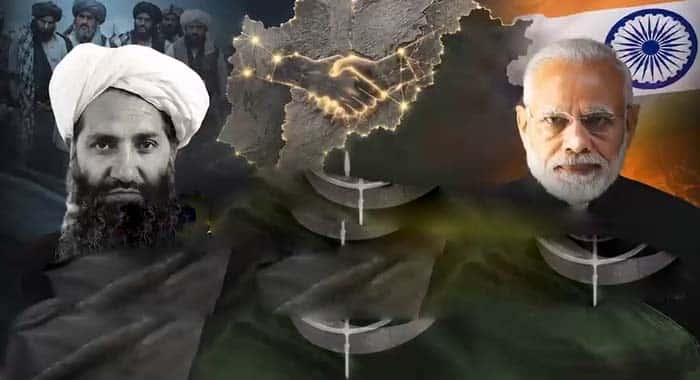
Pakistan has reiterated its concerns regarding the alleged nexus between India and the Afghan Taliban regime, emphasizing that the convergence of interests between certain actors poses serious challenges to regional peace, security, and stability.
The issue came into focus following remarks by the Director General Inter-Services Public Relations (DG ISPR), who highlighted concerns regarding the alleged alignment of the Afghan Taliban regime and India in matters related to regional security and terrorism.
Responding to questions regarding the DG ISPR’s remarks, a spokesperson of the Indian Ministry of External Affairs attempted to dismiss the statement by attributing it to frustration. However, Pakistan has maintained that the growing interaction between India and the Afghan Taliban regime requires serious scrutiny in the context of regional security dynamics.
The discussion gained further attention after statements attributed to an Afghan Taliban minister during a visit to India, in which he claimed that the Afghan Taliban and India shared a common “DNA.” Pakistan has stated that such remarks raise questions about the nature and direction of relations between New Delhi and Kabul’s current rulers.
During a recent press briefing, the DG ISPR stated that Pakistan was aware of what it described as a convergence between India and the Afghan Taliban regime, particularly concerning activities that contribute to instability and security challenges in the region. He emphasized that Pakistan remains vigilant against any efforts aimed at promoting terrorism or undermining regional peace.
Pakistan has repeatedly expressed concerns over the presence and activities of terrorist organizations operating from Afghan territory, including Fitna al-Khawarij and Fitna al-Hindustan, and has called for effective measures to prevent the use of Afghan soil against neighboring countries.
The DG ISPR further stated that Pakistan views the relationship between certain elements in India and the Afghan Taliban regime through the lens of regional security, alleging that ideological and strategic interests have contributed to instability in the region.
Pakistan has also raised concerns over the impact of extremist ideologies and actions targeting communities, including allegations of human rights violations and discrimination against minorities and Muslims in India, while stressing the need for international attention toward such issues.
Security analysts have maintained that regional terrorism networks benefit from instability, external support, and safe havens, emphasizing that coordinated international efforts are essential to dismantle terrorist infrastructure and prevent the exploitation of regional conflicts for political objectives.
Pakistan has reiterated its commitment to combating terrorism in all its forms and has called upon the international community to ensure that no country or territory is used as a platform for activities threatening regional and global peace.
The government of Pakistan and its security institutions have reaffirmed that they will continue to closely monitor emerging security developments and take all necessary measures to safeguard national security, regional stability, and the interests of the people.



