
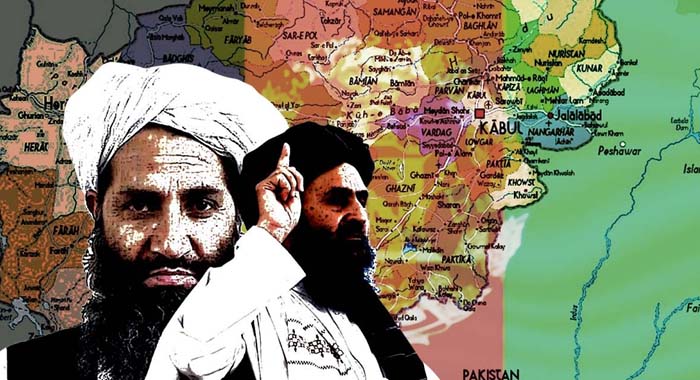
A purposeless armed movement, for which no legitimate religious justification can be established, has once again brought two Muslim countries dangerously close to confrontation. The latest escalation raises a fundamental question: what has this so-called “jihad” actually achieved, and who has benefited from it? The argument presented here is that groups carrying out armed attacks in the name of religion have failed to understand the consequences of their actions, particularly when those actions result in the deaths of Muslims, destabilise a neighbouring Muslim country and create the conditions for a wider military confrontation.
The present cycle of violence must also be viewed against the history of foreign military intervention in the region. The conflict in Afghanistan developed and intensified following years of American military involvement. Yet the political landscape has since changed dramatically. The United States and the Taliban ultimately reached an agreement, and the Taliban have subsequently sought better relations and engagement with Washington. Zalmay Khalilzad, who played a central role in U.S.-Taliban negotiations, has continued to be described as a bridge between the two sides. According to the account presented here, Taliban leaders have also held both public and private meetings with representatives of U.S. intelligence and security institutions since returning to power.
This creates a striking contradiction. While the Taliban leadership has pursued improved relations with the United States, groups described as Taliban supporters or affiliates continue to carry out armed operations inside Pakistan and present those operations as “jihad.” The fundamental question is therefore unavoidable: if the Taliban can pursue negotiations and improved relations with the United States, what is the religious or strategic justification for armed groups to wage war against Pakistan?
The question becomes even more significant when the victims of these attacks are considered. Pakistan is a Muslim-majority country, and the overwhelming majority of its soldiers, police officers and civilians are Muslims. When armed groups attack Pakistani security forces, civilians or public institutions and describe those actions as jihad, they are effectively using religious language to justify violence against another Muslim population. The argument presented here is that simply calling an armed campaign “jihad” cannot make it religiously legitimate, particularly when its consequences are further death, instability and confrontation.
The suicide attack in Kohat became a critical turning point in the latest escalation. According to the information provided, the attack was followed by Pakistani airstrikes in Kunar and Paktika. The following day, Taliban forces responded by sending eight drones and launching attacks against Pakistani border posts. Pakistan then directly targeted Taliban military centres.
What began as one terrorist attack therefore developed into a much broader confrontation. Additional people were killed, military tensions intensified and the prospect of a peaceful resolution became more difficult. This sequence raises a straightforward question: what benefit did the Kohat attack provide, and to whom?
Rather than bringing Pakistan and Afghanistan closer to an agreement, the attack contributed to further confrontation. Instead of improving security for the Afghan people, it helped produce another cycle of violence. Instead of strengthening the Taliban government, it increased pressure on its authorities. And instead of advancing the interests of those claiming to act in the name of Islam, it created further suffering among Muslims on both sides of the border.
The consequences of militant violence are not limited to Pakistan. The Taliban government itself is increasingly exposed to political, military and diplomatic pressure whenever groups operating from Afghan territory attack Pakistan.
The question for Taliban leaders is therefore not simply whether they care about Pakistan or Pakistani citizens. Even if they choose to disregard those concerns, they must consider the consequences for their own government and political authority. If militant attacks repeatedly provoke Pakistani military action, damage bilateral relations and undermine diplomatic engagement, then the same groups claiming to support the Taliban could ultimately become a source of serious problems for the Taliban government itself.
The original argument therefore calls upon the Taliban to consider their own interests. If these groups are genuinely acting in support of the Taliban’s political and ideological project, they should consider whether their actions are actually strengthening or weakening that project.
According to the information provided, Al-Qaeda in the Indian Subcontinent (AQIS) also expressed displeasure over the Kohat attack. The reported reaction is significant because it suggests that even within the wider militant ecosystem there may have been recognition that the operation created consequences far beyond the immediate attack.
However, expressing dissatisfaction after the fact cannot reverse the consequences. It cannot restore the lives lost, undo the Pakistani strikes or return Pakistan-Afghanistan relations to the position they occupied before the escalation. Nor can it restore the diplomatic environment that existed before the attack.
The central lesson is therefore that militant organisations cannot treat individual attacks as isolated events. An operation may begin with one target, but its consequences can extend across borders and affect entire populations, governments and diplomatic processes.
The latest escalation has also placed diplomatic efforts under severe pressure. Türkiye, Qatar and China have all been involved in efforts aimed at facilitating dialogue and reducing tensions between Pakistan and Afghanistan. Such diplomatic initiatives require time, communication and a minimum level of trust. When a major terrorist attack is followed by military retaliation and cross-border confrontation, months of diplomatic work can be undermined in a matter of days.
The argument presented here is that the Kohat attack did not merely cause immediate casualties. It also contributed to the destruction of diplomatic space that could have been used to resolve outstanding disputes peacefully. Those responsible for the attack therefore created consequences extending far beyond the victims at the original scene.
The religious justification offered by militant organisations is also challenged by Pakistan’s religious establishment. According to the information provided, more than 18,000 Pakistani ulema have declared armed rebellion against the Pakistani state to be “fasad” rather than legitimate jihad. This position is significant because it directly challenges the claim that armed attacks against Pakistan can automatically be classified as religiously sanctioned warfare. The argument is that a militant organisation cannot establish religious legitimacy simply by declaring its own actions to be jihad when a broad body of religious scholars rejects that interpretation.
The issue is therefore not merely political or military. It is also a religious question. If thousands of Pakistani scholars reject armed rebellion against the state as fasad, then the militant leadership must explain the religious basis upon which it continues to describe attacks against Pakistan as jihad.
The same issue arises concerning the 2004 fatwa attributed to Mufti Noor Wali, which, according to the information provided, is repeatedly displayed by militant supporters as a religious justification for their activities. The argument presented here is that the fatwa contains no line explicitly authorising armed attacks against the state of Pakistan. Consequently, using the document as a blanket justification for contemporary terrorist attacks represents, according to this analysis, a significant distortion of its actual content and context.
The question therefore remains: if the cited religious document does not explicitly provide justification for armed attacks against Pakistan, on what religious basis are these groups continuing their campaign?
The groups identified in the original material include Tehrik-e-Taliban Pakistan, Tehrik-e-Taliban Ghazwa-e-Hind, Al-Qaeda in the Indian Subcontinent, Inqilab-e-Islami Pakistan, Jamaat-ul-Ahrar and Lashkar-e-Islam. According to the information provided, these groups have pledged allegiance to the Amir of the Taliban. Their precise organisational structures and relationships are not necessarily identical, but the stated allegiance raises an important strategic question about the consequences of their activities for the Taliban government.
If these organisations consider the Taliban leader their Amir, yet their actions repeatedly provoke confrontation between Pakistan and Afghanistan, then their campaign may ultimately be damaging the authority to which they claim allegiance. The question for their leadership is therefore simple: if your activities eventually contribute to the Taliban losing power, what benefit will your “jihad” have achieved?
The assumption that continued terrorism will necessarily force Pakistan to collapse also ignores the country’s history. Pakistan has previously confronted terrorist campaigns considerably larger and more destructive than the current wave. The country has endured years of militant violence, major terrorist attacks and severe security challenges, while its security forces have conducted extensive counterterrorism operations against armed groups.
Pakistan’s governmental structure, according to the argument presented here, is not a newly established system. It has existed for decades and possesses considerable institutional depth. It has endured major political, economic and security shocks and has demonstrated the ability to absorb severe pressure without collapsing. This does not mean that Pakistan is immune to terrorism or that the present threat should be underestimated. Rather, the point is that militant groups should not assume that continued attacks will automatically destroy the Pakistani state.
The Taliban’s current governmental structure, by comparison, remains relatively young. The Taliban returned to power in 2021, and their governing system continues to face major political, economic, diplomatic and institutional challenges. The argument presented in the original material is therefore that the Taliban government may have considerably more to lose from a prolonged confrontation with Pakistan than militant groups understand. A sustained conflict could create additional pressure on Afghanistan’s economy, disrupt trade, increase diplomatic isolation, intensify internal security challenges and make the Taliban’s effort to establish a stable government more difficult. The irony is that groups claiming to support the Taliban could ultimately become a threat to the Taliban’s own political survival.
The central contradiction can be expressed in simple terms. Militant groups claim that they are fighting to establish their preferred interpretation of Sharia in Pakistan. Yet the same campaign risks provoking a confrontation that could weaken or destabilise the Taliban government in Afghanistan, which they claim to support. The original analysis therefore asks these groups to consider the consequences of their own actions. If they continue conducting attacks against Pakistan and those attacks lead to increased Pakistani military pressure on Afghanistan, then they could ultimately contribute to the weakening of the political system they regard as an Islamic model.
In attempting to impose their own version of Sharia in Pakistan, they could, according to this argument, end up contributing to the destruction of the Taliban’s own version of Sharia in Afghanistan. The original assessment also makes an important distinction concerning Pakistan’s policy. According to the information provided, Pakistan has not, so far, adopted a policy of supporting proxies in Afghanistan with the objective of overthrowing the Taliban government.
This means that despite the continuing security tensions and allegations concerning Taliban support for groups attacking Pakistan, Islamabad has not adopted the same kind of proxy strategy that it accuses the Taliban of tolerating or supporting against Pakistan.
However, the analysis warns that policies can change if the security environment continues to deteriorate. If Pakistan eventually concludes that the Taliban government itself is directly responsible for enabling sustained attacks against Pakistani territory, a decision to pursue a different strategic approach could create serious consequences for Kabul. The Taliban leadership, according to the argument presented here, understands the vulnerabilities of its own political system and should recognise the potential problems that could emerge if Pakistan were to fundamentally change its approach.
The message to the Taliban is therefore straightforward. If the Taliban leadership does not care about Pakistan or Pakistani citizens, it should at least consider the future of its own government and political authority. The continuation of militant attacks from Afghan territory risks provoking a cycle in which every attack produces retaliation, every retaliation produces another escalation and every escalation makes the Taliban’s political position more difficult. The Taliban therefore have a direct interest in preventing groups operating from Afghan territory from conducting attacks against Pakistan. Rather than allowing these groups to use Afghanistan as a base for continued armed activity, the Taliban could take steps to dismantle their infrastructure and prevent cross-border infiltration.
The original proposal also calls for the creation of a possible peaceful pathway for militants who genuinely want to abandon violence. One option suggested is that the Taliban could provide such individuals with Afghan citizenship and settle them in Afghanistan through lawful mechanisms, rather than allowing them to remain involved in armed activity against Pakistan. For those militants who have already entered Pakistan, the proposal calls for Pakistan to establish a channel through which individuals willing to surrender their weapons could come forward.
Such a mechanism would necessarily have to operate within Pakistani law. Individuals responsible for serious crimes could not simply be exempted from accountability. However, those who genuinely want to abandon terrorism could be provided with a credible opportunity to leave the cycle of violence. The purpose would be to distinguish between militants determined to continue terrorism and individuals who are prepared to surrender and seek a peaceful future.
A credible surrender mechanism could provide an alternative for individuals who have become disillusioned with the violence or no longer wish to participate in armed activity. If people know that surrendering their weapons provides a lawful path toward safety, rehabilitation or reintegration where legally possible, some may choose to abandon terrorism rather than continue fighting. This would not mean rewarding terrorism or ignoring crimes committed against innocent people. It would mean creating an additional tool for reducing the number of people participating in the conflict. Every militant who abandons violence represents one less potential attacker. Every weapon surrendered represents one less weapon available for future attacks.
Ultimately, the militant leadership must answer a basic strategic question: what is the endgame? If the objective is to impose their interpretation of Sharia in Pakistan, how does killing Pakistani Muslims advance that objective? If the objective is to strengthen the Taliban, how does provoking Pakistan strengthen the Taliban government? If the objective is to defend Afghanistan, how does creating another conflict along Afghanistan’s eastern border help the Afghan people? And if the objective is genuinely religious, how can a campaign that has been rejected by thousands of Pakistani ulema as fasad rather than jihad be justified simply by giving it a religious label? These questions cannot be answered through slogans alone.
The latest escalation demonstrates how quickly terrorism can transform into a wider interstate confrontation. One attack can trigger retaliatory strikes. Retaliatory strikes can trigger border attacks. Border attacks can produce further military action. And each stage creates new casualties and makes diplomacy more difficult. The consequences extend far beyond the individuals who carry out the original attack.
Families lose loved ones. Communities lose their sense of security. Trade and travel are disrupted. Diplomatic channels become harder to maintain. And two populations that share religion, geography and centuries of historical connections are pushed further apart terrorist infrastructure should be dismantled and militant groups should no longer be permitted to use religious terminology as a justification for. The people who ultimately pay the greatest price are ordinary Pakistanis and Afghans.
The alternative is not complicated. The Taliban should prevent armed groups from using Afghan territory to launch attacks against Pakistan. Cross-border infiltration should end, terrorist infrastructure should be dismantled and militant groups should no longer be permitted to use religious terminology as a justification for attacks against Muslims. Pakistan, meanwhile, should continue protecting its territory and citizens while also considering credible and lawful channels for those who genuinely wish to surrender and abandon terrorism. Diplomatic efforts involving Türkiye, Qatar and China should be protected rather than undermined by terrorist attacks. The region has already experienced decades of conflict. Another generation does not need to inherit the same cycle of violence.
The events surrounding the Kohat attack expose the fundamental contradiction at the heart of the current militant campaign. The attack was followed by Pakistani airstrikes in Kunar and Paktika, a Taliban response involving eight drones and attacks against Pakistani border posts, and subsequent Pakistani strikes against Taliban military centres. The escalation placed additional pressure on the Taliban government, damaged diplomatic efforts involving Türkiye, Qatar and China, and created another dangerous confrontation between two Muslim neighbours.
At the same time, Pakistan’s religious establishment has rejected the use of armed rebellion against the state as legitimate jihad, with more than 18,000 ulema cited in the original material as declaring such violence fasad. The frequently cited 2004 Mufti Noor Wali fatwa is also challenged as providing no explicit justification for armed attacks against Pakistan. The militant groups identified in the original material—including TTP, Tehrik-e-Taliban Ghazwa-e-Hind, AQIS, Inqilab-e-Islami Pakistan, Jamaat-ul-Ahrar and Lashkar-e-Islam are described as having pledged allegiance to the Taliban Amir. Yet their activities are creating precisely the type of confrontation that could place the Taliban government itself under increasing pressure.
Pakistan has already survived and defeated major waves of terrorism and possesses a mature state structure capable of absorbing severe shocks. The Taliban government, by comparison, remains relatively young and faces substantial political, economic and diplomatic challenges. The original assessment therefore delivers a direct warning to militant leaders: if your campaign against Pakistan ultimately contributes to the Taliban losing power in Afghanistan, what exactly will your “jihad” have achieved?
And there is an equally direct message for the Taliban leadership: if the militants’ activities are threatening the stability of your own government, then the rational course is to end their use of Afghan territory for attacks against Pakistan.
Pakistan has not, according to the assessment presented here, adopted a policy of supporting proxies to overthrow the Taliban government. But continued terrorism could alter the strategic environment. The most constructive alternative is to stop the cycle before it reaches that point. The Taliban should prevent cross-border terrorism and dismantle militant infrastructure. Pakistan should continue protecting its citizens while creating lawful channels for those who genuinely wish to surrender and abandon violence.
The fundamental question remains: If a campaign carried out in the name of “jihad” produces more Muslim deaths, destroys diplomatic efforts, provokes military confrontation and potentially endangers the very Taliban government its supporters claim to defend—then who is this “jihad” actually serving?



