(Shamim Shahid)
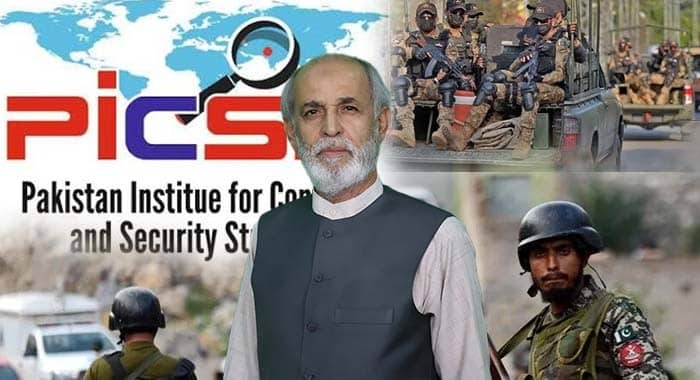
South Asia’s security environment rarely moves in a straight line. It advances through interruptions temporary reductions in violence, sudden political escalations, and shifting regional alignments that constantly reshape the balance of stability. The current discussion around Pakistan, Afghanistan, and India reflects exactly this pattern: while a recent PICSS report for June 2026 highlights a 16% reduction in violence across Pakistan, the broader regional environment remains deeply unsettled. Rising tensions in Afghanistan’s internal political landscape, evolving India-Afghanistan engagement, and continuing border and trade disruptions collectively suggest that Pakistan’s security gains, though real, remain fragile and reversible.
At first glance, the decline in violence appears encouraging. However, when examined alongside regional political volatility, especially in Afghanistan, and the intensifying strain on Pakistan-Afghanistan relations, it becomes clear that this improvement exists within a highly unstable strategic context. The question is not whether security has improved in the short term, but whether the underlying drivers of instability have actually been resolved or merely contained.
According to the PICSS report referenced in the discussion, violence across Pakistan has decreased by 16% in June 2026. This is presented as a positive development, and rightly so, as it suggests that counterterrorism efforts are having an impact. Supporting this trend, Pakistani security forces reportedly conducted around 32,000 operations in the first half of the year, reflecting an intensified and sustained operational posture against militant networks.
This increase in operations has clearly contributed to suppressing immediate threats and reducing the frequency of violent incidents. However, the critical analytical question is whether such operational momentum can sustainably maintain peace without parallel political and structural interventions. History suggests that while force can suppress violence temporarily, it rarely eliminates the conditions that generate it.
Therefore, while the 16% reduction is a meaningful indicator of short-term improvement, it does not automatically translate into long-term stability. It reflects containment rather than closure.
A central theme emerging from the discussion is the reactivation of Afghanistan’s former political leadership and the increasing fragmentation within its political discourse. One of the most notable elements is the reported re-emergence of Dr. Ashraf Ghani in political commentary and public statements.
Dr. Ashraf Ghani, who assumed power in Afghanistan on 15 January 2021, later left the country amid the political transition and is believed to have stayed in Abu Dhabi for a period before moving between possible locations including Lebanon and the United States. Although his exact location remains uncertain, what is evident is his continued engagement in political commentary through statements circulating in public and social media discourse. He has reportedly commented on regional military actions, including criticism of strikes perceived to involve Pakistan, and has raised concerns about Afghanistan’s international recognition and its internal trajectory.
Alongside him, Dr. Hamid Karzai has also become increasingly vocal, though he remains based in Kabul. While not operating openly in opposition, Karzai’s environment is described as constrained, with his associates and supporters increasingly critical of the current Afghan situation. This reflects not just personal political positioning, but a broader sense of dissatisfaction among segments of Afghanistan’s former governing elite.
Together, these developments suggest an emerging pattern: Afghanistan is not experiencing a consolidated political order but rather a dispersed and increasingly vocal political struggle. Different factions and former leaders are reasserting influence through statements, networks, and indirect engagement, signaling that internal political consensus remains incomplete. This fragmentation matters significantly for regional stability, because political uncertainty inside Afghanistan tends to spill across borders in the form of security risks, refugee pressures, and diplomatic friction.
Another major dimension highlighted in the discussion is the perception of increasing engagement between Afghanistan and India. While the exact nature and depth of this engagement may vary, the perception itself carries strategic consequences for Pakistan. Historically, Afghanistan and India have maintained diplomatic and developmental relations, particularly during different political phases including the eras of Sardar Daoud Khan, Dr. Najibullah, and Hamid Karzai. India’s presence in Afghanistan has often been associated with infrastructure development and political outreach.
However, the current concern expressed in the discussion is that as Pakistan-Afghanistan relations become more strained, India is likely to benefit strategically from increased engagement in Afghanistan. This is not necessarily framed as a direct alliance shift, but rather as a geopolitical opening created by declining Pakistan-Afghanistan cooperation. The key implication is that deteriorating relations between Pakistan and Afghanistan do not exist in isolation. They create strategic space for other regional actors, particularly India, to expand influence. This dynamic further complicates Pakistan’s security calculus, as regional alignments become more fluid and less predictable.
A significant contradiction highlighted in the discussion is the tightening of Pakistan’s border with Afghanistan. The border is described as heavily sealed, with restricted movement both ways. While this measure is intended to enhance security and control infiltration, it also produces unintended consequences. Despite strict border management, instability continues to manifest in the form of localized violence, including reported drone strikes and attacks in border regions such as Bajaur and areas around Peshawar. These incidents underscore that physical sealing of borders does not eliminate underlying security threats; it merely alters their form and movement. The broader implication is that border militarization, while effective in limiting unauthorized crossings, does not automatically translate into regional stability. Instead, it often shifts pressure points to adjacent areas and increases the humanitarian and economic burden on border communities.
One of the most consequential yet often under-discussed aspects of the current situation is the collapse of Pakistan-Afghanistan trade relations. The discussion highlights a series of interconnected economic disruptions affecting both countries. On the Afghan side, reduced trade has resulted in shortages of essential goods, including medicines, flour, food supplies, and construction materials. These shortages directly impact daily life and economic stability in Afghanistan, where import dependence is significant.
On the Pakistani side, the consequences are equally severe but manifest differently. The closure and disruption of trade routes have led to a sharp decline in commercial activity, affecting transport networks, logistics systems, and cross-border business operations. It is estimated that more than 50,000 daily wage workers linked to trade and transport have been affected. Trucking businesses, taxi services, and freight operators have all experienced significant downturns. This breakdown demonstrates that economic interdependence between Pakistan and Afghanistan is not marginal but structural. When trade routes are disrupted, both formal and informal economies suffer simultaneously. Rather than creating leverage, prolonged closure creates mutual economic damage.
Another important thread in the discussion is the reliance on large-scale security operations. With approximately 32,000 operations conducted in the first half of the year, Pakistan’s counterterrorism strategy is clearly operationally intensive. However, the discussion emphasizes a key limitation: not all security challenges can be resolved through military operations alone. While operations are necessary for immediate threat suppression, they must be complemented by broader strategic tools, including political engagement, intelligence refinement, and regional coordination.
A particularly important point raised is the need for targeted operations that minimize collateral damage. The concern is that indiscriminate or poorly targeted actions can create unintended grievances among civilian populations, which may later contribute to renewed instability. In this context, collateral damage is not only a humanitarian issue but also a strategic risk factor. Therefore, the argument is not against operations, but against over-reliance on them as the sole instrument of policy.
A recurring conclusion in the discussion is the importance of dialogue between Pakistan and Afghanistan. However, this is not framed as symbolic diplomacy or unconditional negotiation. Instead, it is presented as structured, pragmatic engagement aimed at managing differences rather than eliminating them entirely. The key insight is that negotiation does not require full agreement on all issues. Even partial agreements can stabilize relations and prevent escalation. The expectation that all demands must be accepted by either side is unrealistic; sustainable diplomacy is built on compromise, continuity, and gradual progress.
The absence of dialogue, by contrast, leads to policy rigidity and increased mistrust, which further destabilizes an already fragile environment.
When all elements are viewed together, a complex picture emerges:
- Violence inside Pakistan has decreased by 16%, largely due to approximately 32,000 security operations.
- Afghanistan’s internal political environment is increasingly fragmented, with figures like Dr. Ashraf Ghani and Dr. Hamid Karzai remaining active in political discourse, despite different circumstances.
- Afghanistan’s engagement with India is perceived to be increasing, creating strategic concern in Pakistan.
- Pakistan-Afghanistan border management has intensified, with a heavily sealed border and reduced mobility.
- Despite this, localized violence, including drone strikes and attacks in areas such as Bajaur and Peshawar, continues to occur.
- Bilateral trade has significantly declined, affecting over 50,000 daily wage workers and disrupting transport and logistics networks.
- Afghanistan faces shortages of medicines, flour, food items, and construction materials due to reduced imports.
- Pakistan faces shortages in transport activity, with reduced truck and taxi operations and declining cross-border commercial flow.
These interconnected developments illustrate a region experiencing simultaneous improvement and deterioration. Stability in one domain is offset by instability in another, producing an overall condition of strategic uncertainty.
The central paradox of the current Pakistan-Afghanistan security equation is that measurable improvements in violence reduction coexist with deepening structural instability. A 16% decline in violent incidents and thousands of security operations may indicate tactical success, but they do not resolve the broader regional tensions that continue to evolve. Afghanistan remains politically fragmented, Pakistan’s border strategy remains enforcement-heavy, trade relations are deteriorating, and regional alignments are shifting in ways that increase strategic unpredictability.
Ultimately, the region is not moving toward a stable equilibrium but rather through a phase of managed volatility. Without a coordinated approach that integrates security policy, diplomatic engagement, and economic connectivity, current gains risk remaining temporary. In such an environment, stability cannot be imposed solely through operations or borders. It must be constructed through sustained engagement, mutual restraint, and recognition that in South Asia, security is never purely national it is inherently regional.