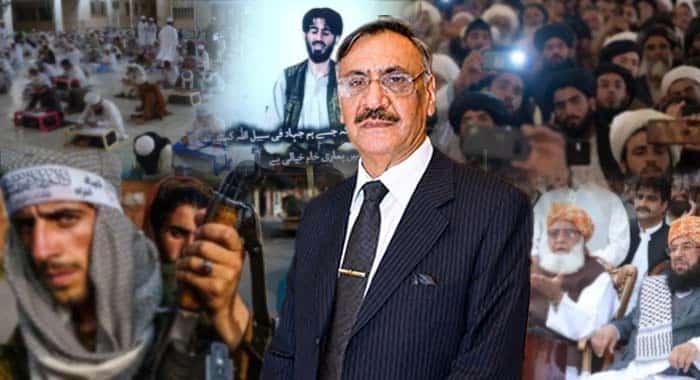
The reported confessional statement of arrested militant commander Hikmatullah, alias Hamza, has brought renewed attention to one of the most alarming challenges confronting Pakistan and the wider region: the exploitation of religion to recruit, manipulate and radicalise young people for militant activities, including suicide attacks.
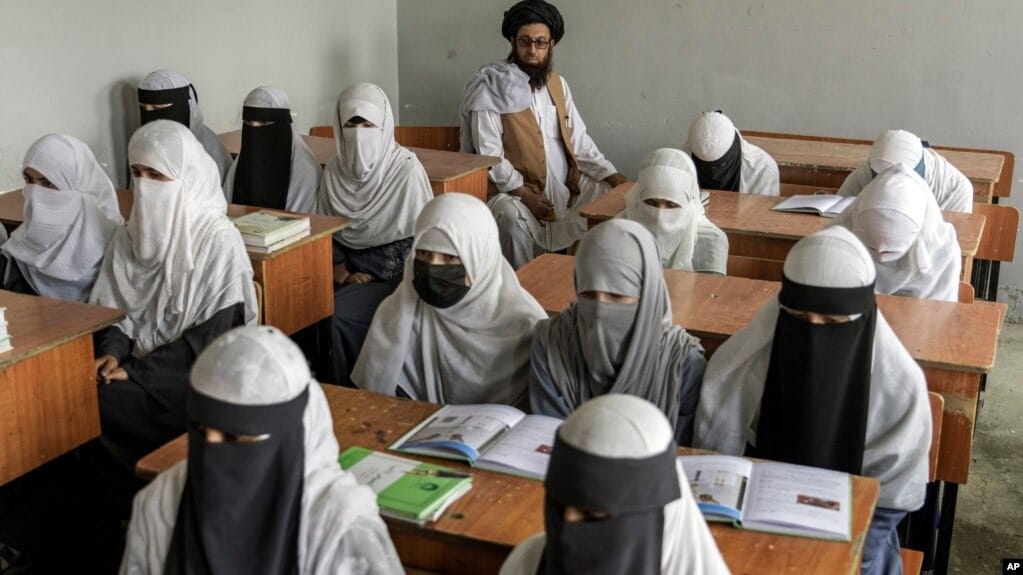
The revelations attributed to Hikmatullah point towards a disturbing intersection of religious misinterpretation, educational deprivation, institutional weaknesses and extremist influence. The alleged preparation of students at certain Afghan religious seminaries for suicide attacks raises fundamental questions about how vulnerable young minds are manipulated, who exercises ideological influence over them, and why educational institutions can become susceptible to extremist exploitation.
This is not merely a counterterrorism issue. It is a question of religious integrity, educational responsibility, social justice and the future of an entire generation. At the heart of this crisis lies a fundamental contradiction: a religion that places extraordinary importance on the sanctity of human life is being misrepresented by extremist elements to justify its destruction.
One of the most disturbing aspects of Hikmatullah’s reported statement concerns the alleged ideological manipulation of students in Afghan religious seminaries.
Young students were reportedly exposed to distorted religious interpretations suggesting that sacrificing their lives through suicide attacks would guarantee them entry into paradise. Such claims represent a profound distortion of Islamic teachings and an abuse of the religious trust that students place in their teachers.
Islam prohibits suicide and places immense emphasis on protecting human life. The sanctity of human life is a foundational Islamic principle, and the deliberate killing of innocent people cannot be justified through selective interpretations or political propaganda.
The Quranic teaching that unjustly killing one human being is comparable to killing all humanity reflects the extraordinary importance Islam attaches to human dignity and the preservation of life. Yet extremist propagandists exploit the limited religious understanding of vulnerable students by presenting violence as an act of extraordinary devotion. This is not religious education. It is the manipulation of religious identity for militant purposes.
The alleged use of visual representations of paradise and promises of spiritual rewards to influence young students makes the matter even more alarming. When religious concepts are repeatedly presented through a distorted ideological framework, students who lack the educational foundation to question such interpretations can become particularly vulnerable. The objective is not to develop independent religious understanding. It is to replace independent thought with unquestioning acceptance of extremist narratives.
The greatest tragedy is that religion, which should promote compassion, responsibility and moral character, is allegedly being exploited to normalise violence and glorify death. Poverty and the lack of educational opportunities are among the most significant factors that can make young people vulnerable to exploitation. For countless economically disadvantaged families, providing their children with quality education is a considerable financial challenge. School fees, uniforms, transportation and other educational expenses can place an additional burden on households already struggling to meet their basic needs.
In such circumstances, religious seminaries that offer free education, accommodation, meals and clothing can become an attractive alternative.
For a poor family, sending a child to a seminary may appear to be a practical decision. Parents believe their children will receive education, food and shelter while the household is relieved of some financial responsibilities. There is nothing inherently wrong with providing free religious education or supporting disadvantaged students. Religious institutions have historically played an important role in offering educational opportunities to communities with limited resources.
The danger emerges when individuals or institutions exploit the vulnerability of these families. If children enter an educational environment seeking knowledge and economic security but are subsequently exposed to extremist indoctrination, the institution has betrayed both the students and their families.
This is why radicalisation cannot be understood exclusively through the lens of militant ideology. Its social and economic foundations must also be examined.
A society cannot effectively protect its younger generation from extremist exploitation while ignoring the circumstances that make vulnerable children dependent on institutions that may lack adequate accountability. Making mainstream education affordable, accessible and inclusive is therefore an essential component of any meaningful strategy against extremism.
Another serious concern is the alleged absence of effective governmental oversight over certain religious seminaries, particularly in Afghanistan. The resistance of some religious educational organisations to registration and regulatory requirements raises important questions about transparency, accountability and the responsibilities of educational institutions. Every educational institution, whether religious or conventional, must operate within a framework that protects students and ensures appropriate educational standards.
Government oversight should not be interpreted as an attempt to undermine religious education. It should be recognised as a mechanism for protecting students and preserving the integrity of educational institutions. There must be a clear distinction between religious freedom and institutional immunity.
Religious freedom protects the right to practise religion, establish educational institutions and pursue legitimate religious scholarship. It does not justify concealing institutional activities, refusing reasonable accountability or allowing the exploitation of children. The allegations concerning the Jalalabad-based Khalid bin Waleed seminary, identified in connection with Hikmatullah’s reported statement, make the need for transparent investigation particularly important.
Nevertheless, the broader principle is undeniable: no educational institution should be beyond accountability when credible questions arise concerning the safety, education and future of its students. Registration, transparent administration, recognised educational standards and appropriate monitoring can help distinguish legitimate religious institutions from those vulnerable to extremist exploitation.
Importantly, regulation must be fair, consistent and applied without discrimination against religious communities. The objective should be to protect religious education from extremist infiltration, not to weaken it. An equally important concern relates to the educational and professional opportunities available to students graduating from certain religious seminaries.
Religious scholarship and service in mosques are respectable professions. There is absolutely no justification for looking down upon individuals who choose these careers. However, a serious problem emerges when students are denied a broader educational foundation that would allow them to pursue different professional opportunities. Education should expand choices rather than restrict them.
A student should be able to acquire religious knowledge while also developing the academic, professional and practical skills necessary to build an independent future. When educational institutions fail to provide broader opportunities, graduates may become economically dependent on a narrow professional structure.
Such dependency can increase their vulnerability to individuals who exercise influence over their religious, social and economic lives. The answer is not to discourage religious education. It is to improve it. Religious seminaries should provide balanced educational environments in which students can study Islamic teachings alongside recognised academic subjects.
Young people deserve the opportunity to become scholars, teachers, doctors, engineers, researchers, entrepreneurs or members of any other lawful profession. A genuinely educational institution should prepare students for life, not confine their futures to a predetermined path.
The most disturbing dimension of the reported revelations is the alleged use of religious promises to make young people accept their own deaths. Extremist organisations frequently attempt to present their political and militant objectives as religious obligations. They exploit the emotional power of faith, the desire for spiritual fulfilment and the trust young students place in religious teachers.
When such manipulation occurs, the consequences extend far beyond the individual being radicalised. Families lose children. Communities lose their younger generation. Society loses productive citizens. Religious institutions suffer reputational damage because the public begins questioning the environment in which such exploitation could take place.
The response must therefore include a stronger emphasis on authentic religious scholarship. Responsible religious scholars, educational leaders and community representatives must communicate clearly that suicide attacks and the deliberate killing of innocent people cannot be legitimised through religious rhetoric.
Religious education must encourage critical understanding, compassion, moral responsibility and respect for human life. Silence in the face of extremist misinterpretation creates space for those who wish to exploit religion. The responsibility of religious leadership is not merely to defend institutions but also to defend the principles those institutions are supposed to represent. The arrest of Hikmatullah represents an important development in the efforts to investigate militant recruitment and extremist networks.
His reported statement has drawn attention to the alleged preparation of young students for suicide attacks, the role of religious seminaries and the ideological manipulation of vulnerable individuals. If independently substantiated, these disclosures could help authorities better understand the institutional and ideological dimensions of militant recruitment. However, the arrest of one individual should not be mistaken for the elimination of an entire network.
Militant organisations depend on broader structures of ideological influence, recruitment and institutional support. Addressing individual perpetrators without examining the wider environment can leave the underlying problem unresolved.
The priority should be to investigate credible allegations, establish responsibility through due legal process and protect vulnerable students from further exploitation. Effective counterterrorism is not simply about arrests. It is about preventing future recruitment, disrupting extremist influence and strengthening the social institutions that protect young people.
The most meaningful achievement would be a situation in which no family has to fear that sending its child to an educational institution could expose that child to militant indoctrination. The debate over restoring trade between Pakistan and Afghanistan represents another critical dimension of the regional security challenge.
Afghanistan has reportedly emphasised the need to restore bilateral trade, while Pakistan maintains that its security concerns cannot be ignored in the pursuit of economic normalisation.
This is a fundamental issue. Trade is an important instrument of regional cooperation. Pakistan and Afghanistan share geographical, historical, cultural and economic connections. Their populations have long-standing commercial and social relationships.
However, economic cooperation requires a minimum level of security and mutual confidence. Pakistan’s central concern is that militant groups allegedly operating from Afghan territory have been involved in attacks inside Pakistan. Islamabad has repeatedly raised concerns about the use of Afghan soil by militant organisations and has sought credible action against individuals and groups threatening Pakistani security.
From Pakistan’s perspective, the issue is therefore not simply whether trade routes should remain open. It is whether the security environment allows normal economic relations to function without exposing Pakistani citizens and security personnel to continued threats. A country facing serious security challenges cannot be expected to treat economic normalisation as entirely separate from national security.
Trade agreements, border arrangements and diplomatic engagement all depend on confidence that commitments will be respected.
This does not mean that trade should permanently become a casualty of political disagreements. Rather, it means that sustainable trade requires credible security arrangements and demonstrable cooperation.
Another important dimension of Pakistan-Afghanistan relations concerns the financial structure of bilateral trade.
Concerns have been raised about commercial transactions in which Afghan traders reportedly purchase Pakistani goods using Pakistani rupees rather than through arrangements that provide transparent foreign-exchange benefits to Pakistan.
For example, an Afghan trader may purchase a truckload of cement in Pakistan and make payment in Pakistani currency. The broader economic question is whether such transactions generate sufficient benefits for Pakistan’s national economy.
The use of the Pakistani rupee in cross-border commercial transactions is not inherently problematic. However, the financial arrangements must be transparent and consistent with Pakistan’s economic and regulatory interests.
The preference for dollar-based payments, as raised in the discussion, also reflects the importance of developing a clear and mutually acceptable trade framework. Pakistan needs commercial arrangements that ensure proper documentation, customs compliance, financial transparency and fair economic returns.
Trade should not become an arrangement in which economic advantages are concentrated among a limited group of commercial interests while the wider national economy receives insufficient benefits. The concerns regarding individuals and commercial groups benefiting from cross-border trade also deserve appropriate scrutiny.
Economic policy must be based on verifiable financial data rather than assumptions or political slogans. A sustainable trading relationship must serve both countries while respecting each country’s legitimate economic and security interests.
Pakistan’s security concerns regarding Afghanistan are not limited to recent developments. The historical relationship between the two countries has repeatedly been affected by disputes over militant activity, cross-border security and the use of Afghan territory by groups hostile to Pakistan.
Different individuals and militant groups have allegedly used Afghan territory at various points to organise or support activities against Pakistan. These historical experiences have contributed to Islamabad’s persistent concerns about the security implications of developments across its western border.
However, historical grievances should not become an obstacle to constructive regional engagement. Pakistan and Afghanistan are neighbours, and geography makes their relationship strategically unavoidable.
Their security challenges are interconnected. Instability in one country can affect the other through militant activity, displacement, economic disruption and border tensions. For this reason, both countries have a shared interest in preventing their territories from being used for attacks against one another.
The issue requires practical cooperation rather than competing political narratives. Pakistan’s concerns regarding militant activity should be addressed through credible evidence, transparent mechanisms and measurable action. Similarly, Afghanistan’s legitimate economic and diplomatic interests should be recognised within a framework of mutual responsibility. Neither country can build a stable future by ignoring the security concerns of the other.
Another important issue concerns arguments based on shared ethnic, cultural and family connections across the Pakistan-Afghanistan border. Communities on both sides share languages, traditions, family histories and cultural identities. These connections are an important part of the region’s social fabric and deserve respect. However, shared ethnicity does not eliminate internationally recognised borders or the sovereignty of neighbouring states. Communities may share cultural identities while living in separate countries. This is not unusual in international relations.
The existence of family connections across a border does not remove the responsibility of governments to regulate movement, prevent illegal activities and protect their citizens. The comparison with other divided regions, including Kashmir and the international border between Pakistan and India, reinforces the principle that shared identities do not automatically invalidate political boundaries.
A functional border system is not necessarily an obstacle to cultural relationships or legitimate trade. It is a mechanism for maintaining order, ensuring accountability and preventing the exploitation of cross-border movement by militant organisations. Pakistan’s border policy should therefore combine effective security arrangements with lawful movement, humanitarian considerations and legitimate commercial activity. The objective should not be to separate communities unnecessarily but to ensure that their legitimate relationships are not exploited by extremist networks.
The reported revelations attributed to Hikmatullah, alias Hamza, raise questions that Pakistan and Afghanistan cannot afford to ignore. The alleged recruitment of young religious students for suicide attacks represents a profound betrayal of education, faith and humanity. It demonstrates how poverty can create vulnerability, how distorted religious interpretations can undermine independent thinking, and how insufficient institutional oversight can allow extremist influence to penetrate educational environments.
Pakistan’s security challenges, meanwhile, cannot be separated from its relationship with Afghanistan. Trade, diplomacy and regional cooperation require mutual confidence, and that confidence cannot develop while serious security concerns remain unresolved. Nevertheless, the solution must extend beyond border restrictions, arrests and political statements.
Pakistan needs stronger educational institutions, transparent madrassa regulation, affordable mainstream schooling and a sustained effort to promote authentic religious teachings. Afghanistan must also address concerns about the alleged use of its territory by militant organisations through credible and verifiable measures.
Religious scholars must reject the misuse of Islam. Governments must protect educational institutions from extremist exploitation. Families must have access to affordable and trustworthy education. Law enforcement agencies must investigate allegations professionally and hold those responsible accountable under the law. Above all, young people must be given opportunities to build meaningful lives rather than being exposed to narratives that glorify death.
A child entering a religious seminary should emerge with knowledge, wisdom, moral character and the ability to contribute positively to society. No child should become a victim of ideological manipulation under the pretext of religious devotion. The greatest victory against extremism will not be measured merely by the number of militants arrested or networks dismantled. It will be measured by the number of young lives protected from radicalisation, the number of families spared unimaginable grief, and the strength of educational institutions that teach the value of life rather than glorifying its destruction.
That is the real battle Pakistan must win: not merely against terrorism, but against the exploitation of faith, poverty and ignorance that allows terrorism to reproduce itself.