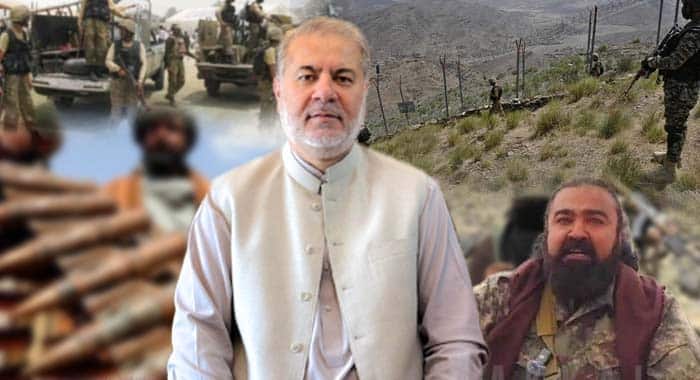
Pakistan’s security landscape along its western frontier is becoming increasingly complex, as militant organisations, internal leadership rivalries and the continued presence of armed networks in Afghanistan converge into a serious regional challenge. From the reported removal of Bashir Zeb from the leadership of the Balochistan Liberation Army (BLA) to the presence of senior Tehreek-e-Taliban Pakistan (TTP) commanders in Afghanistan, recent developments reveal a disturbing pattern: militant organisations may be experiencing internal changes, but their organisational structures and operational capabilities remain a significant concern for Pakistan.
The situation is no longer simply about isolated militant attacks or sporadic border clashes. It involves questions of leadership, financial resources, organisational survival, cross-border sanctuaries and the increasingly difficult relationship between Pakistan and Afghanistan.
At the centre of these developments are two distinct but equally serious security challenges: the evolving internal dynamics of Baloch separatist organisations and the continued presence of Pakistani militant networks across the Afghan border.
The reported removal of Bashir Zeb from the leadership of the Balochistan Liberation Army has raised important questions about the internal stability of the organisation. Reports have also emerged alleging that he was poisoned in Kandahar and subsequently transferred to India for medical treatment. However, the poisoning allegation and reported transfer remain independently unverified.
What appears particularly significant is the reported decision of the organisation’s supreme council to remove him from his leadership position through a unanimous decision. The announcement reportedly did not disclose detailed reasons for the move.
Bashir Zeb had played an influential role in consolidating different factions and strengthening the organisation’s structure. His background in student politics, particularly within the Baloch student movement, reportedly provided him with organisational experience and connections that helped him rise within the separatist movement.
Under his leadership, the BLA underwent significant organisational changes. It reportedly attracted younger recruits, expanded its activities and became increasingly associated with violent attacks against Pakistani security personnel and Chinese nationals and infrastructure in Pakistan.
One of the most disturbing developments associated with this period was the use of women as suicide attackers, introducing a particularly alarming dimension to militant violence in Balochistan.
The reported leadership change therefore deserves attention beyond the individual circumstances of Bashir Zeb. It raises questions about the organisation’s internal decision-making, competing interests and the influence of resources over its leadership structure.
Financial resources are essential to the survival of armed organisations. Maintaining fighters, providing food and accommodation, acquiring equipment and supporting the families of members all require substantial and continuous funding.
In this environment, access to financial resources can translate directly into organisational influence. When an individual leader develops extensive external contacts, gains access to resources and establishes an independent power base, internal tensions can emerge. Other members may begin to perceive that leader as a threat to collective authority or the existing organisational hierarchy.
This possibility is particularly relevant to the developments surrounding Bashir Zeb. Allegations concerning external financial support from India, Israel and Gulf countries have also surfaced in the discussion surrounding the leadership crisis. However, these claims have not been independently established and should not be treated as proven facts.
Nevertheless, the broader issue of financial influence deserves serious scrutiny. If internal disagreements are connected to the distribution of resources, the organisation could face deeper divisions that extend beyond a change in leadership.
Furthermore, if the reports of Bashir Zeb’s treatment in India are eventually confirmed, the development could create additional political and reputational difficulties for the organisation, particularly regarding perceptions of its external relationships.
While the BLA faces questions about its internal leadership, Pakistan continues to confront the challenge posed by Tehreek-e-Taliban Pakistan. The presence of senior TTP commanders and organisational representatives in Afghanistan remains a central concern in Pakistan’s security calculations.
The organisation, led by Noor Wali Mehsud, reportedly maintains a substantial presence across the Afghan border. This includes senior commanders, members of its decision-making structure, fighters and their families. Although numerous fighters operate inside Pakistan, the reported presence of senior leadership outside the country makes the challenge considerably more complicated.
Another significant organisation is the network associated with Hafiz Gul Bahadur, which has also been linked to attacks in North Waziristan, South Waziristan and surrounding areas. Lashkar-e-Islam is another group identified in this wider militant landscape. The geographical separation between militant leadership and operational fighters does not necessarily weaken these organisations. On the contrary, it can complicate efforts to disrupt their structures and prevent attacks.
Pakistan’s concern is therefore not limited to militants crossing the border. It extends to the reported existence of leadership networks, organisational structures and support systems that allow these groups to maintain their activities.
Another important development concerns the reported relocation of Pakistani Taliban members and their families from Afghanistan’s border regions to central parts of the country. The movement reportedly followed increasing tensions along the border and military actions in areas where militant groups were believed to have established a presence.
Some individuals were reportedly provided with accommodation, while others continued living in camps or under difficult economic conditions. This relocation has created its own challenges. Individuals who previously lived in familiar border communities have reportedly struggled to adjust to unfamiliar urban environments. Concerns about personal security, unfamiliar surroundings and the possibility of attacks have added to their difficulties.
Many families are also reportedly facing financial hardship, high living costs and inadequate resources. This situation exposes an important contradiction. Moving militants and their families away from border regions may reduce their immediate visibility in those areas, but it does not necessarily eliminate the organisational structures or leadership networks associated with them. The fundamental issue remains unresolved if these networks continue to exist and retain their capacity to operate.
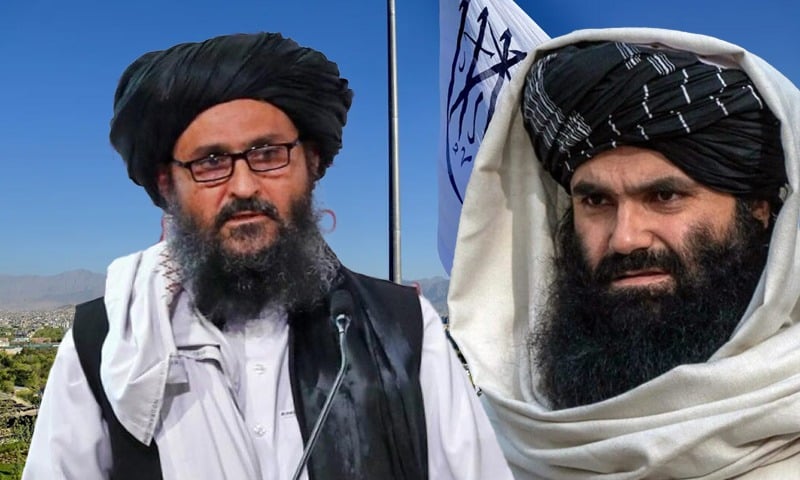
For years, Pakistan has maintained that militant groups targeting its territory have access to sanctuaries and organisational facilities in Afghanistan. Afghan Taliban representatives have repeatedly rejected allegations that their territory is being used to facilitate attacks against Pakistan. However, remarks attributed to Sirajuddin Haqqani concerning the construction of approximately 2,000 houses for individuals described in the discussion as Pakistani militants have brought renewed attention to the issue.
These remarks are particularly significant in the context of Pakistan’s longstanding concerns about the presence of TTP members and their families in Afghanistan. The reported existence of senior commanders, fighters, families and organisational representatives across the border makes it difficult to dismiss the issue as a matter of isolated individuals.
The central question is whether Afghanistan can prevent its territory from being used by organisations involved in attacks against a neighbouring country. For Pakistan, this is not merely a diplomatic disagreement. It is a matter of national security that directly affects the safety of its citizens, the stability of its border regions and the credibility of its counterterrorism efforts.
The situation around Angoor Adda demonstrates how quickly security tensions can translate into suffering for ordinary people. Recent exchanges of fire and military tensions have reportedly affected civilian populations on both sides of the border. According to the account presented, approximately 6,000 to 7,000 people were displaced from affected areas.
Among them were members of the Waziri tribal communities, whose lives and family connections have historically extended across the Pakistan-Afghanistan border. The humanitarian consequences were particularly severe because of the harsh winter conditions. Displaced families faced uncertainty, inadequate shelter and the loss of their normal livelihoods.
The situation also involved reports of civilian casualties and injuries in Afghan areas following military action, generating anger among local communities. There have been arguments that militant groups sometimes use firing from populated areas to divert the attention of Pakistani security forces while attempting to create opportunities elsewhere along the border. Regardless of the competing operational claims, civilian protection must remain a priority.
Border communities should not be forced to bear the consequences of a conflict they have little power to control. The displacement of thousands of people is not simply a temporary inconvenience. It disrupts education, livelihoods, family life and the economic stability of already vulnerable communities.
The recent developments surrounding the Apex Committee and the determination to target militants and their facilitators indicate the seriousness of Pakistan’s security concerns. However, the scale and complexity of the challenge demand a sustained and comprehensive response.
Pakistan must address militant organisational structures, strengthen border management, improve intelligence coordination and pursue meaningful engagement with Afghanistan. Equally important is ensuring that militant networks cannot exploit geographical vulnerabilities, internal rivalries or financial resources to reorganise and continue their activities. The reported divisions within the BLA, the presence of TTP leadership in Afghanistan, the activities associated with Hafiz Gul Bahadur and the continuing tensions around Angoor Adda are interconnected elements of a wider security environment.
The central lesson is that militant organisations cannot be neutralised merely through leadership changes, geographical relocation or temporary security operations. As long as their organisational networks, financial resources and operational structures remain intact, the threat can persist and adapt.
Pakistan’s western frontier is therefore facing a defining security test. The real measure of success will not be the number of statements issued or operations announced, but the state’s ability to prevent militant networks from operating, protect civilian populations and establish lasting stability along the border.
Ultimately, lasting security will require more than confronting armed groups. It will require addressing the conditions that allow them to survive, reorganise and threaten regional peace.