
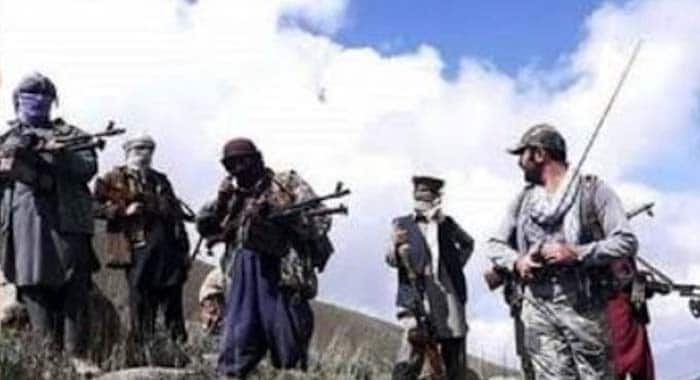
The Taliban regime is facing an increasingly serious internal security challenge, as anti-Taliban resistance operations across Afghanistan more than doubled in October compared to the previous month, exposing growing vulnerabilities in its territorial control and security apparatus.
According to figures reported by the Foundation for Defense of Democracies’ Long War Journal, anti-Taliban resistance groups claimed 82 attacks during October, reportedly resulting in 122 Taliban fatalities and 68 injuries. The operations included improvised explosive device (IED) attacks, ambushes, indirect fire and targeted assassinations, indicating a significant escalation in armed opposition to Taliban rule.
The geographical spread of these attacks is particularly concerning for the authorities in Kabul. Operations were reported across southern strongholds, including Kandahar, Helmand and Zabul; northeastern provinces such as Badakhshan, Baghlan and Takhar; central regions, including Kabul, Panjshir and Wardak; as well as western, northern, eastern and southeastern Afghanistan. The scale and geographical diversity of the reported operations suggest that resistance activity is no longer confined to isolated pockets but is increasingly challenging the Taliban’s security presence across multiple regions.
The Afghan United Front (AUF), led by former 215th Helmand Corps commander Lieutenant General Sami Sadat, emerged as the most active resistance group, claiming 36 operations during the month. Its activities were concentrated largely in Kandahar and Helmand, the traditional strongholds of the Taliban leadership. Particularly significant was the AUF’s claim of seven attacks within 24 hours on October 26 across six provinces, demonstrating the geographical reach of its reported operations and placing additional pressure on the Taliban’s security apparatus.
The National Resistance Front (NRF), led by Ahmad Massoud, claimed 11 attacks across several provinces, while the Afghan Freedom Front (AFF), headed by former Afghan National Army Chief of General Staff Yasin Zia, reported 10 operations. The AFF also claimed an indirect-fire attack on Bagram Airbase on October 22, reportedly resulting in more than 10 Taliban casualties.
The growing activity of these established groups has been accompanied by the emergence of additional resistance formations. The Martyr Massoud Brigades, an NRF-affiliated group, claimed its first operation on October 24 in Panjshir, while the newly announced Afghan National Liberation Front (ANLF) claimed its first attack against the Taliban’s 203rd Mansouri Corps in Gardez on October 31. The National Ideal Front also emerged towards the end of the month, claiming operations in three provinces.
Meanwhile, Amrullah Saleh’s Green Unit, the military wing of the Green Trend, claimed eight attacks, its highest monthly figure since beginning combat operations this year. The Afghanistan Republican Front (ARF) claimed nine operations, while several smaller resistance formations also reported attacks against Taliban personnel and installations.
Of particular strategic significance is the reported continuation of resistance activity in Kamdesh district of Nuristan, which borders Pakistan. The AFF’s sustained engagements in this strategically sensitive area raise concerns about security vulnerabilities along Afghanistan’s eastern frontier and the potential implications for regional border management.
The developments also expose the growing fragmentation of Afghanistan’s internal security environment. Although resistance groups have expanded their reported operational activity, their lack of a unified command structure, competing organisational interests and the continued loss of experienced commanders raise questions about their ability to translate isolated operations into a sustained political and military challenge to Taliban rule.
Nevertheless, the sharp increase in reported attacks, their geographical spread and the emergence of new armed formations represent a significant challenge to the Taliban’s claims of having established nationwide security and consolidated control over Afghanistan.
For Pakistan, these developments carry important security implications. Islamabad has repeatedly expressed concerns about the security vacuum along Afghanistan’s eastern frontier and the potential exploitation of inadequately controlled areas by armed groups. Continued instability inside Afghanistan, particularly in border regions, reinforces the need for effective border management, regional intelligence cooperation and concrete measures to prevent Afghan territory from becoming a source of insecurity for neighbouring countries.
The Taliban leadership must recognise that repeatedly blaming Pakistan for Afghanistan’s security challenges does not address the growing instability within its own territory. The reported escalation in resistance activity presents a serious internal governance and security challenge that Kabul cannot afford to ignore.
The message is unmistakable: Afghanistan’s internal security crisis is deepening, the Taliban’s claim of nationwide control is facing mounting challenges, and the consequences of continued instability extend far beyond its borders. Rather than deflecting responsibility towards Pakistan, Kabul must confront the security realities unfolding within Afghanistan.



