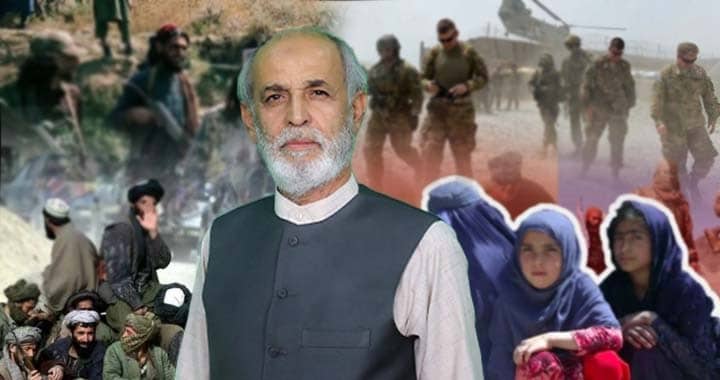
The political and security landscape of Pakistan and Afghanistan is entering a potentially significant phase, shaped by regional instability, competing international interests, domestic political tensions, and the possibility of renewed American engagement in Afghanistan. Developments surrounding Khyber Pakhtunkhwa, the political position of Maulana Fazlur Rahman, and the evolving relationship between Islamabad and the Afghan Taliban are increasingly interconnected. At the centre of this emerging equation lies a fundamental question: Is Afghanistan once again becoming a focal point of international strategic competition, and could the United States be preparing to re-establish its influence in a region it formally left behind?
Recent developments and political discussions suggest that the answers may have considerable implications not only for Afghanistan but also for Pakistan, Central Asia, and South Asia. Meanwhile, Pakistan’s internal political uncertainties, particularly the debate surrounding Governor’s Rule in Khyber Pakhtunkhwa and the future of provincial political representation, add another layer of complexity to an already challenging regional environment.
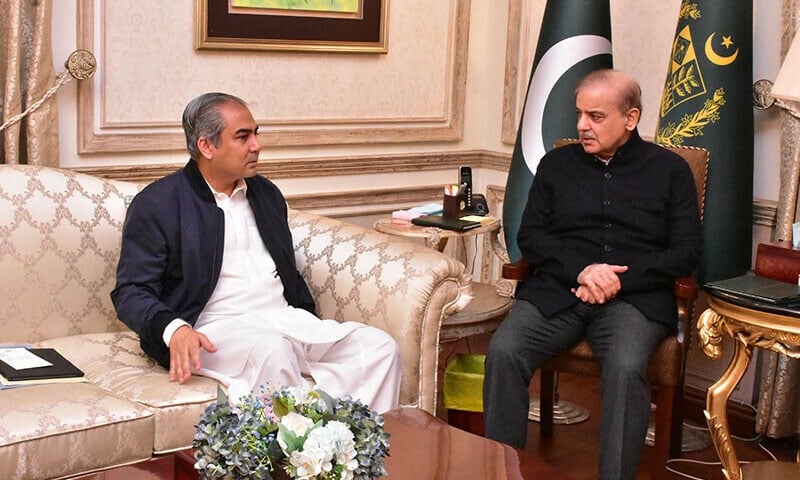
The reported displeasure of Maulana Fazlur Rahman cannot necessarily be understood as a simple reaction to being overlooked by the political leadership or Governor Faisal Karim Kundi. His political position, relationships with different parties, and expectations from the federal government suggest that his dissatisfaction may have deeper roots.
There appear to be at least two important dimensions to his political frustration.
First, Maulana Fazlur Rahman maintained contacts with different political stakeholders before the question of Governor’s Rule in Khyber Pakhtunkhwa became prominent. He reportedly remained engaged with the federal government, political leaders, and influential figures in the province. There were also efforts to establish reconciliation and maintain political communication. However, these efforts did not produce the desired outcome.
The impression that the government moved too quickly, without adequately considering the concerns and political interests of important stakeholders, may have contributed to his dissatisfaction. If political consultations take place but their recommendations are subsequently disregarded, the resulting frustration can extend beyond individual disagreements and become a broader question of political relevance and influence.
Second, Maulana Fazlur Rahman’s expectations may be connected to the political arrangement established during the Pakistan Democratic Movement (PDM) government.
During the political tensions of 2022, the JUI-F played an important role in the broader political alignment. When the PDM government came into power, Maulana Fazlur Rahman and his political camp acquired significant political importance. His party was part of an arrangement in which important political positions and responsibilities were distributed among coalition partners.
Consequently, he may believe that his political contribution deserves greater consideration in subsequent decisions, particularly those concerning Khyber Pakhtunkhwa. His current dissatisfaction could therefore reflect a combination of unmet political expectations, insufficient consultation, and disagreements over the future political structure of the province.
However, the more consequential question is whether Maulana Fazlur Rahman is seeking something much bigger than recognition or participation in the existing political arrangement.
One possible explanation for Maulana Fazlur Rahman’s position is his interest in fresh elections in Khyber Pakhtunkhwa. The argument is that the existing political crisis cannot be resolved through temporary administrative arrangements or prolonged Governor’s Rule. Instead, a new electoral mandate may be necessary to restore political legitimacy and establish a functioning provincial government.
This position is not necessarily limited to the JUI-F. Other political parties, including the Pakistan People’s Party, Pakistan Muslim League, and Awami National Party, may also have an interest in resolving the provincial political deadlock through fresh elections. The fundamental issue is that a province cannot remain indefinitely trapped in political uncertainty. If the existing assembly arrangement is suspended or provincial governance continues under an extraordinary administrative structure, the question of democratic representation becomes increasingly important.
The situation becomes even more complicated when viewed in connection with the Senate elections. The provincial assemblies play an important role in the Senate’s electoral process. Therefore, any prolonged uncertainty concerning the functioning of the Khyber Pakhtunkhwa Assembly could create constitutional and political complications for the broader parliamentary system.
The Senate elections could become another major point of confrontation if the provincial political arrangement remains unresolved. This creates a difficult choice for Pakistan’s political leadership. It must either reconsider Governor’s Rule, restore an appropriate constitutional and parliamentary arrangement, or develop a political solution that addresses the question of fresh elections. Allowing the situation to continue without a clear direction could deepen political divisions.
Maulana Fazlur Rahman, in such circumstances, may find common ground with PTI and other political parties opposed to Governor’s Rule. Although these parties may have different political priorities and historical disagreements, a shared opposition to the existing arrangement could create an unexpected political alignment.
Such cooperation would demonstrate how political interests can sometimes overcome traditional differences when parties face a common institutional or constitutional concern. Pakistan’s leadership should therefore recognise that the issue is not simply about Maulana Fazlur Rahman’s personal dissatisfaction. It concerns the future of political stability in Khyber Pakhtunkhwa and the ability of the country’s political institutions to resolve disagreements through democratic means.
While Pakistan confronts its domestic political challenges, the security situation along its western border remains another major concern. Relations between Pakistan and Afghanistan continue to face serious difficulties, particularly over allegations that Afghan territory is being used by militant groups to conduct terrorist activities against Pakistan.
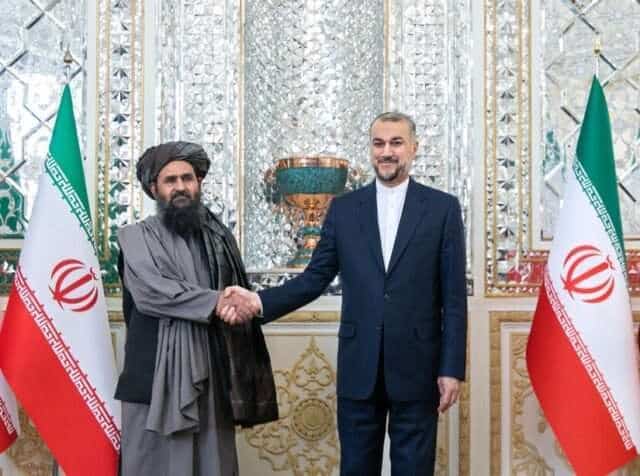
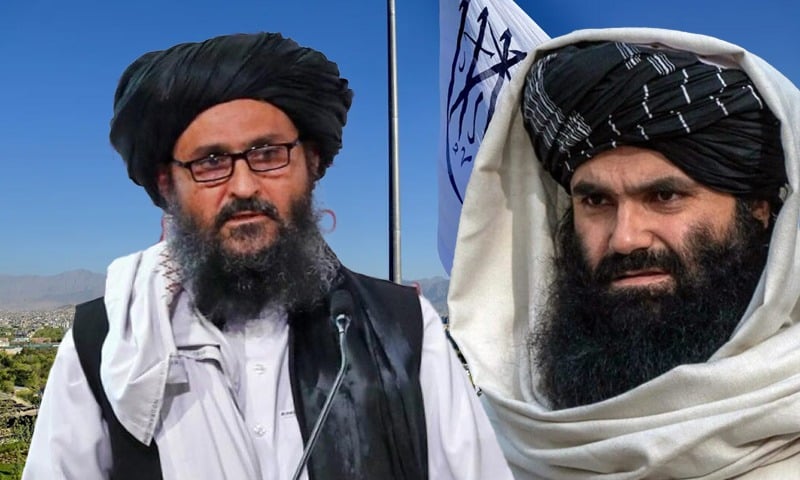
Islamabad maintains that the Afghan Taliban have not adequately addressed its security concerns or taken sufficient action regarding the issues raised by Pakistan. This disagreement has become an important source of tension between the two neighbours. The recent exchange of statements between American Secretary of State Marco Rubio and Afghan Taliban spokesperson Zabihullah Mujahid has added a potentially significant international dimension to the dispute.
The American position, as discussed in the broadcast, highlighted concerns about terrorism and Pakistan’s security situation. In response, Mujahid rejected the allegations and maintained that Afghanistan does not permit its territory to be used against neighbouring countries.
More importantly, the Afghan spokesperson proposed that the United States should visit Afghanistan and investigate Pakistan’s allegations directly. The proposal is significant because it potentially opens the door to international involvement in a dispute that has largely remained a matter of bilateral relations between Islamabad and Kabul.
Reports subsequently indicated support for the idea of an American investigation into the allegations. Although such statements do not establish that Washington has formally accepted the proposal or decided to return to Afghanistan, they reveal an interesting diplomatic development. Afghanistan appears willing, at least rhetorically, to invite American involvement in examining the security allegations. At the same time, Pakistan continues to seek a satisfactory response to its concerns.
This creates a complicated diplomatic situation. If the United States becomes involved, its role may extend beyond investigating terrorism. Its broader strategic interests could shape the nature and direction of any renewed engagement.
Perhaps the most significant question emerging from these developments is whether the United States is considering a renewed presence in Afghanistan. The possibility of an American return has been discussed previously, particularly in connection with Bagram Airbase. Reports and discussions about a potential American interest in Bagram have kept alive speculation that Washington may not be entirely prepared to abandon its strategic interests in Afghanistan.
The latest developments add another dimension to this possibility. According to the assessment presented in the discussion, contacts between American intelligence representatives and the Afghan Taliban may have continued despite the formal American withdrawal.
There are suggestions that conversations have taken place regarding the practical arrangements and conditions under which American personnel could potentially enter Afghanistan. One of the most interesting aspects concerns security arrangements. Any substantial American presence would require personnel responsible for intelligence, security, logistical coordination, and protection. The discussion referred to a possible requirement involving approximately 1,000 security personnel and the associated arrangements for their entry into Afghanistan.
This would not be an insignificant matter.
The historical experience following September 11 provides some context. During the early period of the American presence in Afghanistan, Washington brought in large numbers of personnel to establish security arrangements, intelligence operations, and logistical structures.
A renewed presence, even on a smaller scale, would therefore require negotiations over personnel, access, security responsibilities, and operational conditions. The Afghan Taliban would face a difficult decision.
On one hand, they have consistently emphasised Afghanistan’s sovereignty and independence. On the other hand, maintaining diplomatic relations and managing international security concerns require engagement with powerful countries, including the United States. Allowing American personnel to return, under any arrangement, would represent a major political and strategic decision.
It would also raise questions about how such a move could be reconciled with the Taliban’s political narrative and its relationship with other international powers. Nevertheless, the possibility of discussions should not automatically be interpreted as confirmation that an American military or intelligence presence is imminent. The distinction between diplomatic contact, negotiations, and an actual operational return remains essential.
Even if Washington eventually increases its involvement in Afghanistan, it would be unrealistic to assume that its primary motivation would be improving relations between Pakistan and the Afghan Taliban. The United States would naturally approach Afghanistan through the lens of its own national and geopolitical interests. The most important factor is the growing strategic competition among the United States, China, and Russia.
Afghanistan occupies a strategically important geographical position between South Asia, Central Asia, and the wider region. Its location gives it significance beyond its domestic political and security circumstances. For Washington, reduced influence in Afghanistan has also meant a diminished capacity to engage directly with developments in Central Asia. Following the American withdrawal, regional powers acquired greater opportunities to expand their political, economic, and strategic relationships with Afghanistan.
China has demonstrated interest in the region, while Russia has also sought to strengthen its position and relationships across the broader neighbourhood. This changing balance of influence could become an important consideration in American strategic calculations. If Washington seeks to re-establish a presence or increase its engagement, one possible objective would be to prevent further expansion of Chinese and Russian influence. The issue is therefore not simply whether America wants to return to Afghanistan. It is whether Afghanistan is becoming relevant again as an arena of international competition.
The United States, Russia, and China have different strategic priorities, but all recognise the importance of maintaining influence in regions that connect major political and economic centres. For Washington, engagement with Afghanistan could provide opportunities to reconnect with Pakistan, maintain communication with the Taliban, and rebuild relationships across Central Asia.
This would potentially extend American influence beyond Afghanistan itself. The significance of the region is particularly important because the American withdrawal created a different geopolitical environment. Countries that previously operated within a framework strongly influenced by Washington now have more room to pursue independent regional strategies. An American return, if it materialises, could therefore be motivated by a desire to restore strategic access and influence rather than simply resolve the security dispute between Pakistan and Afghanistan.
For Pakistan, these developments present both opportunities and risks. Islamabad has an immediate interest in improving security along its western border and ensuring that Afghan territory is not used for activities threatening Pakistani security. However, if the United States becomes more actively involved in Afghanistan, Pakistan must carefully evaluate the consequences.
Washington may engage with Islamabad, Kabul, and Central Asian countries simultaneously, but its priorities will ultimately be determined by American strategic interests. Pakistan should not assume that renewed American engagement would automatically translate into support for its position against the Afghan Taliban. Similarly, the Afghan Taliban may attempt to use international engagement to strengthen their diplomatic position and reduce their dependence on any single regional partner.
This means that Pakistan needs a clear and consistent diplomatic strategy. Its security concerns must remain central, but addressing them will require sustained political engagement, regional coordination, and a realistic understanding of the changing international environment. The relationship between Pakistan and Afghanistan cannot be managed exclusively through public statements or temporary diplomatic initiatives. Both sides need mechanisms that can address security concerns, build confidence, and prevent misunderstandings from escalating into larger confrontations.
At the same time, Pakistan must remain attentive to the broader competition involving China, Russia, and the United States. A changing Afghanistan could reshape the strategic calculations of all three powers, with consequences extending across the region.