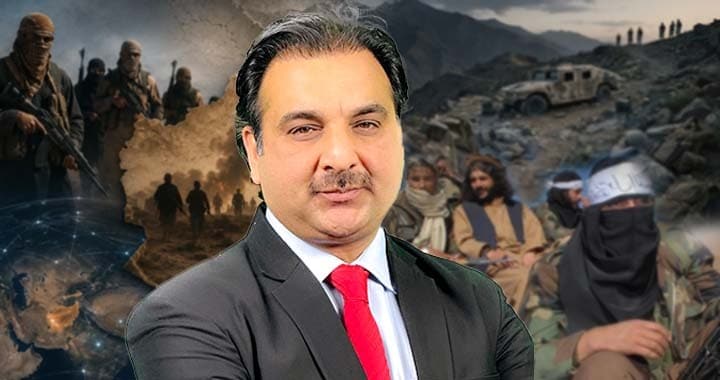
Pakistan is confronting a complex and evolving national security challenge that extends far beyond conventional terrorism. The availability of advanced military equipment in the hands of militant organisations, the growing technological sophistication of terrorist networks, and the systematic use of social media to spread propaganda have created a dangerous combination that threatens the country’s stability. The challenge is no longer limited to preventing armed attacks or securing geographical borders. It also involves protecting public confidence, countering disinformation, strengthening state institutions, and ensuring that vulnerable communities are not pushed towards extremism by economic deprivation and political alienation.
One of the most serious dimensions of this evolving threat is the military equipment left behind by American forces during their withdrawal from Afghanistan in 2021. Equipment and weapons valued at approximately $7.2 billion remained in Afghanistan, subsequently falling under the control of the Taliban administration. What makes this development particularly concerning for Pakistan is the reported transfer of substantial quantities of this military equipment into the hands of Tehreek-e-Taliban Pakistan (TTP) and other militant organisations operating in the region.
The consequences of this development are significant. Weapons originally supplied to support Afghanistan’s former security forces have become part of a regional security dilemma. Instead of contributing to stability, their availability has raised serious concerns about the growing operational capabilities of militant groups and their ability to conduct increasingly sophisticated attacks against Pakistan.
The American withdrawal from Afghanistan fundamentally transformed the regional security environment. When US forces departed in August 2021, a considerable quantity of military equipment remained in the country. This included firearms, ammunition, military vehicles, communications equipment, surveillance technology and other defence-related assets.
Following the Taliban’s takeover, this equipment came under the control of the new authorities. Its subsequent movement and availability in the region created a major security concern, particularly for neighbouring Pakistan.
The central question is how military equipment originally intended for an established national security apparatus became accessible to militant organisations. The TTP’s growing access to sophisticated weapons has intensified concerns about the consequences of leaving such a substantial military inventory in an unstable political and security environment.
The issue is not simply the financial value of the equipment. Its strategic importance lies in the capabilities it provides to organisations that operate outside recognised state institutions and have repeatedly targeted Pakistan’s security personnel and civilian population.
The availability of modern firearms, ammunition, military-grade equipment and emerging technologies can significantly increase the operational capacity of militant groups. It can also make counterterrorism operations more complicated and dangerous for security personnel.
Pakistan therefore has legitimate reasons to treat the proliferation of these weapons as a serious national security concern. Preventing their further movement, identifying their sources and establishing effective mechanisms to monitor illicit arms trafficking should become essential priorities.
The threat posed by the TTP has evolved considerably. Its activities are no longer limited to conventional militant operations involving small arms and isolated attacks. The increasing use of advanced equipment, improved communications and drone technology demonstrates how militant organisations can adapt to changing security environments.
Modern terrorism increasingly relies on technological capabilities. Drones, sophisticated communication systems and specialised technical expertise can change the nature of attacks and complicate the responsibilities of security agencies.
The recruitment of individuals with engineering, technical and operational knowledge is another worrying dimension. Terrorist organisations that acquire weapons without developing the technical expertise to operate them effectively may have limited capabilities. However, when access to equipment is combined with specialised human resources, the threat becomes considerably more serious.
Pakistan must therefore recognise that counterterrorism cannot remain confined to traditional security measures. It requires a comprehensive approach involving intelligence coordination, technological preparedness, border security and the continuous improvement of the capabilities of law enforcement and security institutions. The most important objective should be to prevent militant organisations from converting access to military equipment into a sustainable operational advantage.
Pakistan’s security situation cannot be separated from developments in neighbouring Afghanistan. Since the Taliban takeover in 2021, concerns have persisted about the use of Afghan territory by militant organisations targeting Pakistan. The presence of militant networks, their recruitment activities and their reported access to military equipment have created an increasingly difficult security environment.
The challenge is particularly serious when cross-border militant activity undermines the security of Pakistani border communities and exposes security personnel to repeated attacks. Reports of Afghan nationals being involved in attacks against Pakistani forces have further intensified concerns about the regional dimensions of terrorism.
Pakistan needs a clear and consistent policy towards Afghanistan that combines diplomatic engagement with uncompromising demands for effective action against militant groups. Security cooperation, intelligence sharing and verifiable commitments against cross-border terrorism are essential. The Afghan authorities must recognise that allowing armed organisations to operate from Afghan territory damages regional stability and undermines the possibility of constructive relations with neighbouring countries.
At the same time, Pakistan’s response should remain focused on verifiable evidence, national security interests and diplomatic engagement. Sustainable regional security cannot be achieved through accusations alone; it requires practical cooperation and measurable results.
While weapons and armed attacks represent the physical dimension of terrorism, social media has become an increasingly important battlefield for shaping public perceptions. Militant organisations and hostile propaganda networks understand that damaging public confidence can be as strategically useful as carrying out physical attacks. Their objective is not necessarily limited to spreading misinformation about a particular incident. It can involve creating a broader atmosphere of mistrust between citizens, government institutions and security agencies.
This is where narrative-building becomes particularly dangerous. A misleading video, manipulated photograph, fabricated statement or deliberately distorted news report can circulate across social media platforms within minutes. By the time the facts are established, the original misinformation may already have reached thousands or even millions of people.
The consequences can be severe. False narratives can create confusion during security operations, intensify political divisions, undermine confidence in public institutions and provide propaganda opportunities to militant organisations. The use of accounts operating under different geographical, ethnic or political identities makes the situation even more complicated. Digital identities can be manipulated, and coordinated networks can create the impression that a particular narrative represents widespread public opinion.
The rapid production and circulation of professionally edited videos also raise important questions about the organisation and coordination behind certain propaganda campaigns. The critical point is that Pakistan must distinguish between legitimate criticism, independent journalism and coordinated disinformation. A healthy democracy must protect freedom of expression, but freedom of expression should not become a cover for fabricated information, incitement to violence or deliberate manipulation of public security concerns.
One of the most important lessons in counterterrorism is that military strength alone cannot guarantee long-term success. Security institutions can conduct operations, dismantle militant networks and strengthen border controls, but lasting stability also requires public confidence and cooperation. When citizens trust their institutions, they are more likely to share credible information, reject extremist propaganda and cooperate with law enforcement agencies. When that trust deteriorates, militant organisations can exploit the resulting divisions.
This is precisely why the relationship between the state and the public must remain a national priority. The government should establish effective communication channels through which citizens receive timely, accurate and verifiable information during security incidents. Delayed communication creates an information vacuum, and misinformation quickly fills that space.
Official institutions should develop professional digital communication teams capable of responding rapidly to false claims without becoming involved in unnecessary political arguments. Transparency is equally important. When mistakes occur, institutions should acknowledge them and provide explanations. Public confidence cannot be built through slogans or one-sided messaging. It requires accountability, consistency and credible performance.
Furthermore, the government must avoid treating every critical voice as an enemy. Genuine criticism is part of a functioning society and can help institutions identify weaknesses. The real target should be organised disinformation, incitement and propaganda that deliberately seeks to promote violence or destabilise society.
Another critical dimension of Pakistan’s security challenge is the relationship between economic exclusion and social instability. Communities facing persistent unemployment, inadequate education, poor healthcare and limited economic opportunities can become increasingly vulnerable to criminal networks and extremist recruitment.
When young people see no realistic prospects for employment or a dignified future, frustration and alienation can grow. Criminal organisations, smugglers and extremist groups may exploit these conditions by offering money, influence or a false sense of belonging.
This does not mean that poverty automatically produces terrorism. The overwhelming majority of economically disadvantaged people reject violence. However, persistent deprivation creates vulnerabilities that organised criminal and militant networks can exploit.
For this reason, counterterrorism must include a serious development agenda. The government should prioritise education, healthcare, employment generation and essential public services in vulnerable districts, particularly in areas affected by prolonged insecurity.
Young people need opportunities to participate in the national economy rather than remain disconnected from mainstream institutions. Vocational training, technical education, small-business support and employment programmes can help provide alternatives to criminal and extremist networks. The integration of neglected communities into the national economic and political framework is not merely a development objective. It is an investment in national security.
The economic situation in Afghanistan also deserves serious attention. Economic hardship, unemployment and limited opportunities have contributed to the departure of large numbers of Afghans seeking better living conditions elsewhere. The movement of people through difficult and dangerous routes towards Pakistan, Iran and other neighbouring countries reflects the challenges facing ordinary Afghan citizens. The contrast between political claims of stability and the economic difficulties experienced by ordinary people raises important questions about governance and the distribution of resources.
A country cannot achieve sustainable stability when its population lacks access to basic necessities, employment and economic opportunities. For Pakistan, Afghanistan’s economic difficulties have direct implications for border management, migration, regional stability and security. The international community should recognise that Afghanistan’s economic and humanitarian challenges cannot be ignored. At the same time, economic assistance must contribute to the welfare of ordinary citizens and should be accompanied by transparency and effective accountability.
A more stable and economically sustainable Afghanistan would ultimately benefit the entire region, including Pakistan.
Pakistan needs an integrated strategy that addresses the military, technological, informational and socioeconomic dimensions of the threat. First, the government should strengthen intelligence coordination and develop effective mechanisms to identify and prevent the illegal circulation of military equipment. The origin, movement and ownership of recovered weapons should be investigated wherever possible. Second, border management must be improved through modern surveillance, effective intelligence sharing and stronger coordination among relevant institutions. Preventing the movement of militant personnel, weapons and equipment is essential.
Third, Pakistan must strengthen its technological preparedness. The growing use of drones and sophisticated communications by militant groups requires continuous investment in defensive capabilities, technical training and intelligence analysis.
Fourth, the government should establish a credible national framework for countering digital disinformation. This should involve professional fact-checking mechanisms, rapid public communication, cooperation with social media platforms and appropriate legal action against demonstrably unlawful activities. Such measures must respect constitutional protections and should never become instruments for suppressing legitimate political disagreement.
Fifth, the government, provincial administrations, security institutions, civil society and local communities must work together. Counterterrorism cannot succeed when institutions operate in isolation or when citizens feel disconnected from the state.
Finally, economic development must become an integral part of national security policy. Education, healthcare, employment and equal access to opportunities are essential to preventing the social conditions that extremist organisations seek to exploit.