
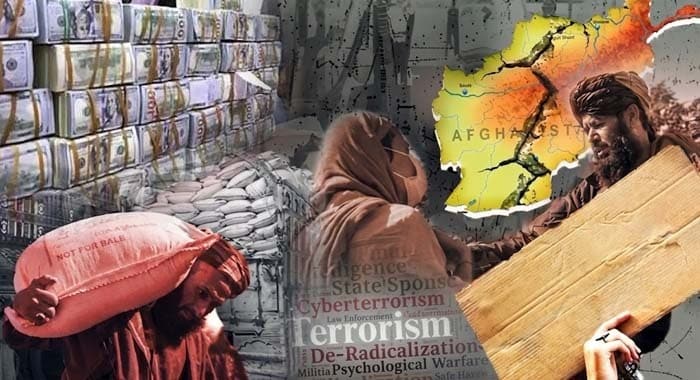
Serious concerns have emerged over the delivery of international humanitarian assistance in Afghanistan under the interim Taliban authorities, with reports alleging bureaucratic interference, financial extraction, political favoritism in beneficiary selection, and restrictions on women’s participation in relief operations. Investigations and assessments attributed to the United States Special Inspector General for Afghanistan Reconstruction (SIGAR), the United Nations, and human rights organizations point to persistent challenges facing humanitarian agencies seeking to deliver assistance to vulnerable communities.
The allegations raise fundamental questions about the independence of humanitarian operations, the protection of donor-funded resources, and the ability of international organizations to ensure that food, medicine, and other essential assistance reach the people who need them most.
Since returning to power in August 2021, the Taliban authorities have exercised increasing control over Afghanistan’s administrative institutions. According to the information provided, this control has extended into humanitarian operations, where aid organizations face regulatory restrictions, approval delays, financial demands, and interference in staffing and beneficiary selection.
The reported pattern of interference threatens to undermine the principles of humanitarian neutrality, impartiality, and independence, particularly in a country where millions of people continue to depend on international assistance for their basic needs.
According to assessments attributed to the United Nations Office for the Coordination of Humanitarian Affairs (OCHA), interference by the Taliban authorities accounts for a substantial proportion of documented obstacles to humanitarian assistance in Afghanistan. The figures cited in the supplied material place this proportion between 73 and 99 percent, although the precise reporting period, methodology, and definition of interference require verification before publication.
The reported restrictions include delays in project approvals, demands for changes to program budgets, pressure concerning recruitment decisions, and attempts to influence how assistance is distributed. Such practices can prevent humanitarian organizations from implementing approved projects on schedule, increase operational costs, and delay essential services for vulnerable households.
In November 2024, OCHA reportedly recorded 64 project suspensions associated with bureaucratic obstruction. A further 21 activity suspensions were reportedly recorded by June 2025 following similar interference, according to the information provided.
When projects are suspended, organizations may be forced to return unspent funds to donors, even as intended beneficiaries remain without food, healthcare, livelihood support, or other essential services. These interruptions can be particularly damaging in communities already facing severe economic hardship and limited access to public services.
The cumulative effect of administrative restrictions is therefore not limited to humanitarian organizations themselves. It can also reduce the reach, timeliness, and effectiveness of assistance intended for Afghanistan’s most vulnerable populations.
International donors have committed substantial resources to addressing Afghanistan’s humanitarian crisis since the Taliban’s return to power. However, questions remain about the financial conditions under which assistance is delivered and the extent to which aid organizations can operate without interference.
According to the figures cited in the supplied material, the United States provided more than $2 billion in humanitarian assistance to Afghanistan between 2021 and 2025. SIGAR also reportedly documented the transportation of more than $2.9 billion in physical US currency into Afghanistan by the United Nations.
A May 2024 SIGAR audit reportedly found that implementing partners working for US agencies paid at least $10.9 million in taxes and fees directly to the Taliban-controlled government between August 2021 and early 2024.
These payments raise questions about the financial obligations imposed on aid organizations, the potential diversion of donor resources, and the safeguards available to ensure that humanitarian funding is used for its intended purposes.
The distinction between legally required administrative payments, unavoidable operating expenses, and improper financial extraction is important. The reported figures alone do not establish that all payments constituted corruption or that all humanitarian assistance was diverted. Nevertheless, allegations of coercive payments warrant transparent investigation, effective financial oversight, and clear guidance for implementing partners.
The supplied material further states that 63 percent of surveyed organizations received no formal compliance guidance from Washington. If verified, this finding would highlight the need for more consistent direction to aid organizations operating in a complex regulatory and political environment.
Concerns have also been raised about the influence of Taliban officials over beneficiary selection and the distribution of humanitarian supplies.
In Zabul province, the supplied material alleges that Taliban officials exercise substantial control over beneficiary-vetting procedures through mandatory six-member committees. Field reporting attributed to OCHA reportedly describes concerns that committee members favor relatives, political loyalists, and individuals perceived to be aligned with the Taliban.
The allegations further suggest that individuals associated with the former Afghan government may be excluded from assistance, while local officials in some rural districts may demand portions of food supplies before distribution.
If substantiated, such practices would undermine the principle that humanitarian assistance must be allocated according to need rather than political affiliation, family connections, ethnicity, or personal loyalty.
Humanitarian organizations require transparent beneficiary-selection procedures, independent monitoring, accessible complaint mechanisms, and safeguards against political interference. Without these protections, vulnerable households risk being excluded from assistance precisely because they lack connections to those exercising local authority.
However, the scope and prevalence of the alleged practices should be established through independently verified field assessments rather than generalized across all provinces or humanitarian programs. The allegations extend beyond food assistance to essential medicines and healthcare supplies.
According to the information provided, SIGAR-related reporting has raised concerns about administrative interference affecting the movement and procurement of donor-funded medicines. The supplied account alleges that customs delays or impoundments can leave pharmaceutical products unusable and create pressure on humanitarian organizations to purchase replacements through politically connected suppliers.
Such claims require careful verification, including examination of customs records, procurement contracts, product-expiry documentation, and any evidence of financial relationships between suppliers and officials.
If confirmed, deliberate delays affecting life-saving medicines would represent a serious threat to public health and the effective use of international assistance. Replacing expired or delayed supplies can increase costs, disrupt treatment schedules, and place additional pressure on already overstretched healthcare services.
Independent procurement audits and transparent customs procedures would help determine whether improper interference has occurred and identify the appropriate corrective measures. Restrictions imposed on Afghan women remain among the most consequential barriers to humanitarian operations.
In December 2022, the Taliban authorities prohibited Afghan women from working for most local and international nongovernmental organizations, subject to subsequent variations and exemptions. In April 2023, restrictions were extended to Afghan women working with the United Nations in Afghanistan.
These measures have severely complicated the delivery of assistance to women and girls, particularly in communities where cultural and social restrictions make access to female humanitarian personnel essential.
Women workers have played important roles in maternal and child nutrition, community health education, psychosocial support, livelihood programs, and outreach to households that may otherwise be difficult to reach. Restrictions on their participation can weaken needs assessments, limit access to female beneficiaries, and undermine the effectiveness of services.
The consequences extend beyond employment. When women cannot participate meaningfully in humanitarian operations, organizations may struggle to identify protection concerns, assess maternal health needs, and provide services in ways that respect the dignity and circumstances of female beneficiaries.
The supplied material also raises concerns about restrictions affecting the training of female healthcare professionals. Claims concerning the number of female healthcare workers potentially affected, and the wider consequences for medical services, should be verified against current data from the World Health Organization, the United Nations Assistance Mission in Afghanistan (UNAMA), and relevant health authorities.
In a country facing substantial healthcare challenges, preserving women’s access to medical education and ensuring that female healthcare professionals can work are critical to the delivery of essential services.
These operational challenges are unfolding against a backdrop of severe humanitarian need and declining international funding. The supplied figures indicate that between 14 million and 23 million Afghans faced acute food insecurity during 2025–2026. The wide range reflects the need to specify the assessment period and the underlying food-security classification before these figures are used in an official statement.
The information further states that Afghanistan’s $1.7 billion humanitarian response plan had received approximately 30 percent of its required funding by September 2026. These figures should be checked against the relevant OCHA financial tracking records and the exact reporting date before publication.
Funding shortages can force humanitarian organizations to reduce food distributions, suspend healthcare activities, scale back protection services, and prioritize only the most urgent needs. When these reductions coincide with administrative interference and restrictions on female staff, the consequences for vulnerable communities may become even more severe.
A decline in the number of active humanitarian projects should not automatically be interpreted as evidence that interference has diminished. Fewer operations can also mean fewer opportunities for aid organizations to encounter administrative obstacles, while unmet humanitarian needs continue to grow.
Reliable monitoring is therefore essential to distinguish between genuine improvements in the operating environment and a reduction in reported incidents caused by shrinking humanitarian activity.
The reported allegations highlight the need for stronger safeguards to protect humanitarian assistance and ensure that donor resources reach their intended beneficiaries. International donors and humanitarian agencies should continue to strengthen financial oversight, independently verify beneficiary lists, document administrative and financial demands, and establish secure reporting mechanisms for organizations facing interference.
Humanitarian access must be assessed according to the practical ability of agencies to deliver assistance safely, independently, and without discriminatory restrictions. Transparent procurement, independent audits, and effective complaints procedures can help identify misconduct and reduce opportunities for diversion.
At the same time, the protection of humanitarian space requires sustained engagement with relevant authorities, clear expectations concerning the role of female personnel, and consistent monitoring of restrictions affecting aid delivery.
The central issue is not simply the amount of international assistance entering Afghanistan, but whether that assistance reaches people according to their needs, without political favoritism, improper financial demands, or discriminatory barriers.



